Jeonnam Gwangju Integrated Special City, Personnel Appointments May Come Before Restructuring
Restructuring Proposal Fails to Reach Special Session Agenda
Ongoing Disagreements Over Planning, Budget, and HR Functions
Individual Interviews With Senior Directors Held Over the Weekend
As the first organizational restructuring of the Jeonnam Gwangju Integrated Special City has been delayed, it has been reported that the administration has decided to prioritize personnel appointments over restructuring. This decision is interpreted as an effort to stabilize the organization by carrying out promotions and appointments first, given that ongoing disagreements within the Gwangju and Jeonnam public sectors over the allocation of key functions—such as planning, budgeting, and human resources—have pushed back the restructuring timeline.
According to officials from the Jeonnam Gwangju Integrated Special City on July 13, a senior management meeting was held that morning at the Naman Government Building. As differences of opinion persist regarding the allocation and division of functions between government buildings, it was decided to proceed with personnel appointments before organizational restructuring. The issue of restructuring will be further analyzed in depth and addressed at a later time.
Originally, the restructuring plan was scheduled to be submitted to the 2nd special session (first plenary session) that opened on this day. However, as final consensus was not reached, the plan was not included among the plenary session’s agenda items.

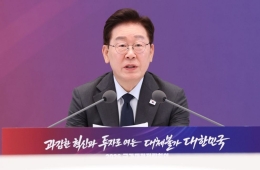
When Min Hyung-bae, Former Mayor of Jeonnam Gwangju Integrated Special City, attended the town hall meeting on the functional allocation of the city hall under the theme "Designing the Integrated Special City Hall with Special Citizens" held at the Muan Government Office Small Theater on the 9th, union members belonging to Jeonnam Gwangju Special City held placards to express their opinions. Photo by Shim Jinseok
View original imageThe restructuring proposal must go through standing committee reviews and legislative notice procedures, but the process has been delayed because the final coordination between the restructuring plans prepared by the organizational departments of the Gwangju City and Jeonnam Provincial governments has not been completed.
The restructuring process is currently overseen by the Jeonnam Gwangju Grand Transition Planning Committee. The plans drafted by the relevant departments for local administration within Gwangju City and Jeonnam Province are being finalized by Mayor Min Hyung-bae.
However, it has been reported that differences of opinion persist regarding which government building should house the so-called core maintenance functions of the institution, such as planning, budgeting, human resources, and organization.
In particular, both inside and outside the public sector, there is growing concern within the Jeonnam Provincial Government that a plan is being considered to locate the planning, budgeting, and human resources functions at the Gwangju Government Building.
At a town hall meeting held at the Muan Government Building on July 9, Mayor Min stated, “We are envisioning the Gwangju Government Building as being centered on core maintenance and political/coordination functions.”
Although he clarified that this was not a final decision, the public sector has interpreted this to mean that the planning, budgeting, human resources, and organizational divisions would be included in these functions.
As a result, there are concerns within the Jeonnam Provincial Government that if the core functions are concentrated at the Gwangju Government Building, the influence of the Muan Government Building could be weakened. Meanwhile, within the Gwangju public sector, there are ongoing calls for job security and the assurance of administrative continuity.
Some observers have pointed out that this controversy is not merely about the allocation of departments but is, in fact, a process of newly designing the authority structure of the Integrated Special City.
With major projects underway in semiconductors, AI, energy, and future industries, there are growing calls to shift from the traditional administration system centered on planning and budgeting to a performance-based system focused on project departments.
Ultimately, as the organizational restructuring has been delayed, greater emphasis has been placed on implementing personnel appointments first.
It has been reported that Mayor Min conducted individual interviews on July 11 at the Naman Government Building with directors holding grade 3 or higher positions in the Jeonnam Gwangju Integrated Special City.
During these interviews, Mayor Min reportedly gathered opinions not only on restructuring but also on the future direction for the operation of the special city, policy implementation guidelines, the establishment of an integrated administrative system, and measures to stabilize the organization. Interviews with senior officials at the Gwangju Government Building are scheduled to take place within this week.
Hot Picks Today
 Report That Accurately Predicted KOSPI's 20% Plunge Now Says "Buy Now... Path to 11,450 Points Opens"
- [Exclusive] "Why Are Sales So Strong Only in Korea?"... 200,000 Units Sold in 10 Years Since Entering Korea [Tesla's Solo Run... Hyundai's Counterattack]
- [Breaking] Lee: "Household electricity rates are the same day and night, so they need to be changed"... hints at reform
- "You Could Die Trying to Buy Clothes"... Record-Breaking 'Killer Heatwave' Forces Uniqlo to Close Stores
- "Why the World Should Learn from Korea: Why Foreigners Are Impressed by Riding the Subway"
An official from the Jeonnam Gwangju Integrated Special City stated, “Although no final decision has been reached regarding restructuring, promotion candidates remain on standby. If the restructuring is delayed, there are considerations to conduct personnel appointments first and then reassign staff after the restructuring is complete.”
© The Asia Business Daily. All rights reserved. Unauthorized AI training and use prohibited.