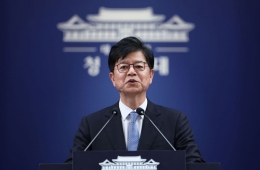
[Second Half Growth Strategy] Strategic Sovereign Wealth Fund Ultimately Placed Under KIC... Concerns Over Expertise and Independence
Ministry of Economy and Finance Announces Economic Growth Strategy for Second Half of 2026
Sovereign Wealth Fund and National Growth Fund to Expand Investment in Advanced Industries
Capital Market Reforms through Won Internationalization and
The government will establish a new strategic investment account within Korea Investment Corporation (KIC) to expand and reorganize it into a comprehensive sovereign wealth fund. The intention is to boost the nation's competitiveness by increasing public-private investment to supply long-term funding for advanced industries such as artificial intelligence (AI) and semiconductors. However, while prioritizing speed by choosing KIC over creating a separate strategic sovereign fund as initially considered, challenges remain regarding securing investment independence and expertise.
On July 14, the government reported these plans in the "Second Half 2026 Economic Growth Strategy" during a cabinet meeting presided over by President Lee Jaemyung. As a core initiative to restore potential growth rates, the government proposed expanding public-private funding support for high-tech sectors through the sovereign wealth fund and the National Growth Fund. The key approach is to use government capital injections, donations, and operating profits to support long-term equity investment in strategic industries, key industries, overseas supply chains, and other fields critical to national competitiveness and economic security.
Expansion of Advanced Industry Investment via Sovereign and National Growth Funds
The main investment targets for the sovereign wealth fund are: ▲Three major mega projects and other strategic industries; ▲Key industries such as finance and infrastructure; ▲Industries critical to national competitiveness and economic security, including overseas supply chains. The government plans to provide patient capital-type long-term equity investment in strategic sectors including advanced industries, materials, parts, equipment, nuclear power, aerospace, and quantum technology, while also promoting domestic and overseas co-investment with foreign sovereign wealth funds.
Previously, the government had considered establishing a separate "Korean-style sovereign wealth fund" specializing in industrial competitiveness and strategic technology investment, similar to Singapore's Temasek. Although creating the Korea Future Investment Corporation to focus exclusively on investments in strategic industries was discussed, the final decision was to set up a strategic investment account within the existing KIC. In a prior briefing, First Vice Minister of Economy and Finance Lee Hyungil explained, "KIC has already built a strong network and credibility abroad as a sovereign fund," and added, "Utilizing KIC, rather than creating a new institution, is advantageous for joint investments with overseas sovereign wealth funds and allows for swifter establishment."
While the government emphasized that launching the sovereign wealth fund through KIC would save time and costs, critics have pointed out limits to investment independence and governance, given that strategic investments would be managed within the existing KIC framework, which oversees foreign reserves. Concerns center on the possibility that investment goals and decision-making could influence each other when foreign reserve management and strategic industry investment occur within the same institution. It was noted that a separate sovereign wealth fund modeled after Singapore's Temasek, as originally considered, would have allowed for bolder and longer-term investments in strategic industries through an independent investment body insulated from reserve management activities. In response, the government announced plans to segregate the foreign reserve and strategic investment accounts from an accounting perspective and to establish a "Chinese Wall" to block any mutual influence.
![[Second Half Growth Strategy] Strategic Sovereign Wealth Fund Ultimately Placed Under KIC... Concerns Over Expertise and Independence](http://www.asiae.co.kr/news/img_view.htm?img=2026071313440143809_1783917840.jpg)
In addition, in Q3 of this year, the National Growth Fund will introduce an additional 600 billion won in citizen-participation investment products. The government's operational goal is to secure over 15 trillion won in funding support by the end of the year, including project approvals and the establishment of sub-funds. Following supply chain and economic security risks after the war in the Middle East, the government will build a comprehensive macroeconomic response system and continue a proactive fiscal policy stance. Notably, it plans to create a "Future Response Fund" to direct additional tax revenue, anticipated owing to the semiconductor boom, toward investments in youth, next-generation growth industries, local regions, and education. An insurance pilot program to accelerate advanced technology commercialization will also be introduced next year. The government will support insurance coverage that guarantees risks from the prototype proof-of-concept stage through to commercial launch and will accumulate both demonstration-special insurance claim data and pilot project data with the Korea Insurance Development Institute to develop an integrated insurance system for advanced goods and services.
Comprehensive Reform of National Assets, Fiscal Management, and Public Institutions
The government also presented plans to strengthen sovereign wealth management and to innovate public institutions, taxation, and fiscal policy. Through the "K-Asset Project," the government will shift the national asset management paradigm from ownership and preservation to operation and value creation, and will enact a National Asset Basic Act to cover new types of assets such as virtual assets.
Asset-related information for the central government, local governments, and public organizations will be linked via the digital budget accounting system (dBrain). Starting this year, AI-based legal interpretation chatbots for national property will be introduced within government networks. Next year, separate from the existing dBrain, the government will develop an information strategy plan (ISP) for constructing the "K-Asset Cloud," an AI-based database dedicated to national assets.
The overseas diplomatic mission project will be unified as a complex development model, departing from the previous ministry-specific decentralized approach. In Mexico City, a validity review of the business plan is underway, while in New York and Hanoi, project site acquisition is being pursued. The system for allocating treasury funds will be reorganized from a ministry-based total budget allocation scheme to one based on key project categories, such as disaster safety, national policy priorities, mandatory spending, and R&D. Dedicated AI will be deployed to support the entire cycle from fund allocation to execution, performing tasks such as anomaly detection in expenditures and forecasting daily treasury disbursement needs.
To invigorate the government bond market, individual investors will be allowed to purchase government bonds directly through retirement pension accounts, and the inflow of funds following Korea's inclusion in the World Government Bond Index (WGBI) will be closely monitored. For retirement pension account holders, an annual income tax deduction of 1 million won is available for personal contributions within a cap of 9 million won per year at a rate of 13.2%–16.5%. When pension benefits are received, preferential separate taxation of 3.3%–5.5% for up to 15 million won per year will be applied.
In terms of taxation, all forms of tax expenditure will be reviewed from scratch, with unnecessary or excessive schemes to be abolished or restructured. The business succession deduction system will be redesigned by adjusting eligible industries, establishing a selection review committee, and rationalizing requirements. During next year’s budget formulation, all fiscal programs will be examined for the largest-ever expenditure restructuring. Reform plans will also be devised for educational finance grants to reflect declining school-age populations and changing educational needs. For cash-like benefits such as the first meeting voucher, parental allowances, and child allowances, the government is considering providing payments from the month of birth without requiring a separate application immediately upon birth. Adjustment plans for earmarked taxes—including transportation, energy, environment, and special rural development taxes—will also be developed to allocate resources more efficiently.
Accelerated Restructuring of Public Institutions and Innovative Procurement
Starting in the third quarter of this year, the government will implement structural reforms for key public institutions, integrate and consolidate overlapping and redundant organizations, and reorganize subsidiaries and overseas branch offices. It is reviewing the integration of five state-owned power generation companies to support the transition toward renewable energy, as well as the merger of Korea Broadcasting Advertising Corporation with the Audience Media Foundation and five Korea Railroad Corporation subsidiaries.
By December this year, the government will introduce an innovative procurement system based on the Korean version of the Other Transaction Authority (OTA), which incentivizes joint government-corporate standard development, phased achievement-based payments, and flexible adjustments to contract amounts and performance requirements. Additionally, demonstration-linked fast-track procedures for emerging industries such as robotics will be expanded, and a pilot program will be launched to allow major metropolitan government leaders, including the mayors of Seoul and Gyeonggi Province, to act as nominators for innovative products.
Capital Market Transformation through Won Internationalization and MSCI Inclusion
The government also unveiled plans to reform the capital market by internationalizing the won and seeking inclusion in the Morgan Stanley Capital International (MSCI) Developed Market Index. Starting this month, the foreign exchange market will operate 24 hours a day, and an "offshore won settlement system" (tentative name) will be established and operated from January next year, while extensive easing of capital transactions and foreign exchange regulations is planned. The scope of won-denominated instruments available to foreigners will be expanded to include short-term financial products, and incentives such as preferential export finance rates and higher trade insurance limits will be offered for current-account transactions in won. Plans also include easing borrowing restrictions for foreign financial institutions and boosting won trade finance using currency swap funds.
Hot Picks Today
![[Breaking] Trump: "Korea to Invest in U.S.... Eight Large Nuclear Power Plants and Gas Power Plant in Texas"](https://cwcontent.asiae.co.kr/asiaresize/93/2026092813302742391_1790569827.png) [Breaking] Trump: "Korea to Invest in U.S.... Eight Large Nuclear Power Plants and Gas Power Plant in Texas"
[Breaking] Trump: "Korea to Invest in U.S.... Eight Large Nuclear Power Plants and Gas Power Plant in Texas"
- "Instead of Japan, Let's Go to Korea": Chinese Tourists Flock In... Travel Demand Surges During Up to 13-Day Golden Holiday
- "No Age or Income Limits, Everyone Gets 100,000 Won... This City to Provide Subsidies to All Residents"
- "I’m Now Afraid of Chinese People"... Chinese Restaurant Owner Appeals After Being Threatened Over Sign
- "Did They Really Use That Pot for Cooking?" Outrage as Chinese Kindergarten Caught Washing Rags in Kitchen
To mitigate market volatility stemming from won internationalization, the government will enhance its 24-hour response system and improve offshore won liquidity management and external financial safety nets. A global core investor group will also begin regular meetings from this month to strengthen communication with foreign investors and support ongoing investment environment improvements to facilitate Korea's inclusion in the MSCI Developed Market Index.
© The Asia Business Daily. All rights reserved. Unauthorized AI training and use prohibited.


![[Update] Trump: "Korea to Invest in Texas Power Plant, 8 Nuclear Plants, Alaska LNG"](https://cwcontent.asiae.co.kr/asiaresize/307/2026100105593246483_1790801971.png)