Rising Token Costs Drive 'Low-Cost, High-Efficiency' Competition in the AI Industry
Major artificial intelligence (AI) companies are releasing new AI models that can provide better services at lower costs than before. As companies utilizing AI have begun to limit usage due to enormous expenses, leading AI firms are rolling out increasingly cost-efficient models.

According to Bloomberg on July 12 (local time), recent AI models released by OpenAI, SpaceXAI, and Meta emphasize their ability to handle more tasks with fewer tokens as a key advantage.
SpaceXAI’s Grok 4.5 highlights that its token efficiency is twice as high as that of rival models in the same class. Mark Zuckerberg, CEO of Meta, recently launched Muse Spark 1.1 and stated that the company has set a highly competitive price. OpenAI also released GPT-5.6, explaining that it is designed to perform more tasks while using significantly fewer tokens than previous models. Tokens are units similar to “pieces of text” used when AI reads and writes user content. As AI becomes more intelligent and token usage decreases, the cost for users to utilize AI also drops.
Bloomberg pointed out that the reason AI companies are now focusing on cost reduction is because they have started closely examining AI-related expenditures. At the beginning of this year, companies were encouraging employees to use AI as much as possible. This practice was referred to as “token maxing.” However, as expenses have grown much larger than expected, some companies have started to restrict AI usage.
Sam Altman, CEO of OpenAI, said in a recent interview with CNBC, “Every company is now asking how much they are spending on AI and what value they are getting in return,” adding, “We are also focused on delivering value that matches what our customers pay.” These remarks represent a notable shift from about a year ago. At that time, OpenAI executives even mentioned the possibility of charging thousands of dollars per month for top-tier AI model subscriptions.
Gil Luria, Head of Technology Research at D.A. Davidson, said, “Companies are spending much more money than in the past,” and added, “As they watch these costs balloon to uncontrollable levels, they have started to ask questions about efficiency.”
Some companies are also seeking more affordable alternative AI models. Chinese AI companies such as DeepSeek are releasing a range of open-source models that emphasize price competitiveness. Although their performance does not match the top-tier models from U.S. firms, these models are considered sufficient for handling routine work. Some users are also turning to “model routing” services, which allow easy selection of the most suitable model from among hundreds of AI models for each task, lowering costs.
Hot Picks Today
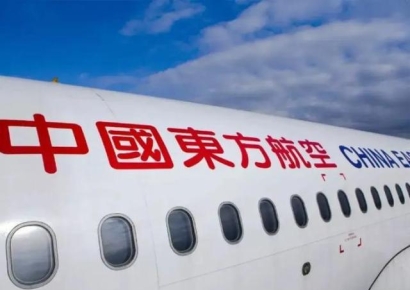 Flight Attendant Kneeled to Apologize... China Eastern Airlines Bans Passenger Who Continued to Complain
- An Apartment Once Worth 400 Million Won Nears 1 Billion... "Still Worth It" as 1990s-Born Pangyo Workers Flock to Gyeonggi Gwangju [Report]
- "Didn't Want to Buy a Home"... Seoul Apartment Buyers Flocked to Mid- to Low-Priced Segment After Tax Reform Plan [Real Estate AtoZ]
- "Huge Sum in Pension Account He Never Knew About... What Happened to Chinese Man in His 70s Who Collected Scrap for 21 Years?"
- Musk's Partner Reveals Sudden Breakup Just a Week After Saying "I Love You"
As companies now consider not only performance but also cost efficiency, there is analysis that Anthropic, currently regarded as a leading player in the industry, could also face pressure to lower its prices. According to benchmarking service Artificial Analysis, Anthropic’s latest models, Opus and Phaebl, are among the most expensive on a per-task basis.
© The Asia Business Daily. All rights reserved. Unauthorized AI training and use prohibited.