NTS Chief Lim Kwanghyun: "Establishing a 'Future Response Fund' with Additional Tax Revenue from Semiconductor Boom Is Essential" (Comprehensive)
High Dependence on Specific Industries and a Few Corporations in Korea’s Tax Revenue Structure
Corporate and Securities Transaction Taxes Rise Sharply Amid This Year's Semiconductor Supercycle
Need to Invest in and Nurture New Strategic Industries for Future Growth
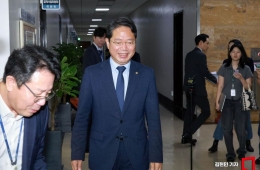
Kwanghyun Lim, Commissioner of the National Tax Service, emphasized on July 12 that the plan to establish a "Future Response Fund," which would use additional tax revenue generated by the semiconductor boom to support the nation’s three major mega projects and strengthen long-term national competitiveness, is an essential policy.

On July 12, Commissioner Lim posted on his X (formerly Twitter) account under the title "For Today's Tax Revenue to Become Tomorrow's Competitiveness," stating, "Sustainable fiscal management depends not only on how much tax revenue is secured, but also on how stable the structure is through which it is obtained."
He described the volatile tax revenue resulting from fluctuations in the semiconductor market since 2000 as a "concentrated portfolio," adding, "As someone responsible for the nation's tax revenue, this has always been a concern." He noted, "When the semiconductor industry is booming, tax revenue—especially corporate tax—rises rapidly, whereas during industry downturns, corporate performance worsens and tax revenue declines, causing repeated fiscal management difficulties." He pointed out that while the average annual tax revenue growth rate over the past 20 years was 5.71%, the volatility was excessive due to the semiconductor cycle. For example, in 2021, tax revenue increased by 20.6% year-on-year thanks to the semiconductor boom driven by the COVID-19-induced non-face-to-face economy, but declined by 12.6% two years later due to weakening IT demand.

Commissioner Lim suggested, "In terms of diversifying the tax revenue portfolio, semiconductors, as a core competitive industry, must continue to be fostered as a super-gap sector to solidify our global technological leadership." He added, "We must also actively invest in and nurture new strategic industries that will drive future growth." He explained, "Such efforts will not only secure engines for future growth but will also diversify the industrial structure," predicting that "in the long term, this will lead to a virtuous cycle, building a more balanced and stable tax revenue base."
Hot Picks Today
 Wealth Surpasses 20 Quadrillion Won... The Super-Rich Score Big, But Where Did the Money Flow?
- "Claims of Organ Trafficking Ring in Jeju"... Island Once Famous for Its Pristine Nature Plagued by Unfounded Rumors
- "Even as Stocks Crumbled, Investors Trusted This Steadily Rising ETF"[Weekend Money]
- "448,000 km With One Truck?"... After 29 Years, Hyundai Motor Company Searches for Owner After Farewell
- "Just Drinking to Lift Your Mood"...Unexpected Warning: Raises Risk of Cancer Death
He reiterated, "That is why the plan to create a 'Future Response Fund' to use the additional tax revenue from the semiconductor boom to support the nation’s three major mega projects and strengthen long-term competitiveness is an essential policy." He also expressed hope that "from the perspective of a tax revenue agency, this will help ensure both the sustainability of public finances in response to rising welfare demand due to low birth rates and an aging population, as well as tomorrow’s competitiveness."
© The Asia Business Daily. All rights reserved. Unauthorized AI training and use prohibited.