U.S. Recession Fears Ease... Focus on Warshin's Testimony Amid Prolonged Inflation
June CPI Expected to Decline Month-on-Month
Most Expect Rates to Hold Steady This Year
Upward Pressure Remains on Producer Prices
The likelihood that the U.S. economy will avoid a recession has increased, but there is a growing consensus that inflation could remain elevated for longer than expected due to higher energy prices stemming from the Iran war. The upcoming release of the June Consumer Price Index (CPI) and Federal Reserve (Fed) Chairman Kevin Warshin’s first congressional testimony this week have emerged as key variables that will determine the direction of monetary policy in July.

According to a Wall Street Journal (WSJ) survey conducted between July 2 and 7 (local time) of 72 economists, the average probability that the U.S. economy will fall into a recession within the next 12 months was calculated at 25%. This is 8 percentage points lower than the 33% reported in the April survey, marking the lowest level since early 2025.
Experts forecast the U.S. economic growth rate this year to average 2.1%. This is a slight upward revision from the 2.0% projection in April. Although the U.S.-Iran war has pushed up oil prices and shaken energy supply chains, the overall U.S. economy has not yet suffered a severe shock, according to their assessment.
On the other hand, inflation forecasts have worsened. Respondents expected the U.S. Consumer Price Index (CPI) to rise 3.4% year-on-year by the end of this year. This is 0.2 percentage points higher than the 3.2% forecast made in April.
Forecasts for the core Personal Consumption Expenditures (PCE) price index, which the Fed emphasizes in setting monetary policy, were also raised from 2.9% to 3.2%. This means inflation is likely to remain well above the Fed's 2% target for a considerable period.
The WSJ commented that persistent inflationary pressures have become the most significant policy challenge for Chairman Warshin, who took office in May. However, only 15% of the experts surveyed believed the Fed is likely to raise interest rates. The majority expect the Fed to maintain the current annual rate of 3.50–3.75% through the end of the year.

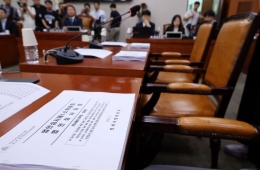
The market's attention is focused on the June inflation data and Chairman Warshin’s congressional testimony scheduled for this week. On July 14, Warshin will appear before the House Financial Services Committee for his first congressional testimony since taking office. Prior to that, the U.S. Bureau of Labor Statistics (BLS) will release the June CPI.
On July 15, the June Producer Price Index (PPI) will be released, and Warshin will testify at a Senate hearing. With inflation indicators and Warshin’s remarks coinciding, the market’s outlook for interest rates ahead of the July Federal Open Market Committee (FOMC) meeting could be significantly affected.
According to economists surveyed by Bloomberg, the June CPI may decline month-on-month due to recent drops in gasoline prices. If this materializes, it would be the first time since the early months of the COVID-19 pandemic in 2020 that the monthly CPI posts a negative figure.
In contrast, inflationary pressures at the production stage are expected to remain high. Energy price shocks resulting from the Iran war are being reflected in corporate costs, and the year-on-year increase in core PPI—excluding food and energy—is projected to rise from 4.9% to 5.2%.
Even if consumer inflation slows due to falling energy prices, there are concerns that higher production costs for businesses could eventually be passed on to consumer prices with a time lag.
Most in the market believe it is unlikely the Fed will raise rates at the July meeting. The probability of a rate hike in July, as reflected in current financial markets, is about 24%.
Andrew Sucher, Chief U.S. Economist at Bloomberg Economics, said, "The likelihood that the Fed will actually move at the July meeting is low. For the probability of a rate hike to increase significantly, CPI would have to come in stronger than expected and Chairman Warshin would need to show a clearly hawkish stance at the hearing, but the chances of both are low."
Hot Picks Today
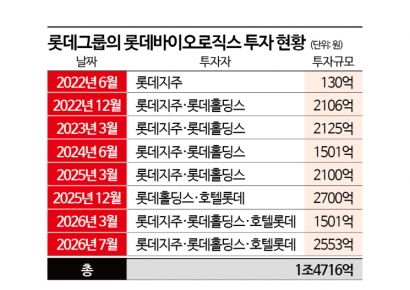 "Just Two Days After the Chairman's Visit"... Lotte Injects Another 250 Billion Won 'Here'
- 83% of Highway Fatalities Linked to This 'Habit'... Check This Button When Driving in Summer
- "How Many Days Off Does Your Company Give?"... Only Half Receive Vacation Allowances: The Reality of Summer Leave for Korean Workers
- "French Team Without Any French Players"... Former Spanish Prime Minister Slammed for Racist Remarks
- Corrective Orders Issued to Plastic Surgery Clinics for Elaborate 'Fake Reviews' Used as Deceptive Ads
Meanwhile, public comments from Fed officials will continue. On July 13, Fed Governor Christopher Waller will deliver a speech, followed by remarks from New York Fed President John Williams and Fed Governor Lisa Cook on July 15. On July 16, Vice Chair Philip Jefferson, Dallas Fed President Lorie Logan, and Kansas City Fed President Jeff Schmid are scheduled to speak.
© The Asia Business Daily. All rights reserved. Unauthorized AI training and use prohibited.