"If You Don't Collect the Fresh Bag, You Lose Your Zone"... 'Merciless Rules' Triple Industrial Accidents Among Delivery Workers in 5 Years
1,516 Industrial Accident Cases Approved in Parcel Delivery Sector Last Year
Seven Delivery Workers Recognized for Work-Related Deaths So Far This Year
As competition for speed intensifies within the parcel delivery industry, the number of industrial accident approvals for parcel delivery workers has nearly tripled over the past five years.

According to data received from the Korea Workers' Compensation and Welfare Service by Assemblyman Kim Wisang, a member of the National Assembly's Climate, Energy, Environment and Labor Committee, the number of industrial accident approvals in the parcel delivery industry surged from 561 cases in 2021 to 1,516 cases last year. Of the cases approved last year, 1,341 cases (88.5%) were accidents, which accounted for the vast majority, followed by 103 cases (6.8%) of illness, and 72 cases (4.7%) related to commuting.
By type of illness, musculoskeletal disorders were the most common with 87 cases (84.4%), followed by cerebrovascular and cardiovascular diseases with 13 cases (12.6%). Musculoskeletal disorders typically result from accumulated work, while cerebrovascular and cardiovascular diseases are often caused by excessive work.

The number of industrial accident approvals in the parcel delivery industry has been increasing every year, with 692 cases approved between January and May this year. During the same period, there were 7 approved cases of fatal industrial accidents. The number of approved fatal industrial accident cases was 10 in 2021, 11 in 2022, 11 in 2023, 9 in 2024, and 14 in 2025.
The main causes of industrial accidents among parcel delivery workers include the surge in night and late-night delivery volumes due to the industry's speed race, such as same-day delivery, early-morning delivery, and seven-day-a-week delivery. Another cause is the so-called "cleansing system," under which delivery zones can be revoked or contracts terminated even before the contract period ends if certain criteria—such as delivery rate or Fresh Bag collection rate—are not met.

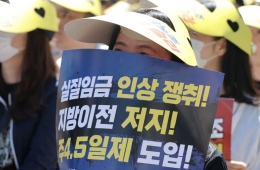
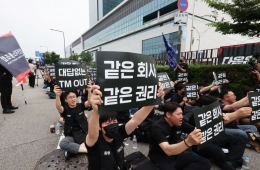
However, discussions to address these issues continue to face difficulties. The social dialogue body on parcel delivery, led by the Democratic Party of Korea, is currently discussing measures such as limiting night delivery work hours to 46 hours per week. However, agreement is proving difficult due to opposition from delivery companies. In addition, discussions on introducing a "minimum remuneration system" to guarantee a minimum standard of living for specially-employed and platform workers such as delivery riders and parcel delivery drivers—who are not covered by the minimum wage—have not made progress. Moreover, the Ministry of Employment and Labor is seeking to introduce the "Workplace Basic Rights Act" and the "Presumption of Worker Status System" to protect specially-employed and platform workers, but the legislative process in the National Assembly remains stalled.
Hot Picks Today
 Wealth Surpasses 20 Quadrillion Won... The Super-Rich Score Big, But Where Did the Money Flow?
- "Claims of Organ Trafficking Ring in Jeju"... Island Once Famous for Its Pristine Nature Plagued by Unfounded Rumors
- "Even as Stocks Crumbled, Investors Trusted This Steadily Rising ETF"[Weekend Money]
- "Remembered Passwords"... Woman in Her 30s Sentenced to Prison for Stealing 60 Million Won While Cleaning Homes
- "Just Drinking to Lift Your Mood"...Unexpected Warning: Raises Risk of Cancer Death
Assemblyman Kim emphasized, "Despite various government measures, the sharp increase in fatal industrial accidents in the parcel delivery industry last year proves that current policies remain out of touch with reality and fail to address the structural causes. The government must move beyond regulation-centric policies and establish practical preventive measures."
© The Asia Business Daily. All rights reserved. Unauthorized AI training and use prohibited.