59 Emergency Rooms in Gwangju and Jeonnam Linked into a Single Network... Establishing a 'Lifeline' to Secure the Golden Hour
Real-Time Sharing of Emergency Room Information
Land, Sea, and Air Transport System and Integrated Control Center in Operation
Jeonnam Gwangju Metropolitan City has launched an initiative to establish an emergency medical system that connects 59 emergency rooms across Gwangju and Jeonnam into a single healthcare network. The plan aims to secure the golden hour for emergency patients by integrating real-time information sharing among hospitals, land-sea-air transport systems, and unified control functions.
On July 10, Jeonnam Gwangju Metropolitan City held an event at Chonnam National University Hospital to announce its "One Lifeline, Three-Strategy" plan, unveiling measures to build a regionally self-sufficient emergency medical system. The core objective is to unify the emergency medical resources of Gwangju and Jeonnam into a single system following the launch of the integrated metropolitan city, allowing patients to receive timely treatment regardless of their location.

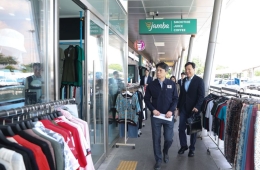
On the morning of the 10th, Min Hyungbae, Mayor of Jeonnam Gwangju Metropolitan City, visited the Biomedical Research Institute at Jeonnam National University Hospital in Dong-gu to inspect the local emergency medical system along with Jeonnam National University Hospital Director Jeong Shin, fire department personnel, and related agency officials. Provided by Jeonnam Gwangju Metropolitan City
View original imageThe first pillar of the strategy is the "One Lifeline Platform," which connects 59 emergency medical institutions in Gwangju and Jeonnam into a single network. By linking electronic medical records (EMR) between hospitals and establishing a telemedicine consultation system, essential information is shared in real time from patient transfer to treatment. To quickly determine the receiving hospital for critical patients, the "Final Landing Team (FLT)," comprised of emergency room on-call specialists, is operated on a permanent basis.
The patient transport system will also be expanded to include land, sea, and air. On land, a new dedicated ambulance for critical patients (MICU) will be introduced. At sea, Narumiseon vessels and Coast Guard ships will be utilized, while in the air, fire helicopters and doctor helicopters will be coordinated to minimize gaps in patient transport to island and remote mountain areas.
The Emergency Medical Integrated Control Center will oversee transfers, MICU dispatch, telemedicine consultations, and hospital-to-hospital transfers. It will connect paramedics, medical staff, and various means of transport into a single system to provide integrated management of the emergency medical response.
Hot Picks Today
 Wealth Surpasses 20 Quadrillion Won... The Super-Rich Score Big, But Where Did the Money Flow?
- "Spend 200,000 Won, Get 100,000 Won Back?"... Government's Bold Move Unveiled [Essential Tips for Benefits]
- "Even as Stocks Tumble, This ETF Stands Strong"... The Secret Behind the Steadily Rising ETF [Weekend Money]
- Father Suffers Cardiac Arrest After Rescuing Son from Valley; Multiple Water Accidents Reported in Uljin
- "Garbage Bags Hoarded After All Else Fails"... Minister's Pleas Couldn't Stop the 'Bag Crisis' Backstory [Energy Odyssey] ①
Prior to the announcement, Mayor Min Hyung-bae held a meeting with the heads of regional and local emergency medical centers to hear feedback from the field. Mayor Min stated, "Policy decisions must be made with a focus on opinions from those on the front lines," adding, "We will change the decision-making structure so that administrative support follows initiatives proposed by medical professionals."
© The Asia Business Daily. All rights reserved. Unauthorized AI training and use prohibited.