Mayor Park Gwannyul: "Pledges Are Proven by Action"... 9th Term Core Projects Officially Launched
Gwangju City Holds First Briefing of 9th Term
Accelerating Plans for AI Smart City and a Self-Sufficient City of 500,000
Mayor Park: "Delivering Responsible Administration That Produces Tangible Results for Citizens"
Gwangju City in Gyeonggi Province (Mayor Park Gwannyul) has held its first major work briefing session since the launch of the 9th term of the local government, officially commencing execution-focused administration to fulfill promises made to citizens.

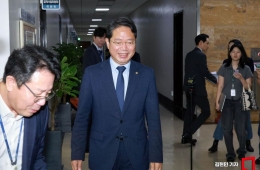
Gwangju City (Mayor Park Kwan-yeol) is holding its first major work briefing session since the launch of the 9th term of the elected administration. Provided by Gyeonggi Gwangju City
View original imageOn July 10, at Vision Hall in the City Hall, Gwangju City held a major work briefing session presided over by Mayor Park Gwannyul, with bureau, department, and headquarters heads in attendance, to review the implementation plans for the 9th term's core pledges and major pending projects.
This briefing session was organized to connect pledges to concrete action plans, and to comprehensively review the schedule for each project, anticipated challenges, and interdepartmental collaboration strategies.
The city set the creation of visible changes and tangible results for citizens as the top priority of the 9th term administration. The city plans to meticulously examine the necessity and feasibility of projects, as well as administrative efficiency, to establish a system of "administration that acts."
In particular, administrative efforts will focus on citizen-centered, daily-life policies such as operating a direct communication channel with the mayor, launching the Gwangju Basic Society Committee, establishing the Future-Oriented Smart Child Development Center, creating youth cultural spaces in all districts, and building an integrated Gwangju-style care system.
Large-scale projects to revitalize the local economy and lay the foundation for future growth will also be accelerated.
The city will work to expand local currency benefits, stimulate the neighborhood economy, and foster an ecosystem for the growth of small businesses. In addition, the city plans to strengthen urban competitiveness by expanding infrastructure, including building a direct bypass road connecting Taejeon and Gosan, establishing a new safe logistics interchange for citizens, and constructing the Gwangju East-West Cross-City Railway (Pangyo~Opo~Gwangju~Gonjiam).
Furthermore, the city aims to accelerate the construction of a 30,000-unit AI-powered smart city, the development of public industrial complexes, the establishment of the Gwangju Physical Artificial Intelligence Innovation Cluster, and the creation of an AI-driven future city, with the goal of building a self-sufficient city of 500,000 people based on advanced industries.
Mayor Park Gwannyul emphasized, "The success or failure of the 9th term depends not on planning, but on execution," adding, "This work briefing must not only serve as an opportunity to share the new direction of city administration but also become the starting point of responsible administration that will fulfill promises to citizens."
Hot Picks Today
 Wealth Surpasses 20 Quadrillion Won... The Super-Rich Score Big, But Where Did the Money Flow?
- Trusted the 'Helper' and Opened the Door... She Returned and Stole Nearly 60 Million Won
- "Even as Stocks Tumble, I Trusted You"... The Secret of the ETF with Steady Upward Momentum [Weekend Money] [Weekend Money]
- "Kkokkalcorn Placed Next to Pork Belly Causes a Sensation... Sells Out Three Months’ Stock at Five Times the Usual Speed"
- "Just Drinking to Lift Your Mood"...Unexpected Warning: Raises Risk of Cancer Death
Meanwhile, the city plans to actively incorporate matters discussed in this work briefing into each project, continuously monitor the progress of core pledges and major policies of the 9th term, and concentrate administrative capacity on making results tangible for citizens as early as possible.
© The Asia Business Daily. All rights reserved. Unauthorized AI training and use prohibited.