Gyeongnam Office of Education Allocates First Supplementary Budget of 7.2899 Trillion Won This Year ... Reflects Superintendent's Campaign Pledges
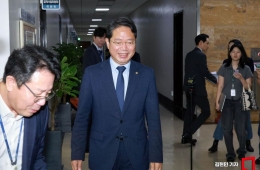
The Gyeongnam Office of Education submitted a supplementary budget plan totaling 728.99 billion won to the provincial council on July 10, reflecting Superintendent Kwon Soonki's campaign pledges.
The supplementary budget for the 2026 first Gyeongnam Provincial Education Special Account, submitted by the Office of Education on this day, is 684.1 billion won larger than the original budget.
Total revenue is 684.1 billion won, consisting of 620.1 billion won from central government transfers, 11.7 billion won from local governments and other sources, 22.1 billion won in self-generated revenue, and 30.2 billion won from surplus funds and other sources.
On the expenditure side, the budget increases include 152.9 billion won for personnel expenses, 56.8 billion won for operating expenses, 206.3 billion won for educational projects, 249.7 billion won for facility projects, and 26.3 billion won for reserve and miscellaneous payments. Internal reserves have been reduced by 4.9 billion won.

The Office of Education explained that this supplementary budget was prepared with a focus on supporting on-site school operations and stabilizing educational activities in line with the government's supplementary budget policy, while also advancing new Gyeongnam education policies that reflect the superintendent's campaign pledges.
In particular, to ease the financial burden on schools caused by high oil prices and inflation, the basic school operating expenses will be increased by 15%. The budget also prioritizes expanding commuting convenience and has secured 152.9 billion won in personnel expenses that were not included in the original budget.
The budget also includes 7.8 billion won to guarantee basic academic achievement through projects such as the Do-Dream School program, 2.4 billion won to create Gyeongnam-style study cafes, 31.7 billion won to supply electronic boards to general classrooms, and 14.2 billion won to establish intelligent science labs.
Additional allocations include 800 million won for a pilot project providing simple breakfast, 4.2 billion won for a pilot project to integrate kindergartens and childcare, 1 billion won for supporting the Nuri curriculum, 8.5 billion won for the Neulbom School program, and 4.5 billion won for special education support.
The budget also provides for 800 million won for the "EodiGO" real-time location sharing service, 1.8 billion won for classroom moving and cleaning services at the start of the new school year, 60 billion won for the establishment and expansion of schools, 5.9 billion won for spatial restructuring projects, 33.6 billion won for meal service facilities, 6.2 billion won for school sports facilities, 122.2 billion won for improving the school educational environment, and 8.9 billion won for toilet facility upgrades.
The proposal also includes 19.7 billion won for operating local curriculum programs tailored to regional characteristics and 5.4 billion won for nurturing skilled workers in vocational high schools linked to local strategic industries.
Hot Picks Today
 Wealth Surpasses 20 Quadrillion Won... The Super-Rich Score Big, But Where Did the Money Flow?
- Trusted the 'Helper' and Opened the Door... She Returned and Stole Nearly 60 Million Won
- After Adding It During the Crash, Investors Cheer... Which ETF Has Steadily Climbed? [Weekend Money]
- "Sprinkling Potato Chips on Ice Cream?"... Consumer-Created 'Naesipi' Shakes Up the Food Industry
- "Just Drinking to Lift Your Mood"...Unexpected Warning: Raises Risk of Cancer Death
This supplementary budget bill is scheduled to be finalized at the plenary session on July 30 after review by the Gyeongnam Provincial Council.
© The Asia Business Daily. All rights reserved. Unauthorized AI training and use prohibited.