[The Road to M.AX ④] "Why Should We Use AI?"... Perception, Not Cost, Is the Biggest Barrier to Manufacturing AI
8 Out of 10 Companies Do Not Use AI—"Don't See the Need"
Companies That Have Adopted AI Feel the Benefits, While a Perception Gap Remains with Non-Adopters
Success of M.AX Depends More on Shifting Onsite Perceptions Than on Technology
"There are so many product categories that I doubt whether artificial intelligence (AI) can be trained and utilized, and the cost of training is also a burden. There are clear limitations within the production line itself, and I believe that, at best, AI could be applied to quality inspection." (Mid-sized bio company)
"Some of our manufacturing processes require manual labor, making it difficult to introduce AI. In areas with many process variables, I also believe that applying AI would be challenging." (Small and medium-sized secondary battery company)
Although the government has positioned 'M.AX (Manufacturing AI Transformation)'—its strategy for AI transition in manufacturing—as a core industrial policy, the reality on the shop floor remains at the starting line. The main reason companies are hesitant to adopt AI is not so much the cost or lack of technology, but rather their perception that they simply "do not understand why AI should be introduced."
![[The Road to M.AX ④] "Why Should We Use AI?"... Perception, Not Cost, Is the Biggest Barrier to Manufacturing AI](http://www.asiae.co.kr/news/img_view.htm?img=2026071016300942103_1783668609.png)
80% of Advanced Manufacturers Have Not Adopted AI
According to a survey on the status of AI adoption in manufacturing conducted by the Korea Institute for Advancement of Technology (KIAT), commissioned by the Korea AI & IoT Association and Matrix R&C, 960 out of 1,212 companies (79.2%) in seven advanced manufacturing sectors—semiconductors, secondary batteries, displays, bio, defense, robotics, and advanced mobility—had not adopted AI as of July 10. Among these, only 18.6% responded that they plan to adopt it in the future. This shows a considerable gap between the government's push for AI transformation in manufacturing as a national industrial strategy and the current state of the field.
The most notable finding is the reason for not adopting AI. While it is generally expected that investment burden or lack of professional personnel would be the biggest obstacles, the actual results were different. The most common reason for not adopting AI was "do not see a significant need for adoption," accounting for 37.4%. This was followed by "low compatibility with the current business model" (20.6%), "not a priority for adoption" (17.9%), "lack of budget" (17.7%), "lack of technology and infrastructure" (14.2%), and "uncertain return on investment" (9.7%).
![[The Road to M.AX ④] "Why Should We Use AI?"... Perception, Not Cost, Is the Biggest Barrier to Manufacturing AI](http://www.asiae.co.kr/news/img_view.htm?img=2026071014240641850_1783661047.jpg)
"Cost" < "Lack of Perceived Need" by 2x
The fact that the response "do not see a significant need" was more than twice as prevalent as "lack of budget" is highly significant. This means that the biggest obstacle to the spread of AI in manufacturing is not funding, but perception in the field. Even if the government expands subsidies and supplies AI technology, the policy impact will be limited unless companies view it as an essential investment to enhance competitiveness.
A manager at a mid-sized defense company explained: "If you look at the style of decision-making so far, the top priority is that the effectiveness of adoption must be verified. Whether introducing new equipment or undertaking construction, if the effectiveness is not verified, it is rarely pursued. Considering the management's style, the primary consideration is how much the adoption reduces the unit cost and improves energy and labor costs. The next priority is alleviating the cost burden, followed by securing professional personnel."
On the other hand, companies that have already adopted AI are clearly experiencing improvements in productivity and competitiveness. On a five-point scale evaluating changes after AI adoption, productivity improvement scored the highest at 3.94, followed by overall competitiveness improvement at 3.87, and alleviation of workforce burden at 3.84. In the section asking about improvements, 78.6% responded that productivity had improved, followed by competitiveness improvement (73.4%) and workforce burden alleviation (72.6%). In other words, companies with AI experience feel the impact, while those without it are still unconvinced of its necessity.
The report recommended that manufacturing AI policy should now move beyond mere dissemination of technology to focus on field-level expansion. It suggested expanding pilot projects so that various manufacturers can experience proven AI models firsthand, and spreading productivity improvement cases throughout the industry so companies can feel the benefits of AI. Ultimately, the analysis is that the success or failure of AI adoption in manufacturing will depend on how many convincing success stories are created for companies still asking, "Why should we use AI?"
![[The Road to M.AX ④] "Why Should We Use AI?"... Perception, Not Cost, Is the Biggest Barrier to Manufacturing AI](http://www.asiae.co.kr/news/img_view.htm?img=2026071014240641849_1783661046.jpg)
"You Have to Experience It"—Need to Spread Success Stories
The report also proposed that the direction of manufacturing innovation policy should shift from "building facilities" to "enhancing capabilities for utilization." Rather than simply increasing the number of AI developers, it is necessary to foster multidisciplinary talent who can both understand production processes and connect AI to process improvement, as well as to expand training for current employees and on-site AI utilization education. In fact, companies that have adopted AI cited support for adoption costs and tax benefits (59.5%) and support for AI professional training and employee education (20.2%) as the most needed policies.
The government shares this sense of the problem. The Ministry of Trade, Industry and Energy has presented M.AX as the key strategy for strengthening the competitiveness of manufacturing this year, and is pursuing the expansion of AI pilot projects, fostering specialized manufacturing AI companies, and employee-centered AI education. The government's vision is to become not just a country that develops AI, but one that utilizes AI most effectively on the manufacturing floor.
Hot Picks Today
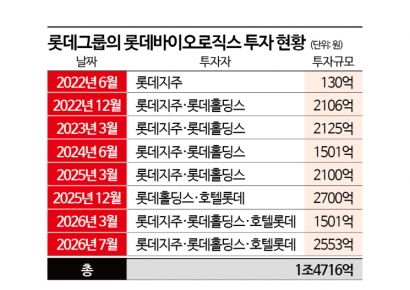 "Just Two Days After the Chairman's Visit"... Lotte Injects Another 250 Billion Won 'Here'
- 83% of Highway Fatalities Linked to This 'Habit'... Check This Button When Driving in Summer
- "How Many Days Off Does Your Company Give?"... Only Half Receive Vacation Allowances: The Reality of Summer Leave for Korean Workers
- "French Team Without Any French Players"... Former Spanish Prime Minister Slammed for Racist Remarks
- Corrective Orders Issued to Plastic Surgery Clinics for Elaborate 'Fake Reviews' Used as Deceptive Ads
A KIAT official also stated, "Companies that have already adopted AI are experiencing improvements in productivity and competitiveness, but the reality is that many companies still see AI as 'someone else's business.' Going forward, our policy efforts will focus on rapidly spreading proven success stories to the same industries and enabling companies to experience the benefits of AI firsthand through field demonstrations and consulting."
© The Asia Business Daily. All rights reserved. Unauthorized AI training and use prohibited.