"Transaction Volume Jumps 69% When Avoiding 'Triple Regulations'... Is the Unregulated Presale Market Also Experiencing a Balloon Effect? [Real Estate AtoZ]"
Triple Regulatory Designation for Dongtan, Giheung, and Guri
Spotlight on Unregulated Areas with Easy Access to Seoul
With the government strengthening real estate regulations, the number of regulated areas in the Seoul metropolitan area has expanded to 40. As a result, there are expectations that demand will shift to unregulated regions with good accessibility to Seoul. In previous instances when real estate policies were announced, areas that avoided regulation saw a surge in transaction volumes. This time, the advantages of unregulated areas—where the thresholds for subscription and loans are lower—are becoming more pronounced.
!["Transaction Volume Jumps 69% When Avoiding 'Triple Regulations'... Is the Unregulated Presale Market Also Experiencing a Balloon Effect? [Real Estate AtoZ]"](http://www.asiae.co.kr/news/img_view.htm?img=2023061410543763238_1686707677.jpg)
According to a 10 July analysis by the real estate research firm RealToday, based on the Ministry of Land, Infrastructure and Transport’s public transaction data, the number of apartment sales in unregulated areas of Gyeonggi Province increased from 6,926 in the 30 days before last year’s October 15 policy announcement to 11,691 in the 30 days after the announcement. This represents an increase of 4,765 transactions, or 68.8%, in just one month.
The largest increase was seen in Guri, where the number of transactions rose from 211 to 527, a jump of 150% (316 transactions). Hwaseong saw an increase from 938 to 1,921, up 106% (994 transactions), and Namyangju rose from 492 to 883, an increase of 391 transactions (79%).
Bucheon also saw an increase from 400 to 712 transactions during the same period, an increase of 78% (312 transactions). Goyang increased from 621 to 1,080 transactions, up 74% (459 transactions), and Giheung-gu, Yongin, rose from 487 to 806, an increase of 66% (319 transactions). This trend indicates that demand has shifted to areas with fewer restrictions on loans and subscriptions, avoiding regulated zones.
This month, the government added Dongtan-gu in Hwaseong, Giheung-gu in Yongin, and Guri to the list of regulated areas (adjustment zones and speculative overheated districts) and land transaction permit zones, expanding the number of regulated areas in the metropolitan region from 37 to 40. All 25 districts of Seoul and 15 areas in Gyeonggi Province are now subject to regulation.

Perspective view of 'Sangdong Station Lotte Castle Signature' in Bucheon-si, Gyeonggi Province. Lotte Construction
View original imageWith Dongtan-gu, Giheung-gu, and Guri—areas where transactions surged after last year’s measures—now designated as regulated, Goyang, Namyangju, Bucheon, and Gimpo are being discussed as the next destinations for demand. These areas border Seoul or offer commuting access via rail and road but have not been designated as regulated. In the southern metropolitan area, Gwonseon-gu in Suwon and Osan remain unregulated.
In the pre-sale market, the presence or absence of regulation simultaneously affects eligibility for subscription, first-priority requirements, restrictions on repeat wins, and resale restrictions. These factors make the impact of regulation more tangible than in the case of existing home sales.
In speculative overheated districts and adjustment zones, applicants for first-priority subscriptions to national or private-sector housing must have held a subscription savings account for at least two years. The applicant must be the head of household, and no household member must have won a housing subscription in the past five years. In unregulated areas, even non-head household members can apply for first-priority subscriptions, and restrictions based on past subscription wins are less strict than in regulated areas. For private-sector housing units larger than 85 square meters, all winners are selected by lottery, giving real demand buyers—who may have low subscription scores or shorter periods without home ownership—a chance to win.
There are also differences in the initial financial burden. In regulated areas, requirements for loan guarantees on interim payments are stricter: at least 10% of the sale price must be paid as a down payment to qualify for a guarantee, and the number of guarantees per household is limited to one. In unregulated areas, the minimum down payment is 5%, and up to two guarantees per household are allowed. Thus, even when purchasing apartments at the same price, unregulated areas have lower barriers to entry in terms of subscription eligibility, chances of winning, and initial funding requirements.
With the expansion of regulation changing the intensity of subscription eligibility and loan restrictions, attention is focused on how new complexes in unregulated areas of Gyeonggi Province, set to launch this month, will perform in subscriptions. These include 'Sangdong Station Lotte Castle Signature' in Sang-dong, Wonmi-gu, Bucheon (1,859 units); 'Hoban Summit Pungmu III' in Sau-dong, Gimpo (660 units); 'Namyangju Jinjeop Seohan Idam' in Jinjeop 2 District, Namyangju (512 units); and 'Osan Heritage Xi' in Yangsan-dong, Osan (1,783 units).
Hot Picks Today
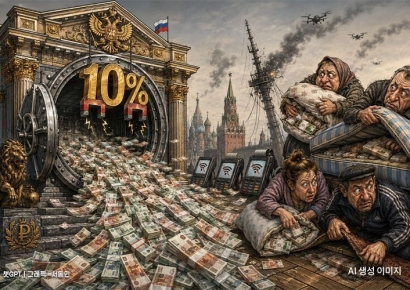 Despite 10% Annual Interest, Russians Pull Out Cash as Fears of Deposit Nationalization Spread
- "Monami Posts a 10 Billion Won Deficit, But Consistently Awards 4.7 Billion Won in Contracts to the Third-Generation Family Company"
- "Can We Trust These Cars?"... China Flooded with New Models Amid 'Rushed Car' Controversy
- Pop Mart's Overseas Sales Drop 11% as LABUBU Craze Fades, Growth Slows Sharply
- "Terrible Quality" Low-Budget Chinese Animation Makes Stunning $28 Million Box Office Turnaround
!["Transaction Volume Jumps 69% When Avoiding 'Triple Regulations'... Is the Unregulated Presale Market Also Experiencing a Balloon Effect? [Real Estate AtoZ]"](http://www.asiae.co.kr/news/img_view.htm?img=2026071009414841347_1783644108.gif)
© The Asia Business Daily. All rights reserved. Unauthorized AI training and use prohibited.