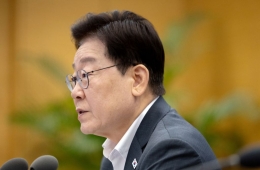
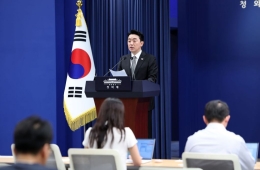
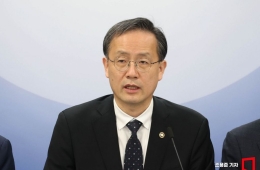
Ruling Party Judiciary Committee Members Debate Abolishing Supplementary Investigation Authority [Prosecution Supplementary Investigation Sparked by Jang Yunki] ③
"System Needed to Prevent Police from Destroying Evidence"
"Potential Side Effects... Further Deliberation Needed"
"Position Already Decided... Is There Any Point in Other Opinions?"
The Democratic Party of Korea is accelerating its legislative efforts for prosecution reform by beginning a review of an amendment to the Criminal Procedure Act, which centers on abolishing the prosecution's supplementary investigation authority. On July 10, the Democratic Party held a session of the First Bill Review Subcommittee of the National Assembly's Legislation and Judiciary Committee solely by itself and began deliberating the amendment to the Criminal Procedure Act. The previous day, the party proposed an amendment that would abolish both the prosecution’s direct investigation authority and supplementary investigation authority, consolidating investigative powers under the police.
The Democratic Party is working quickly with the aim of passing the bill by next month. Seo Youngkyo, chair of the Legislation and Judiciary Committee, stated, "We will make supplementary improvements so that prosecutors can sufficiently fulfill their role by requesting supplementary investigations," and added, "We will proceed swiftly while ensuring the content is fully developed." However, concerns are growing within the Democratic Party itself about abolishing the supplementary investigation authority. Hong Giwon, a Democratic Party lawmaker, announced on KBS Radio that he would propose a bill to make exceptions for the prosecution’s supplementary investigation authority in cases involving crimes against the socially vulnerable, civil cases, and cases nearing the statute of limitations. Other ruling party members of the judiciary committee are reportedly engaged in behind-the-scenes debates, particularly because of their inability to overlook the fatal investigative failures revealed in the so-called "Jang Yunki Incident" (the Gwangju high school girl murder case), where a police officer father aided in destroying evidence for his son, the murderer.
![Ruling Party Judiciary Committee Members Debate Abolishing Supplementary Investigation Authority [Prosecution Supplementary Investigation Sparked by Jang Yunki] ③](http://www.asiae.co.kr/news/img_view.htm?img=2026071011112441650_1783649483.jpg)
◆ Growing Calls for Caution Amid "Risks of Concentrating Power in the Police" = According to The Asia Business Daily’s interviews with nine members of the judiciary committee from the Democratic Party, despite the party's outwardly hardline stance, concerns abound over the police monopolizing investigations and the resultant potential harms. There were especially strong worries about gaps in protecting the criminal rights of vulnerable groups.
During the full committee session held on July 8, lawmaker Kim Namhee said, "We need a system to prevent the police from colluding with suspects or destroying evidence," and added, "When fair investigation cannot be expected due to circumstances, we need a system that allows another agency to take over the investigation." He pointed out a critical flaw in the bill to abolish supplementary investigation authority, stating, "Concentrating all powers in a single investigative agency is fundamentally very risky." Park Kyuntaek, also a former prosecutor, commented, "While there is consensus that abolition should be the principle, there are also calls for deliberation on whether to allow some exceptions," and added, "Concerns expressed by groups like Minbyun are very reasonable, and personally, I think a reexamination is necessary."
However, such calls for caution are running up against the party line, which emphasizes the need to meet the demands of its hardline supporters advocating for complete abolition of the supplementary investigation authority ahead of the party convention. The issue of "full abolition of supplementary investigation authority" has become a focal point in the competition for clarity among core supporters in the run-up to the convention.
One judiciary committee member, speaking on condition of anonymity, said, "There are concerns about re-examination even within the party, but most members are weary of the issue and prefer to just settle it quickly without further debate," and added, "I originally opposed the abolition, but given the current direction of the overall discussion, I wonder what purpose opposing it would serve." Another committee member remarked, "With the party and government already having settled on abolition, it is difficult to present a dissenting view."
◆ Hardliners Argue for "Punishment Under the Crime of Legal Distortion" = Hardline lawmakers argue that even the problems exposed by the Jang Yunki case can be attributed to prosecutors' media manipulation or can be addressed through post-facto punishment. Regarding alternatives to abolishing supplementary investigation authority, lawmaker Kim Seungwon cited the "crime of legal distortion," stating, "If someone destroys or conceals evidence related to a case, they can be punished under the crime of legal distortion." This view assumes that post-facto punitive provisions alone can prevent concealment or negligence during investigations. Committee chair Seo also dismissed concerns, saying, "Police officers who are found to be corrupt should simply be disciplined or replaced," while lawmakers Park Jiweon and Lee Sungyoon maintained, "This is a settled principle for the National Assembly and the government, and no other institutional alternatives are necessary."
There are also criticisms that the right to request supplementary investigation, as stipulated in the Democratic Party’s proposed amendment to the Criminal Procedure Act, lacks effectiveness. Lawmaker Kim Yongmin argued, "We can use systems like the complainant's appeal or the right to request supplementary investigation within 90 days," but Justice Minister Jeong Seongho countered, "Currently, the supplementary investigation request rate is about 10 percent, and there are no means of enforcement or control, so simply requesting supplementary investigation is insufficient."
Both inside and outside the legal community, many believe that relying on documents provided by the police to request supplementary investigation is not enough to prevent another "Jang Yunki" case. A current chief prosecutor commented, "In the Jang Yunki case, the records were sent as a simple murder, and in such cases, exculpatory evidence that could point to a different motive is omitted from the records," adding, "A prosecutor needs to meet people directly and take action to uncover what lies beneath, but if the supplementary investigation authority is abolished, it would be impossible to correct misunderstandings regarding legal interpretations."
Hot Picks Today
 "Is This Serious? Should I Go Back to Korea?"... New U.S. Internship Guidelines Put International Students on Edge
- "Driverless" Chinese Robotaxis to Run Freely on Seoul Roads: Up to 200 Vehicles as Early as 2028
- NPS Draws the Line on ‘Additional Payment’ Controversy: “Foreigners Who Paid Contributions Cannot Be Charged Higher Hospital Fees”
- "South Korea Excels" Even Mongolians, Renowned for Good Eyesight, Flock In... Chinese Spend 57.7 Billion, Japanese 28.5 Billion on K-Medical
- Lee Jaemyung Congratulates Yong Hyein on Birth of Child... 1990-Born Nominated as Gender Equality Minister [Profile]
The People Power Party strongly objected, arguing that abolishing the supplementary investigation authority could lead to repeated cases of downplayed, concealed, or poorly conducted investigations, as seen in the 'second Jang Yunki case.' The party is preparing an alternative bill and is also considering pursuing a parliamentary hearing to investigate the truth behind the 'Jang Yunki case.'
© The Asia Business Daily. All rights reserved. Unauthorized AI training and use prohibited.