"Red License Plates for Drunk Drivers?" Outrage Reignites Debate over 'Stigma Punishment'
Over 100 Deaths from Drunk Driving Accidents Each Year
"Need for Greater Awareness" vs "Public Punishment of Families"
Nearly 64,383 Drunk Driving Accidents in the Past Five Years
The proposal to require habitual drunk drivers to attach a distinctive "red license plate" to their vehicles, setting them apart from ordinary cars, is once again spreading online. The debate is intensifying, with supporters arguing that visible markings are necessary to prevent repeat drunk driving offenses, while opponents warn that such public punishments could stigmatize not only the driver but also their family members and passengers.

On July 10, Yonhap News reported that the "red license plate" debate has resurfaced in online communities. On July 7, a post titled "97% Support the Red License Plate" was uploaded to the online forum Bobaedream, garnering high views and recommendations. On the same day, similar posts were shared across other online communities, prompting a wave of comments. Some users responded strongly, saying, "There are hardly any people who have only driven drunk once," and "Let's implement this immediately. If I see one on the street, I'll point fingers."
Every Drunk Driving Accident Revives Debate over "Red License Plates"
This is not the first time the idea of introducing red license plates has been raised. The argument resurfaces online every few months. Each time a drunk driving incident occurs—or when a case involving a celebrity or politician is reported—demands for stricter penalties and the red plate proposal reemerge. Proponents emphasize that drunk driving is not a simple mistake but a crime that threatens the lives of others.

Officials from the Road Traffic Authority are conducting the 'Drink Driving ZERO Campaign' to raise awareness and caution against drunk driving. Photo by Hyunmin Kim
View original imageSupporters claim that special license plates would alert drivers to the seriousness of their actions, and make it easier for other drivers and the police to identify such vehicles, potentially helping to prevent repeat offenses. Some users have argued for even harsher measures, such as "permanently revoking licenses" and "banning offenders from ever driving again," suggesting that stronger sanctions are needed beyond red license plates.
Drunk driving accidents remain prevalent. According to the Korea Road Traffic Authority's Traffic Accident Analysis System (TAAS), there were 10,351 drunk driving traffic accidents in 2025 alone, resulting in 121 deaths and 16,304 injuries. Over the past five years, from 2021 to 2025, there were a total of 64,383 drunk driving accidents, 838 deaths, and 101,956 injuries. Arithmetically, an average of about 35 drunk driving accidents occurred per day during this period, with one death every two days.
The issue of repeat offenses in drunk driving also fuels public opinion for stricter penalties. According to data announced by the Samsung Fire & Marine Insurance Traffic Safety Culture Research Institute, which analyzed police and insurance statistics, the average annual repeat offense rate for drunk driving from 2015 to 2023 was recorded at 42.3%.

The issue of repeat offenses in drunk driving is also a factor that intensifies public calls for stricter penalties. According to data released by Samsung Fire & Marine Insurance's Traffic Safety Culture Research Institute, which analyzed police and insurance statistics, the average annual repeat offense rate for drunk driving from 2015 to 2024 was recorded at 43.9%. The Asia Business Daily
View original imageHowever, the claim circulating online that "97% of the public support red license plates" does not match the facts. In a 2023 survey by the Anti-Corruption and Civil Rights Commission, 5,211 out of 5,334 respondents—97.7%—did agree that "stronger and more comprehensive measures are needed to prevent drunk driving." However, this figure does not represent direct support for the introduction of red license plates. In the same survey, only 14.7% cited "attaching special license plates to drunk drivers' vehicles" as the most necessary policy for preventing drunk driving accidents. The most common response, at 25.7%, was "strengthening penalties such as criminal sanctions."
Calls for Tougher Penalties Grow, but Concerns over Human Rights and Effectiveness Remain
Opposition to the idea is also considerable. Critics argue that a system allowing people to identify a driver's criminal history simply by looking at their license plate amounts to public shaming or social stigmatization. Concerns are especially strong in cases where cars are shared by families or registered to companies, as family members or colleagues who have not committed any offense could also be subjected to negative attention. There are also criticisms regarding effectiveness, as drunk drivers could simply use vehicles registered under someone else's name to bypass the system.

The police have initiated a special crackdown on drunk driving in school zones around schools to mark the new semester. Photo by Hyunghan Heo
View original imageThis issue also relates to the "labeling theory" in criminology, which suggests that persistent negative labeling makes social reintegration difficult and may even lead to repeated deviant behavior. While there is consensus on the need to prevent repeat drunk driving offenses, some question whether public marking through license plates serves as an effective deterrent or merely as a channel for punitive sentiment.
Hot Picks Today
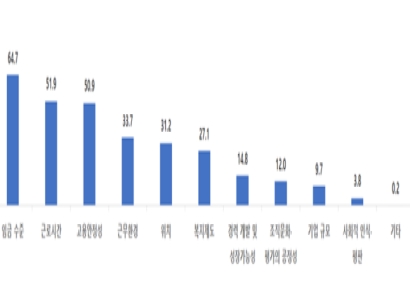 "Please Pay Me at Least 3 Million Won a Month": More Than Half of Young People Today Prioritize "Working Conditions" Over Company Size
- Selling Like Crazy Every Year... 30-Year-Old Hetbahn Takes on a New Challenge: Tastes Better Than "Mom's Home Cooking" [On-Site Report]
- "It's so popular you can't get it": 'Legendary liquor' returns after 11 years, causing a stir... 'Newtro' craze takes over convenience stores [How We Shop Today]
- "Hey, Lady, Teach Your Kids to Behave!" ... 300,000 Won in Cash and a Bodily Injury Claim Demanded Over Child's Door Ding
- Beachgoer Finds 'Plastic' That Turns Out to Be Perfume Ingredient Worth More Than Twice as Much as Gold
Experts agree that more effective measures are needed to eradicate drunk driving, but urge caution regarding the introduction of special license plates. Opinions have been raised that, before considering red license plates, priority should be given to measures such as strengthening criminal penalties, imposing driving restrictions on habitual offenders, mandating ignition interlock devices, enhancing education for repeat offenders, and revising sentencing standards.
© The Asia Business Daily. All rights reserved. Unauthorized AI training and use prohibited.





![[Market ING] KOSPI Seeks Rebound in Superweek Packed with Corporate Earnings and FOMC](https://cwcontent.asiae.co.kr/asiaresize/307/2026102514484873155_1792907327.jpg)