[Exclusive] "Invossa, a Drug Made from Kidney Cells, Not Cartilage"…First Victory for 139 Patients
Cell Mix-up in Korea’s First Gene Therapy Leads to First Trial Ruling After Seven Years
Seoul Central District Court Acknowledges Tumorigenic Risk from Mislabeling of 'GP2-293' Cells
Violations of Pharmaceutical Affairs Act and Labeling and
Patients have won their first court victory against the manufacturer in a damages lawsuit involving Invossa Kju (hereafter referred to as Invossa), a gene therapy for osteoarthritis. Invossa was initially approved as the first gene therapy in Korea, but its license was revoked after it was discovered that its main ingredient had been substituted.

Kolon Life Science's gene therapy for osteoarthritis, 'Invossa Kju'. Kolon Life Science
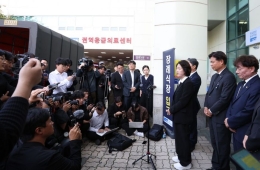
View original imageOn July 9, the 29th Civil Division of the Seoul Central District Court ruled entirely in favor of 139 patients who had received Invossa in their lawsuit for damages against Kolon Life Science and Kolon TissueGene. This first-instance ruling comes almost seven years after the lawsuit was filed in August 2019.
The court recognized that Invossa had a manufacturing defect, as the second component of Invossa was made not from cartilage-derived cells as listed at the time of approval, but from GP2-293 cells, which are kidney-derived and have tumorigenic properties that could potentially form tumors. The court determined that Kolon's actions—labeling the product as cartilage-derived, obtaining approval, and subsequently manufacturing and selling the product—constituted violations of the Pharmaceutical Affairs Act and the Act on Labeling and Advertising.
Accordingly, the court ordered the manufacturer to compensate for both property damages, such as medical expenses, and for emotional distress. The court also rejected the manufacturer's "development risk" defense, which claimed that the defect was undetectable given the scientific and technological standards at the time of manufacture.
Invossa received its product license from the Ministry of Food and Drug Safety in July 2017 as Korea's first gene therapy. However, in 2019, it was confirmed that some of its main ingredients were kidney-derived cells, not as approved. As a result, the Ministry first ordered a halt to manufacturing and sales in April of that year, and then revoked the product license in July. The plaintiffs in this lawsuit are patients who received Invossa between December 2017 and March 2019; they are currently subject to a 15-year long-term follow-up study.
The Invossa damages lawsuits have proceeded as three separate cases, depending on the time of legal representation, with a total of about 900 patient participants. This ruling is the first for one of those cases, concerning 139 patients. The other two cases are still underway at the same court in the first instance.
Because this is a first-instance judgment, it is not final and may be appealed by the defendants, which would move the case to a higher court. The plaintiffs are set to review the decision after receiving the written judgment today.
Hot Picks Today
 "I Ate It Often Because It Tasted Good"... This Eating Habit Linked to 40% Higher Odds of Asymptomatic Cerebrovascular Damage
- "She's 7..." President Lee Left Speechless, Posthumously Awards Medal to Firefighter Killed in the Line of Duty
- Buying Demand Spreads Beyond Gangnam... Transaction Values Soar in Gangdong and Nowon [Real Estate A to Z]
- "We've gone this far to save on lunch"... Where office workers are flocking instead of restaurants
- "Can They Really Be This Sweet?"... The Story Behind Convenience Store Honey Sweet Potatoes [Foodie X-Files]
Um Taeseop, an attorney at OhKims Law & Company representing the plaintiffs, stated, "The court has taken seriously the anxiety and suffering endured for years by patients who trusted in the safety of their treatment. I am grateful to the patients who stayed with us to the end, and we will continue to do our utmost in the remaining procedures and related cases."
© The Asia Business Daily. All rights reserved. Unauthorized AI training and use prohibited.

!["Please, Just Take Them Off" - They Made It All the Way to Bed... Then Fecal Bacteria Struck [Deep Scroll]](https://cwcontent.asiae.co.kr/asiaresize/307/2026101610053063338_1792112730.png)