"Simple Editing Exempt from AI Labeling Obligation"... Kim Woo Young Proposes Amendment to AI Promotion Framework Act
Woo Young Kim, a member of the Democratic Party of Korea, announced on July 9 that he has sponsored a partial amendment to the “Basic Act on the Promotion of Artificial Intelligence and the Establishment of a Trust-Based Environment,” which aims to reasonably revise the labeling requirements for outputs generated by generative artificial intelligence (AI).
Under current law, when providing generative AI or products and services using generative AI, it is required to indicate that the result was created by generative AI. This also applies to audio, images, and videos that are difficult to distinguish from reality, which must be notified or labeled as such.

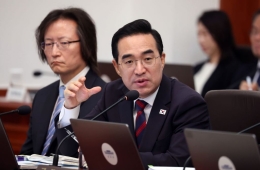
Woo-young Kim, Member of the Democratic Party of Korea. Photo by the Office of the Member.
View original imageHowever, there have been concerns that even a simple level of editing assistance—such as background generation, color correction, or screen organization—is subject to mandatory labeling, which could impose an excessive burden on creators, content providers, and industry sites.
Accordingly, the amendment allows for exceptions to the labeling requirement when generative AI is used only for standard editing assistance or when it does not substantially alter the data or meaning provided by the user.
Hot Picks Today
 "Should Get at Least 45 Million Won Salary" "Can't Give Up on Large Companies"... Young People Say There Are No Places to Apply
- Unemployment Benefits to Drop from 1.98 Million to 1.76 Million Won per Month...Employment Insurance Premium Rate to Rise from 1.8% to 2%
- Packed Crowds with “It’s So Cheap!”... Japan Travel by UK Millennials & Gen Z Surges 25% in a Year
- "Only One Restroom Break per Semester During Class"…Controversy Over Chinese High School Regulations
- When "Cutting Down Reserved Tents" Brings Relief: Local Governments Take Action Against Escalating 'Reserved Tent' Problem
Kim stated, “Transparency regarding AI-generated content is necessary, but imposing a uniform labeling requirement even on simple corrections or edits does not align with the realities of creation and industry. We must not stifle legitimate creation and service innovation that utilize AI as a tool.”
© The Asia Business Daily. All rights reserved. Unauthorized AI training and use prohibited.