Korean Scientists Worldwide Declare "Beyond Brain Drain to Brain Circulation in the AI Era"
2026 World Conference of Overseas Korean Scientists and Engineers Concludes
"Seoul Declaration 2.0" Adopted
Presents Future Strategies for Global Cooperation, AI, and Science and Technology Diplomacy
Korean scientists and engineers active around the world have declared a joint vision to transform the current "brain drain" into "brain circulation" in the era of AI. Rather than merely seeking to retain overseas talent, the plan is to leverage cross-border researcher networks as a new growth engine for Korea's scientific and technological competitiveness.
The Ministry of Science and ICT announced on July 9 that the "2026 World Korean Scientists and Engineers Conference," co-hosted with the Korea Federation of Science and Technology Societies (KOFST) and 20 overseas Korean scientists and engineers associations, concluded on July 8.

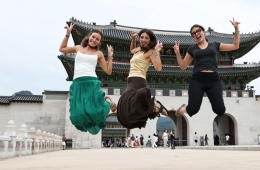
Commemorative photo of the Overseas Korean Scientists and Engineers Association. Provided by the Korea Federation of Science and Technology Societies.
View original imageThis event, held in celebration of the 60th anniversary of KOFST, was attended by more than 1,040 scientists and engineers from Korea and abroad, who discussed innovation in science and technology in the AI era, international cooperation, global talent circulation, and strategies for science and technology diplomacy.
"From Brain Drain to Brain Circulation"
The key outcome of the conference was the adoption of the "Seoul Declaration 2.0." The presidents of the 20 overseas Korean scientists and engineers associations issued a joint declaration, pledging to recognize the mobility of Korean scientists and engineers worldwide as "brain circulation" rather than "brain drain," and to foster it as a new growth axis for Korea's scientific and technological competitiveness.
The declaration outlines four practical tasks: ▲ Consolidation of cutting-edge scientific and technological capabilities ▲ Building a global talent circulation ecosystem ▲ Responding to the climate crisis and nurturing future talent through safe and inclusive AI ▲ Leading the establishment of international science and technology norms and cooperation frameworks.
KOFST explained that it was especially meaningful to officially reframe the overseas activities of young researchers as assets that circulate knowledge and research networks, rather than as losses.
Oh-Nam Kwon, President of KOFST (and professor at Seoul National University), stated, "The Seoul Declaration 2.0 promises to transform the era of worrying about talent leaving the country into one where the mobility of Korean scientists and engineers across borders becomes an asset for Korea," adding, "We will expand joint research, talent exchange, and policy collaboration so that Korea advances beyond simply following international science and technology norms to actively shaping them together."
In-depth Discussions on Science and Technology Strategies in the AI Era
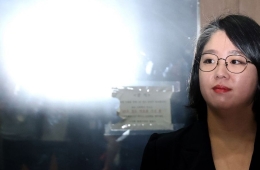
The conference also featured wide-ranging discussions on innovation strategies for science and technology in the AI era. In a keynote speech, Cha Mi-young, Director of the Max Planck Institute for Security and Privacy in Germany, introduced cases of using AI and data science to address misinformation, poverty, and disasters, emphasizing that "it is time to consider how AI can contribute to the happiness of humanity."

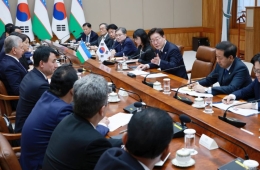
Cha Mi-young, Director of the Max Planck Institute for Security and Privacy in Germany, is delivering the keynote speech. Provided by the Korea Federation of Science and Technology Societies.
View original imageDuring the talk concert, attendees agreed that as next-generation technologies such as AI for Science, physical AI, and quantum science proliferate, human creativity, the ability to define problems, and collaboration skills will become increasingly important.
In academic and policy sessions, participants discussed future response strategies on topics such as AI-based research innovation, biohealth, smart agriculture, science and technology diplomacy, deep tech startups, and nurturing core talent.
This year, for the first time, public lectures open to the general public and youth were organized, introducing physical AI and future robotics technologies, thereby expanding the event beyond a researcher-focused gathering into a science culture festival for public participation.
Strengthening the Role as an International Cooperation Platform
During the event, an exhibition was also held to showcase, in one place, international joint research initiatives by government and public institutions, programs to attract outstanding overseas researchers, global technology commercialization efforts, and overseas expansion support programs.
Meanwhile, this year's Korea's Top Scientist and Engineer Award went to Professor Jinwoo Cheon of Yonsei University, who pioneered the field of nano-medicine.
Hot Picks Today
 You Can Receive Monthly Payments Like a Pension Without Selling Your Home... The Local Mutual Growth Housing Pension That Provides 1.69 Million Won Each Month
- "Unimaginable in Korea"...Koreans Surprised by Secondhand Smoke in Japan and China Restaurants
- "Special Skill: Admitting Mistakes"... The Unexpected Edge That Helped Job Seekers Tired of AI Resumes Succeed
- "Canceled After Five Days and Lost 770,000 Won"... Hit by Steep Fees After Pressing the Cancel Button
- "I Thought She Was an Ordinary SKT Employee... The Unexpected Identity of Nongshim's Third-Generation Bride"
President Kwon remarked, "This conference connected the capabilities of Korean scientists and engineers active worldwide and presented a new direction for global cooperation and talent circulation in the AI era," adding, "Going forward, we will further expand joint research and international cooperation as a global platform connecting Korean scientists and engineers worldwide."
© The Asia Business Daily. All rights reserved. Unauthorized AI training and use prohibited.

![How Did Tacos Come to Have Two Shells [Delicious Stories]](https://cwcontent.asiae.co.kr/asiaresize/307/2026091410392626963_1789349966.jpg)