Park Hongkeun: "Addressing K-Shaped Polarization with Future Response Fund... Right Time for Grant Reform"
National Assembly Financial and Economic Planning Committee Work Report on July 9
Hongkeun Park, Minister of Planning and Budget, stated on the 9th, "By establishing a Future Response Fund that invests additional tax revenue into regional talent—the next-generation growth engines such as youth—we will sufficiently and stably secure resources to create future growth momentum and to address K-shaped polarization." He further emphasized, "Now is the right time to reform the Local Education Finance Grant in response to the declining school-age population," adding, "We must use this opportunity to resolve the instability of the grant system."

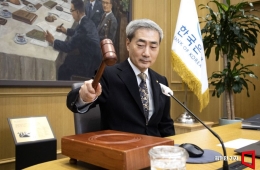
Hongkun Park, Minister of Planning and Budget, is responding to lawmakers' questions at the 2nd plenary meeting of the Budget and Economic Planning Committee held at the National Assembly on the 9th. Photo by Yonhap News
View original imageMinister Park attended the National Assembly’s Planning and Finance Committee work report on this day and explained, "To enable such active fiscal investment, it is not just about how much budget is spent, but also about the outcomes achieved."
He continued, "We will comprehensively re-examine all fiscal projects from a zero-base, boldly reduce or abolish projects that show no results, and fundamentally reform mandatory expenditures such as education grants to reflect the changed environment."
Minister Park also asserted, "The semiconductor super-boom and the AI (artificial intelligence) revolution are once-in-a-lifetime opportunities facing Korea," and added, "To seize this golden time, which may never come again, it is time for the people, the National Assembly, and the government to join hands and concentrate the nation’s capabilities."
Regarding the procedure to reform the Local Education Finance Grant, he explained that he would narrow differences with the Ministry of Education—the main authority—and submit the final amendment proposal to the National Assembly. Minister Park held a public debate lasting about an hour and a half with Minister of Education Choi Kyojin the previous day. During the debate, Minister Park argued that the current rigid system, which allocates 20.97% of domestic tax revenues to education grants, leads to fiscal inefficiency amid a sharply declining school-age population and thus must be reformed. In contrast, Minister of Education Choi Kyojin expressed concerns about a "one-sided economic logic that says if the number of children decreases, the budget must also decrease," and opposed changes to the distribution method or rate of education grants.
Hot Picks Today
 "The Transfer Failed, but 'Ding Dong' Money Came In"... 32.5 Billion Won Financial Incident at Toss Bank
- "They Wouldn't Give It a Second Look When Offered to Ancestors"... MZ Goes Wild for 80-Year-Old Ceremonial Liquor as a Household Must-Have
- Pinky swear: "I'll become a female soldier"... An elementary school student's moving letter of support from 11 years ago
- "Even If He's Handsome, That's a Bit Much"... The "Behavior" That Turns Off 7 in 10 Women
- The 'Hangover Legend' That Had You Waking Up the Day After Tomorrow Returns After 11 Years... Lee Sunmin's Captain Q Sells Out

Hongkeun Park, Minister of the Office for Government Policy Coordination, is reviewing documents at the 2nd plenary session of the Planning and Finance Committee held at the National Assembly on the 9th. Photo by Yonhap News Agency
View original imageMinister Park recalled, "There have been many changes in the educational environment. Back in 2016, when I was a first-term lawmaker, I actually proposed a bill to increase the domestic tax linkage rate to 22%." He reflected, "Looking back, I realize that my perspective at the time may have been shortsighted and limited." He added, "Not just as Minister of Planning and Budget, but even during my time as a lawmaker, I was among those who argued that this issue needed to be addressed either as a matter of self-reflection or to adapt to new changes. Therefore, I believe now is the right time." Minister Park also pointed out that the current method, which is linked to domestic tax revenues, could result in no grants being provided at all when domestic tax revenues are low, stressing that now is the right opportunity to resolve the instability of the grant system.
© The Asia Business Daily. All rights reserved. Unauthorized AI training and use prohibited.