"When Prices Drop, It's an Opportunity": China Scoops Up Gold for 20 Consecutive Months [Weekend Money]
People’s Bank of China Buys Gold for 20 Consecutive Months
Accelerating Acquisition of Strategic Assets During Price Corrections
As China expands its reserves of strategic assets such as gold and crude oil, interest is growing in commodity prices and related investment assets. Analysts suggest that China’s strategy of increasing purchases during price corrections could provide downside support for precious metals and energy assets.
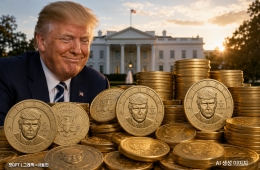
Recently, Jeong Jeong-Young, a researcher at Korea Investment & Securities, stated, “As of last month, the People’s Bank of China held 75.44 million ounces of gold (an increase of 480,000 ounces from the previous month), marking the 20th consecutive month that China has expanded its gold reserves.” Looking at the recent monthly increases: March saw 160,000 ounces, April 260,000 ounces, and May 320,000 ounces. The increase in June was the largest since October 2023, when it reached 740,000 ounces.
!["When Prices Drop, It's an Opportunity": China Scoops Up Gold for 20 Consecutive Months [Weekend Money]](http://www.asiae.co.kr/news/img_view.htm?img=2026070913481040368_1783572490.png)
It is expected that China’s expansion of gold reserves will continue as a long-term trend. There is both justification and room for further expansion. As of last year, gold accounted for only about 8% of China’s foreign reserves, far below the global central bank average of 27%.
Researcher Jeong commented, “Growing global trade uncertainty, heightened geopolitical risks, and concerns about confidence in the dollar are all factors increasing global demand for gold,” adding, “In particular, China’s strategy can be seen as part of its efforts to accelerate de-dollarization and strengthen the position of the yuan.”
Until now, China has significantly increased its gold purchases during price corrections. Last year, China’s net increase in gold reserves was 860,000 ounces, but in the first half of this year alone, reserves have increased by 1.29 million ounces (about 36.6 tons). As gold prices, which surged by 56% last year, have declined by about 7% this year, China has moved to buy aggressively.
The same is true for crude oil. Researcher Jeong pointed out, “China’s fluctuations in crude oil imports are often interpreted as reflecting domestic economic conditions, but given that the structural shift away from oil is accelerating, it is difficult to evaluate these changes in imports solely as an index of domestic demand,” adding, “It is more reasonable to interpret this as a strategic move to secure strategic petroleum reserves.”
Hot Picks Today
 "Are You Okay, Dad? Brother?"... 1 in 18 Men Deficient, U.S. Military to Begin Annual Screenings
- "What Did He See?"... Warren Buffett Sells Stocks and Piles Up Cash
- "Home-Cooked Meals Were the Only Affordable Option, but Now Even Hetbahn and Dumplings Are Going Up"
- "One Year from Now Will Be Worse Hell"... 9 Out of 10 Japanese Fear 'Runaway Inflation'
- "How Can So Many Fit on One Boat?"...Crowds in Red: What Is This?
Researcher Jeong further emphasized, “China’s push to expand its strategic asset reserves is clear,” and added, “It is particularly noteworthy that China has increased its gold holdings whenever prices have declined, and that rebounds in precious metals stocks have repeatedly occurred during these periods.”
© The Asia Business Daily. All rights reserved. Unauthorized AI training and use prohibited.