Bank of Korea: "Limited Possibility of a Sustained Downturn in Domestic Stock Prices"
Bank of Korea Reports to National Assembly’s Planning and Finance Committee
The Bank of Korea recently commented on the recent decline in domestic stock prices, stating that “the likelihood of a shift to a sustained downward trend is limited.”
In a work report submitted to the National Assembly Planning and Finance Committee on July 9, the Bank of Korea explained, “Earnings forecasts for semiconductor companies continue to be revised upward, and the government is making efforts to improve the capital market system.”
Regarding the recent movement of the KOSPI, the Bank assessed, “Since May, stock prices have experienced significant fluctuations due to foreign investors realizing gains and portfolio rebalancing at the end of the half-year, among other factors.”
The Bank went on to forecast, “Going forward, stock prices are likely to remain highly volatile, influenced by concerns related to the artificial intelligence (AI) industry, the monetary policy stance of major economies, and changes in global capital flows.”
However, the Bank emphasized that “the global semiconductor market is expected to maintain an expansionary trend for a considerable period, driven by the growing range of AI applications and increased investment in related infrastructure.”
This analysis takes into account increased demand for computational power due to AI proliferation, continued investment by major big tech companies seeking to secure market leadership, and constraints on supply expansion due to the high level of process complexity.
From November of last year to February of this year, and from March to early July, the KOSPI rose by 52.0% and 29.5%, respectively, with gains led by the semiconductor sector. During the same periods, the semiconductor industry rose by 95.7% and 72.1%, respectively. In contrast, from March to early July, sectors such as defense (-1.1%), shipbuilding (-13.7%), automotive (-22.7%), and nuclear power (-25.3%) showed limited room for further gains.
Hot Picks Today
 Wealth Surpasses 20 Quadrillion Won... The Super-Rich Score Big, But Where Did the Money Flow?
- Trusted the 'Helper' and Opened the Door... She Returned and Stole Nearly 60 Million Won
- After Adding It During the Crash, Investors Cheer... Which ETF Has Steadily Climbed? [Weekend Money]
- "Help Us"... Novice Hikers Underestimate 4,000m Trail, Ultimately Call for Rescue
- "Just Drinking to Lift Your Mood"...Unexpected Warning: Raises Risk of Cancer Death
However, the Bank of Korea noted, “Adjustments in the financial market due to concerns over AI profitability, a reduction in real investment by big tech companies, and energy bottlenecks are downside risks.”

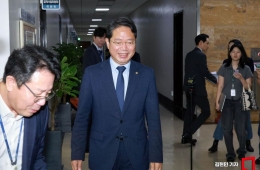
Shin Hyun-song, Governor of the Bank of Korea, is delivering a greeting at the 2nd plenary meeting of the Planning and Finance Committee held at the National Assembly on July 9, 2026. Photo by Hyunmin Kim
View original image© The Asia Business Daily. All rights reserved. Unauthorized AI training and use prohibited.