[Homeplus, Aftermath]③"Don't Follow Coupang"... The Survival Formula for Major Hypermarkets
Regulatory Reform Is Essential, Along With Enhanced Products and In-Store Experiences
Experts: "Large Supermarkets Must Strengthen Unique Advantages Over Coupang"
"The golden time to save large discount stores has already passed."
An executive at a major domestic hypermarket commented on July 10 while analyzing the crisis facing Homeplus, which is on the verge of liquidation. The executive explained that the retail market has changed rapidly, but more than a decade of business regulations have caused large retailers to lose their competitiveness. Experts also suggested that in addition to updating retail regulations to reflect changing times, major hypermarket chains must invest in strengthening both their online and offline competitiveness. They pointed out that regulatory improvement is only the minimum condition for creating an environment in which companies can reinvest, and that the key to survival lies in making stores that consumers want to return to.
![[Homeplus, Aftermath]③"Don't Follow Coupang"... The Survival Formula for Major Hypermarkets](http://www.asiae.co.kr/news/img_view.htm?img=2026041716522430745_1776412344.jpg)
Major Changes in the Retail Market Over the Next 5 Years... Regulations on Hypermarkets Must Be Eased
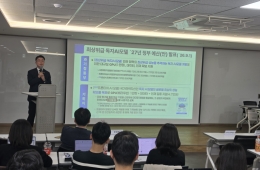
The top policy priority is easing business regulations. Mandatory closure days and operating hour limits for large retailers, introduced in 2012, were implemented before the full-scale rise of online retail. However, as the market has shifted online, driven by platforms like Coupang, and with new trends such as 'AI agent commerce'—where artificial intelligence handles everything from product search to purchase—these regulations remain stuck in the past. Yeonseung Jung, President of the Korean Marketing Association and a professor at Dankook University, said, "The market has moved online, but regulations on large discount stores remain in the past," adding, "We need to redesign regulations so that online and offline retailers can compete under the same conditions."
Chunhan Cho, a professor at Gyeonggi College of Science and Technology, emphasized, "Recently, large hypermarkets are increasing the proportion of rental stores, making their business model more like real estate than retail," and "the reason we need to amend the mandatory closure regulation is also linked to the survival of small merchants operating within these stores."
Since the beginning of this year, the government and the ruling party have formed a working group to discuss ways to improve regulations on large hypermarkets. The National Assembly is reviewing amendments to the Distribution Industry Development Act to allow overnight delivery of online orders. However, industry insiders agree that in order for these policy changes to be effective, restrictions on new store openings and mandatory closures must also be lifted, not just those on overnight delivery. To use stores as overnight delivery hubs, large investments are needed in automation equipment, logistics systems, and additional staff, but under the current regulatory environment, it is difficult to recoup these investments.
Professor Chunhan Cho also noted, "Sundays are a core business day for large hypermarkets, with sales 15–50% higher than on weekdays. Mandatory closures not only reduce daily sales, but also lower inventory turnover for fresh foods, while refrigeration and freezing equipment continue to run, resulting in only additional costs and reduced operational efficiency." He added, "Regulatory relaxation should be approached from the perspective of improving operating efficiency and securing investment capacity, rather than simply expanding sales."
![[Homeplus, Aftermath]③"Don't Follow Coupang"... The Survival Formula for Major Hypermarkets](http://www.asiae.co.kr/news/img_view.htm?img=2026071009373641324_1783643855.jpg)
Currently, out of 351 large hypermarket stores nationwide, 218 stores (62%) are forced to close on two Sundays each month. About 60% of the approximately 1,600 supermarket chains (SSMs) across the country are subject to the same regulations, and both hypermarkets and SSMs are restricted from operating between midnight and 10 a.m.
However, experts also point out that lifting regulations alone will not automatically restore competitiveness. Choongryul Park, a researcher at the National Assembly Research Service, explained, "Abolishing mandatory closures is not easy in reality, as it is intertwined with issues involving traditional markets, small merchants, and labor. Even if some regulations are relaxed, it may provide some breathing room, but it will not be enough on its own to restore the competitiveness of large discount stores. Strategies and innovation tailored to changes in the retail environment must be pursued together."
There are also calls for flexible operation that reflects local conditions, rather than uniform regulatory changes. Jin-guk Lee, Director of Fiscal Investment Evaluation at Korea Development Institute (KDI), said, "Whether mandatory closure days fall on weekends or weekdays should be decided autonomously through discussions between local governments and merchants. Even under the current law, it is possible to switch closure days to weekdays if regional stakeholders agree, but many local governments are not actively utilizing this."
Customer-Centric Management and Looking Overseas
Experts agree that the key to success is creating stores that consumers want to visit again. Rather than simply imitating online services, offline stores need to strengthen experiences that only they can offer. Emart is focusing on food competitiveness and enhancing its grocery offerings, while Lotte Mart is expanding food-specialty stores and improving store efficiency. Further investment in online operations could end up being a futile effort.
A Daiso representative noted, "The reason Olive Young and Daiso perform well is because they've created brands and experiences preferred by younger generations," adding, "For large hypermarkets to regain competitiveness, they should focus more on innovating offline stores rather than competing online."
Myeonggyun Jang, a professor at Hoseo University's School of Business Administration, emphasized, "The future will be determined by how much offline retailers can offer experiences that e-commerce cannot. Increasing competitiveness in fresh foods, strengthening experiential spaces, kids' cafes, and cultural classes—content closely connected to the local community—will be key to attracting customers back to stores."
Another lesson from the Homeplus situation is the importance of management systems. Professor Jang pointed out, "The biggest problem was focusing on recouping investment rather than long-term management that understands the retail business. The hypermarket industry is not one that produces results in the short term; it requires ongoing investment and expertise."

A representative of the Korean Chamber of Commerce and Industry stated, "To survive amid the rise of single-person households and intensifying online competition, regulatory improvements must be accompanied by securing investment capacity." The representative added, "Large hypermarkets do not need to simply follow the online model. Rather than trying to imitate online platforms, strengthening unique offline experiences—such as fresh foods and family-oriented shopping—should be the survival strategy for large hypermarkets."
Hot Picks Today
![An Apartment Once Worth 400 Million Won Nears 1 Billion... "Still Worth It" as 1990s-Born Pangyo Workers Flock to Gyeonggi Gwangju [Report]](https://cwcontent.asiae.co.kr/asiaresize/93/2026100211322949134_1790908349.jpg) An Apartment Once Worth 400 Million Won Nears 1 Billion... "Still Worth It" as 1990s-Born Pangyo Workers Flock to Gyeonggi Gwangju [Report]
An Apartment Once Worth 400 Million Won Nears 1 Billion... "Still Worth It" as 1990s-Born Pangyo Workers Flock to Gyeonggi Gwangju [Report]
- Suddenly Called Out During Class, Awarded $100,000 as Students Cheer in the Gym
- "After a Dream About Feces, Bought a Lottery Ticket and Won 20,000 Won... Scratched Again and Hit a 2 Billion Won Jackpot"
- "Did Dad Go Again?" After One Visit... Casino Overindulgence Among Seniors Raises Red Flags
- "What Is This?" Jensen Huang Amazed... Korea's Iconic 'Health Gift' Captivates Foreigners [K-Holic]
It was also pointed out that relying solely on the domestic market imposes limits on the growth of the hypermarket industry. With the domestic market shrinking due to population decline and stagnant consumption, expanding into overseas markets is essential. Director Lee emphasized, "Strengthening domestic competitiveness is important, but expanding the overall market size is even more critical. Rather than focusing solely on competition with online players, large retailers should actively pursue opportunities in overseas markets such as China and Southeast Asia." He added, "The government also plans to support companies' overseas market expansion for the next three years through programs aimed at helping retail companies develop international sales channels, so companies need to proactively target foreign markets as well."
© The Asia Business Daily. All rights reserved. Unauthorized AI training and use prohibited.