Household Loan Growth Slows Amid Crackdown on Debt-Fueled Investing... Government Urges Samsung to Tighten In-House Loan Controls
Household Loans Increase by 8.3 Trillion Won in June
Mortgage Loans Rise, Unsecured Credit Loans Decline
Samsung’s 1.5% In-House Loan Prompts Call for Stronger Corporate Self-Regulation
The banking sector has strengthened its management of credit loans, which had surged due to stock investments made with borrowed money, known as 'Bittu' in Korea. As a result, the growth in household loans last month slowed slightly. However, the increase in mortgage loans was larger, driven by the expansion of housing transactions. Financial authorities are tightening lending practices across the board, urging companies that provide in-house loans to employees—including those at Samsung Electronics—to impose restrictions on housing price and size, as well as to require principal and interest repayment in installments.

According to the "June Household Loan Trends" released by the Financial Services Commission and the Financial Supervisory Service on July 9, household loans across all financial institutions increased by 8.3 trillion won last month compared to the previous month. This is a decrease of 1 trillion won from the previous month's increase of 9.3 trillion won. Compared to May, when the increase was three times higher than the previous month, the growth has partially stabilized.
Breaking it down, mortgage loans increased by 4.5 trillion won, up from 4 trillion won the previous month, due to a recent uptick in housing transactions and the execution of previously approved group loans. In contrast, other loans—which had seen a significant increase in credit loans last month—rose by 3.7 trillion won, but this was a smaller increase than the previous month's 5.3 trillion won. This was largely due to the decrease in the amount of credit loan growth, from 3.6 trillion won in May to 2.6 trillion won in June.
By sector, household loans at banks increased by 7.6 trillion won, up from 6.9 trillion won the previous month. Bank-originated mortgage loans rose by 2.9 trillion won and policy loans increased by 1.4 trillion won, which are increases of 800 billion won and 400 billion won, respectively, compared to the previous month. On the other hand, other loans increased by 3.3 trillion won, which is a decrease of 400 billion won in the growth rate compared to the previous month.
In the secondary financial sector, household loans increased by 700 billion won, a significant slowdown compared to the previous month's increase of 2.4 trillion won. This was due to a slowdown in mutual finance loans and a shift to a decrease in loans at credit-specialized financial companies and savings banks. Meanwhile, the growth in insurance sector loans expanded slightly.
On this day, as authorities reviewed household loan trends for the first half of the year and risk factors for the second half, they called for stronger voluntary management of in-house loans by companies. This measure comes amid concerns that Samsung Electronics' recent decision to provide up to 500 million won per employee at an annual interest rate of 1.5% for home purchases could stimulate the real estate market.
Shin Jinchang, Secretary General of the Financial Services Commission, stated, "While it is difficult to directly apply household loan regulations to in-house loans, excessive in-house lending can increase instability in the housing market. We hope to see more widespread voluntary management efforts by companies, such as establishing first-priority mortgage rights, requiring principal and interest repayment in installments, restricting loans to multi-homeowners, limiting high-priced housing, and imposing housing size restrictions."
Financial authorities have also repeatedly urged all financial institutions to strengthen their management of household loans and credit loan risks. This is based on the assessment that, following the end of the temporary suspension of capital gains tax in May, the impact of increased housing transactions could lead to a continued rise in mortgage loans over the next two to three months.
Hot Picks Today
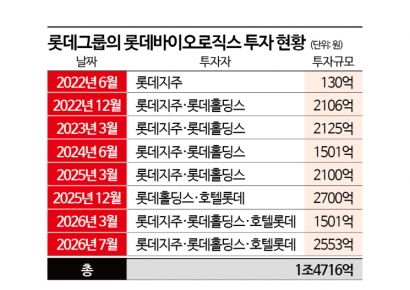 "Just Two Days After the Chairman's Visit"... Lotte Injects Another 250 Billion Won 'Here'
- 83% of Highway Fatalities Linked to This 'Habit'... Check This Button When Driving in Summer
- "How Many Days Off Does Your Company Give?"... Only Half Receive Vacation Allowances: The Reality of Summer Leave for Korean Workers
- "French Team Without Any French Players"... Former Spanish Prime Minister Slammed for Racist Remarks
- Corrective Orders Issued to Plastic Surgery Clinics for Elaborate 'Fake Reviews' Used as Deceptive Ads

Secretary Shin added, "Since the volatility of other loans in the secondary financial sector—including insurance policy loans and card loans—has been increasing recently, all financial sectors, including banks, insurance companies, credit-specialized financial companies, and mutual finance institutions, must further strengthen their efforts to manage household loans. Proactive risk management is needed to prepare for the potential increase in credit loan volatility," he emphasized.
© The Asia Business Daily. All rights reserved. Unauthorized AI training and use prohibited.