Rapid Labor Structure Changes Driven by AI and GX... Additional 600 Billion Won Allocated to 'National Growth Fund'
82% of Manufacturers Not Utilizing AI in Management
High-Carbon Manufacturing Hubs Hit Hard by Climate Crisis
New Designation of Just Transition Special Zones
The government has unveiled the “Basic Plan for Employment Stability in Industrial Transition” based on the judgment that the simultaneous progression of artificial intelligence (AI), carbon neutrality (GX), and low birth rates and aging population has brought about unprecedented structural changes in industries and the labor market. The transition process carries both the risk of job displacement and the opportunity for job creation, but delayed responses or insufficient preparation are highly likely to lead to employment shocks.
Anxiety at the field level is also substantial. According to a survey by the Korean Chamber of Commerce and Industry, eight out of ten manufacturing companies (82.3%) have not yet adopted AI in their operations, and 74% cite investment costs as a significant burden. The proportion of small and medium-sized enterprises (SMEs) reporting cost burdens is especially high at 79.7%, far exceeding that of large corporations (57.1%), highlighting a serious gap. As generative AI spreads, the replacement of simple and repetitive work is becoming a reality, threatening a sharp decline in entry-level jobs for young people. Efforts to address the climate crisis are also resulting in concentrated shocks to specific high-carbon manufacturing hubs such as Chungnam, Yeosu, Ulsan, and Pohang. With the scheduled closure of 40 coal-fired power plants by 2040, starting with Taean Power Plant Unit 1, there is growing concern about job loss among skilled, middle-aged contract workers who have been responsible for maintenance and operation support. In the automobile manufacturing sector, the burden of maintaining employment is intensifying due to decreasing demand for internal combustion engine parts.
In this plan, the government has set a direction to monitor changes in the field in real time, develop targeted strategies for each sector, guarantee opportunities for all, and share the fruits of growth. The government will preemptively designate regions showing signs of employment and regional economic crises stemming from industrial transition, such as the closure of coal-fired power plants, as “Just Transition Special Zones.” These special zones will receive support packages for employment stability, new industry development, and administrative and financial assistance. Overseas, Germany has decided, under its Coal Regions Act, to provide up to 40 billion euros by 2038 to support the infrastructure and development of new industries in coal regions. The European Union will mobilize approximately 55 billion euros from its Just Transition Fund between 2021 and 2027 to support regions upon approval of their just transition plans. Poland is establishing separate just transition plans for each of its six coal regions, in addition to its national plan.

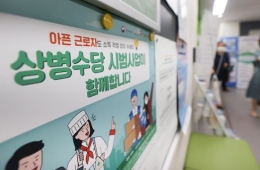
Kim Young-hoon, Minister of Employment and Labor, is presiding over the "Field Meeting with Office Workers" held on the 4th at an outdoor plaza in Gasan Digital Complex, Geumcheon-gu, Seoul. Photo by Yonhap News
View original imageThe government also plans to ensure that the benefits of new industry growth are shared by the public by adding another 600 billion won to the existing 600 billion won “Public Participation National Growth Fund,” which is open to general citizens. It aims to expand win-win renewable energy models nationwide, such as the “Sunlight Income Village” in Guyang-ri, Yeoju, where rural residents install solar power facilities on unused land and share in the development profits. In addition, the government intends to significantly expand the number of jobs in social enterprises, which serve as a buffer zone (third sector) to absorb employment shocks from industrial transition, to around 90,000 by 2030. When workers take over struggling companies, the government will provide special certification for conversion to social enterprises and support for labor costs.
Hot Picks Today
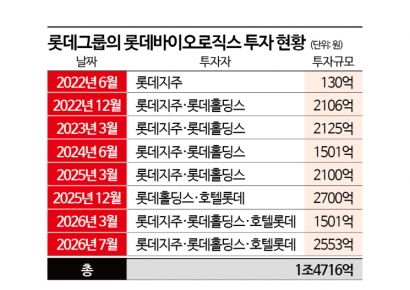 "Just Two Days After the Chairman's Visit"... Lotte Injects Another 250 Billion Won 'Here'
- 83% of Highway Fatalities Linked to This 'Habit'... Check This Button When Driving in Summer
- "How Many Days Off Does Your Company Give?"... Only Half Receive Vacation Allowances: The Reality of Summer Leave for Korean Workers
- "French Team Without Any French Players"... Former Spanish Prime Minister Slammed for Racist Remarks
- Corrective Orders Issued to Plastic Surgery Clinics for Elaborate 'Fake Reviews' Used as Deceptive Ads
The government is also actively reviewing measures to socially compensate for temporary income gaps and wage reductions for workers who are inevitably forced to change jobs or relocate during the transition process. The newly established “Industrial Transition Employment Stability Committee” will serve as a hub to flexibly adjust the plan each year based on feedback from the field. In addition, the Ministry of Employment and Labor will operate a permanent “Industrial Transition Employment Stability Advisory Group” (tentative name) to monitor domestic and international trends and propose improvements. The government stated, “The pace and pattern of industrial transition cannot be predicted with precision,” adding, “We will flexibly respond to changes in the policy environment surrounding jobs, rather than relying on fixed plans.”
© The Asia Business Daily. All rights reserved. Unauthorized AI training and use prohibited.