Hyun-song Shin: "High Volatility in the Foreign Exchange Market Remains a Potential Risk Factor for Financial System Instability"
July 9 Bank of Korea Report to the National Assembly
External Borrowing Conditions and Foreign Currency Liquidity Remain Sound
Heightened Volatility Possible If External Risks Increase
Limited Likelihood of a Sustained Downturn in Domestic Stock Prices
"The high volatility in the foreign exchange market remains a potential risk factor for instability in the domestic financial system."

On July 9, Hyun-song Shin, Governor of the Bank of Korea, stated during a temporary session of the National Assembly's work report, "Korea's external borrowing conditions and foreign currency liquidity remain at a sound level," but emphasized, "We will continue our efforts to stabilize the market, keeping in mind that foreign exchange market volatility may increase if external risks rise."
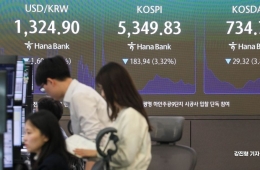
Recently, despite a large current account surplus, the won-dollar exchange rate has fluctuated in the mid-1,500 won range. This year, the exchange rate has been affected by heightened risk aversion due to risks in the Middle East, coupled with net selling of domestic stocks by foreign investors and the strength of the U.S. dollar, leading to a larger depreciation of the won compared to other major currencies. From the beginning of this year through July 3, the value of the won fell by 5.7% against the U.S. dollar. During the same period, the euro in the Eurozone declined by 2.8%, the Japanese yen by 3.1%, and the Thai baht by 5.0%, making the won's depreciation more pronounced.
Governor Shin explained, "To stabilize the foreign exchange market and improve supply and demand, last month we extended interest payments on excess foreign currency reserve requirements and also carried out a foreign exchange swap with the National Pension Service." He added, "To enhance accessibility to Korea's foreign exchange and capital markets, we have implemented 24-hour foreign exchange market trading starting this week, and the establishment of an offshore won settlement system is also proceeding smoothly."
Stock prices have also undergone adjustments. With investment demand concentrated in related sectors due to the semiconductor boom, uncertainties surrounding U.S. monetary policy and debates over artificial intelligence (AI) profitability have simultaneously increased both upward and downward pressures on stock prices, resulting in greater volatility. Governor Shin said, "Stock prices had shown a steep upward trend thanks to favorable industry conditions and improvements in capital market systems, but recently, adjustments have occurred as foreign investors have increased selling for profit-taking and portfolio rebalancing purposes."
The Bank of Korea analyzed that, going forward, stock prices are likely to remain highly volatile, influenced by concerns over the AI industry, the monetary policy stances of major countries, and changes in global capital flows. However, the likelihood of a persistent downward trend in domestic stock prices is limited. This is due to continued upward revisions of operating profit forecasts for semiconductor companies and the government's ongoing efforts to improve capital market systems.
South Korea's economy has seen a significant increase in nominal gross domestic product (GDP) growth, driven by improved terms of trade resulting from higher semiconductor prices. Governor Shin projected, "Solid growth is expected to continue, supported by the favorable semiconductor cycle." However, there remains considerable uncertainty regarding the future growth path, due to factors such as the pace of AI investment, developments in geopolitical risks, and U.S. tariff policies. The Bank of Korea also pointed out that the benefits from the semiconductor boom are concentrated in certain industries and groups, which may slow the pace of expansion to the broader economy.
Consumer prices rose sharply in the first half of the year, driven by higher international oil prices. Governor Shin predicted, "Inflation is expected to remain at a high level for a considerable period." This is because, despite the easing of tensions in the Middle East, the ripple effects of previously elevated cost increases are likely to persist for some time, and demand-side pressures are growing. He also expects core inflation to stay elevated, citing factors such as the transmission of cost shocks from the high exchange rate and increased upward pressure on demand resulting from improvements in income and asset conditions.
Hot Picks Today
 He Left It in the Car and Forgot... "I Nearly Collapsed with Joy": Man Wins $1.48 Million Lottery
- Goldman Sachs Cuts KOSPI Target by 25%... "Excessive Pessimism, Still Attractive"
- "'Nodding Off' on the Subway? Here's Why Koreans Are Getting Even Less Sleep"
- "Please Pay Me at Least 3 Million Won a Month": More Than Half of Young People Today Prioritize "Working Conditions" Over Company Size
- Beachgoer Finds 'Plastic' That Turns Out to Be Perfume Ingredient Worth More Than Twice as Much as Gold
Meanwhile, ahead of the upcoming base rate decision on July 16, Governor Shin reiterated the need to shift to a rate hike cycle. He stated, "Since July last year, the Bank of Korea has maintained the base rate at around 2.5%, but considering inflation exceeding target levels, improving growth momentum, and rising financial stability risks, we believe it is necessary to raise the base rate at an appropriate time."
© The Asia Business Daily. All rights reserved. Unauthorized AI training and use prohibited.