Government to Proactively Respond to AI-Driven Job Changes... 1 Million to Receive Job Training Over 5 Years
Announcement of the Industrial Transformation Employment Stability Roadmap
“Plus Certification System” Introduced for Completion of Emerging Technology Courses
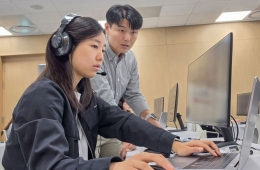
As artificial intelligence (AI) rapidly transforms the job landscape, the government has unveiled the nation’s first-ever “Industrial Transformation Employment Roadmap.” Over the next five years, more than 1 million workers and job seekers will receive AI job training, and the government plans to proactively respond by forecasting occupations that are highly likely to be replaced by AI.
On July 9, the Ministry of Employment and Labor, the Ministry of Education, and the Ministry of Science and ICT announced the “1st Basic Plan for Employment Stability in Industrial Transformation (2027–2031)” at the National Policy Coordination Meeting. Beginning this year through 2030, systematic AI job training will be provided to more than 1 million workers and job seekers. The government will reform the National Tomorrow Learning Card system to institutionalize the “three transition rights of the era”—the right for anyone to learn, the right for youth to grow, and the right for middle-aged and older workers to make a new leap forward.

A new “Plus Certification System” will also be introduced, allowing newly acquired competencies in emerging technologies—when completed in combination with national technical qualifications—to be listed as additional capabilities on existing certificates. In particular, to address the concentration of training opportunities in the Seoul metropolitan area, the government will significantly expand regional training infrastructure outside the capital and substantially strengthen preferential allowances for non-metropolitan regions. Through these initiatives, the aim is to ensure that the benefits of AI technology, which have been centered on large corporations, are more widely distributed to local small and medium-sized businesses and young job seekers.
A monitoring system will also be launched to promptly detect changes in the labor market. By next year, the government will develop the “Korean AI Occupational Exposure Index (K-AIOE),” which precisely reflects the actual tasks of each occupation, and operate the “Korean Canary Dashboard” to provide real-time employment trends and early warnings. The government also plans to publish the “Industrial Transformation Job Map,” which will provide a comprehensive view of labor demand changes by industry and region, establishing a continuous early warning system. To ensure that the adoption of AI technology leads to a real reduction in working hours, the government will promote the enactment of the “Support Act for Shortening Actual Working Hours,” which will encourage flexible work arrangements such as staggered commuting and remote work.
Hot Picks Today
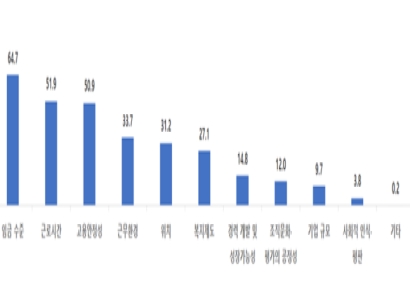 "Please Pay Me at Least 3 Million Won a Month": More Than Half of Young People Today Prioritize "Working Conditions" Over Company Size
- Selling Like Crazy Every Year... 30-Year-Old Hetbahn Takes on a New Challenge: Tastes Better Than "Mom's Home Cooking" [On-Site Report]
- "Americans Would Be Amazed If They Came": Wide-Eyed at a Sight They've Never Seen Before... Foreigners Also Fall for K-Baseball [K-Holic]
- President Lee Narrows Candidates for Next Justice Minister to Former Prosecutors Yang Bunam and Park Gyuntaek
- Beachgoer Finds 'Plastic' That Turns Out to Be Perfume Ingredient Worth More Than Twice as Much as Gold
High-carbon hub regions affected by measures such as coal-fired power plant closures will be designated as “Special Zones for Just Transition” and will receive comprehensive administrative and financial support packages. To further strengthen the win-win ecosystem between large and small businesses, the scope of performance-sharing initiatives will be expanded, and funds contributed by large corporations for cooperative partnerships will be actively utilized to maintain employment and provide retraining for partner company workers. The government stated, “To ensure that industrial transformation becomes an opportunity for creating new jobs rather than unemployment, we will sequentially introduce follow-up measures for each sector.”
© The Asia Business Daily. All rights reserved. Unauthorized AI training and use prohibited.