"When Crackdowns Begin, Fields Empty": Jiwon Park's Criticism... Ministry of Justice Promises Advance Notice
Crackdown on Foreign Workers Curbed, Breaking the Vicious Cycle of Rural Labor Shortages
Five Additional Staff for Mokpo Immigration Office... Positive Outlook for Branch Office Upgrade Next Year
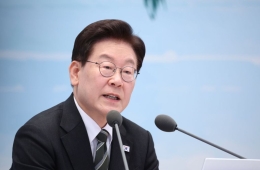
Jiwon Park, a member of the Democratic Party of Korea, strongly urged for the improvement of treatment and institutional support for foreign workers, who have become essential personnel in the island and rural areas of South Jeolla Province, and achieved tangible results.
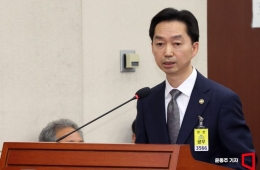
On July 8, at the full meeting of the National Assembly's Legislation and Judiciary Committee, Assemblyman Park officially requested Justice Minister Seongho Jeong to upgrade the Mokpo Immigration Office, which has jurisdiction over the vast island areas including Haenam and Wando, to a branch office, emphasizing the importance of field-oriented administration.

Member of Parliament Jiwon Park officially requested the elevation of the Mokpo Immigration Office, which has jurisdiction over island areas such as Haenam and Wando, to a full office during the National Assembly Legislation and Judiciary Committee plenary meeting. Provided by JTV News
View original imageOn this day, Assemblyman Park pointed out, “Haenam-gun is larger than Seoul, and Sinan-gun is bigger than the land area of South Korea,” adding, “The current office structure is woefully inadequate to properly manage such a vast region with so many islands.”
He further stressed, “Without foreign workers, all productive activities and fishing operations in the region would come to a halt, and even the local consumer economy would be paralyzed. This is the harsh reality facing rural communities.”
In particular, Assemblyman Park strongly criticized the negative side effects caused by abrupt, excessive crackdowns in rural areas. He stated, “Whenever an immigration control vehicle appears, all foreign workers who were working in the seas and fields flee. As a result, work comes to a standstill while only labor costs continue to be incurred, creating a vicious cycle.”
Given that seasonal workers are urgently needed during sowing and harvesting periods, he explicitly requested flexible administration from the Ministry of Justice and advance notification before any crackdowns.
Justice Minister Jeong immediately responded, “We will notify employers in advance when conducting crackdowns on illegal foreign workers.”
Minister Jeong explained, “Unlike the previous administration, we are taking a much more flexible and realistic approach. The frequency of crackdowns has been reduced to about one-tenth of the previous level. While maintaining the basic principles of the Ministry of Justice, we are actively considering the human rights of foreign workers as well as the circumstances of our farmers and frontline manufacturers.”
Five Additional Staff for Mokpo Office... Positive Signal for Branch Office Upgrade
The voices from the field have led to concrete administrative reinforcement. The Ministry of the Interior and Safety decided to increase the staff of the Mokpo Immigration Office from the current 13 to 18, adding five more personnel. In addition, regarding Assemblyman Park’s key initiative to upgrade the office to a branch, the ministry provided a positive response, stating, “It will be given priority review next year.”
A government official predicted, “By increasing staff in charge of visa-related matters, the processing speed for foreign worker-related work will improve significantly.”
Assemblyman Park immediately shared these achievements with local residents via his Facebook page. With the message, “Let’s appreciate foreign workers,” he added, “With a significant increase in the Mokpo office workforce, the processing speed of work will improve, and we can expect more business trips as requested by island areas such as Wando. I hope business owners employing foreign workers will take note and cooperate with these changes.”
Currently, the southern island regions of South Jeolla Province, including Haenam, Wando, and Jindo, are experiencing a severe labor shortage due to rapid population aging. The dependence on foreign workers is high, accounting for 10 to 15 percent of agricultural and fisheries workers. However, local businesses have long suffered the inconvenience of having to travel long distances to central immigration offices for visa processing. This inconvenience has been cited as a cause for the proliferation of undocumented workers, for instance when workers miss the period to extend their stay.
Hot Picks Today
 "300,000 Won Grant" Shelved at Chuseok to Go to All Residents After All... This City Says It Will Pay Before Lunar New Year
- "Didn't Save This Money to Leave to Our Kids?"... Retired Couples Spend $10,000 on a Single Trip
- "Make $10 Million by Flipping It Right After Delivery?"... The Market Drawing the World's Ultra-Rich in ‘This Market’
- Friend Who Went Abroad Goes "Silent"... 617 South Koreans Out of Contact, What's Going On?
- "Stockpile 9 Liters of Bottled Water and Three Days' Worth of Food"... UK on Edge as Nationwide Emergency Preparedness Alert Issued
The local community is now watching closely to see if these measures will provide much-needed relief for the chronic labor shortages and administrative gaps in the region’s agriculture and fisheries sectors.
© The Asia Business Daily. All rights reserved. Unauthorized AI training and use prohibited.