Supreme Prosecutors' Office Warns of 'Case Ping-Pong' if Supplementary Investigations Are Abolished...Opposes Criminal Procedure Act Amendment
Opinion Submitted to the Ministry of Justice on the Amendment Bill
"Weakened Judicial Oversight Over Investigative Agencies"
Reintroduction of the All-Case Transfer System Also Needed
The Supreme Prosecutors' Office has expressed its opposition to the proposed amendment to the Criminal Procedure Act, which would abolish prosecutors' supplementary investigations, stating that "such a measure could weaken the protection of basic rights for the public and the function of providing relief to victims." The Supreme Prosecutors' Office also argued that the right to request supplementary investigations alone would not be effective, and insisted on the need to reintroduce the system requiring the transfer of all cases to prosecutors.

On the 1st, the Supreme Prosecutors' Office building, visible through the sculpture at the Supreme Prosecutors' Office in Seocho-gu, Seoul, appeared distorted as Shim Woo-jung, Prosecutor General, expressed his intention to resign after only nine months in office. The Special Investigation for Internal Security plans to investigate Prosecutor General Shim Woo-jung for abuse of authority and other charges following his immediate abandonment of an appeal after the cancellation of former President Yoon Seok-yeol's arrest. 2025.07.01 Photo by Dongjoo Yoon
View original imageOn July 8, the Supreme Prosecutors' Office stated, "In response to a request from the National Assembly, we submitted our opinion on the proposed amendment to the Criminal Procedure Act to the National Assembly through the Ministry of Justice the previous day." Previously, the Democratic Party of Korea and the Cho Kuk Innovation Party had proposed an amendment to the Criminal Procedure Act that would completely abolish prosecutors' investigative authority, leaving only the right to request supplementary investigations.
The Supreme Prosecutors' Office emphasized that supplementary investigations by prosecutors are not simply a matter of prosecutorial authority, but serve as a means of judicial oversight over investigative agencies. They argued that relying solely on records transferred by judicial police officers, such as the police, has limitations in uncovering the substantive truth of a case, and that prosecutors must directly hear statements from parties involved or collect additional evidence to properly determine whether to indict.
The Supreme Prosecutors' Office stated, "Supplementary investigations serve as a means and a duty to protect the fundamental human rights of the public and to prevent unjust victimization," and added, "This is especially important as a measure for protecting the rights of vulnerable groups in society, such as women, children, the elderly, persons with disabilities, and victims of sexual violence." They cited recent cases—including the Jang Yoon-gi case, the Haedeuni case, and the late film director Kim Chang-min case—as examples where supplementary investigations by prosecutors uncovered the full facts of a case.
They also expressed the opinion that the effectiveness of the right to request supplementary investigations must be ensured. While the proposed amendment would allow prosecutors to request the exclusion or replacement of a judicial police officer if a supplementary investigation request is not fulfilled "without just cause," the Supreme Prosecutors' Office believes that such mechanisms are insufficient. Their concern is that if the police refuse supplementary investigation requests by citing "just cause," such as disagreements over investigative direction or legal interpretation, case processing could become deadlocked.
The Supreme Prosecutors' Office pointed out, "If exceptions remain whereby supplementary investigation requests do not have to be followed in a situation where prosecutors are completely banned or restricted from conducting supplementary investigations, case processing may become impossible in the event of a dispute between prosecutors and police," and warned that "an endless game of passing responsibility and paperwork between the two agencies—a so-called 'infinite ping-pong' effect—could occur."
The Supreme Prosecutors' Office also argued for the reintroduction of the system requiring the transfer of all cases to prosecutors. They asserted that the current non-transfer system, which allows the police—as the primary investigative agency—to determine whether to close an investigation, is inconsistent with the principle of separating investigation and prosecution to provide mutual oversight. "Prosecution and non-prosecution are inseparably linked, like two sides of the same coin," the Supreme Prosecutors' Office stated. "Prosecutors, as quasi-judicial external agencies, must review and evaluate the legality and appropriateness of all investigative outcomes."
The Supreme Prosecutors' Office also mentioned the need for judicial oversight over special judicial police officers. They noted that, although special judicial police officers have expertise in their respective administrative fields, their investigative expertise and continuity are limited. As of 2024, out of 20,159 special judicial police officers nationwide, 15,962 are concurrently handling other administrative duties, and 9,671 have less than one year of experience as special judicial police officers.
Hot Picks Today
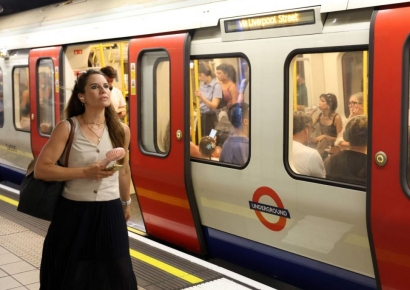 "Unimaginable in Korea": No Air Conditioning Despite 40°C Carriages... London's 'Gentleman’s Country' Endures Sweltering Subways
- "900 Snakes Escape in Heavy Rain, Including Venomous Species... Resident Hospitalized After Bite"
- "Thought God Would Bring Her Back": Man in His 30s Sentenced to 18 Years for Killing Mother During Nap
- "Beyond Discomfort—It's Enough to Make You Sick"...Criticism Mounts Over Prime Minister Takaichi's 260 Million Yen Necklace
- Snapping Photos in Tokyo Wearing Uniqlo and Drinking Asahi Beer: "What's No Japan?" A Shift in Consumer Trends
They also voiced concerns about the proposed establishment of a Public Prosecution Review Board included in the amendment. The Supreme Prosecutors' Office stated that binding the decision to prosecute to the opinions of randomly selected ordinary citizens could lead to legal errors and violations of human rights, and pointed out, "Public prosecution review board members do not bear legal responsibility for maintaining prosecution or for trial outcomes, which creates a problem of mismatch between authority and responsibility."
© The Asia Business Daily. All rights reserved. Unauthorized AI training and use prohibited.