[Exclusive] Will Stic Investment Become Foreign-Owned... Miri Capital Leaves Room for Management Involvement
Miri Capital and Chairman Doh Yonghwan Leave Room for Management Participation Clause
Foreign Ownership Emerges as a Variable in Selection of National Growth Fund Scaling Up League Manager
![[Exclusive] Will Stic Investment Become Foreign-Owned... Miri Capital Leaves Room for Management Involvement](http://www.asiae.co.kr/news/img_view.htm?img=2009071511474710265_2.jpg)
Stic Investment, a first-generation domestic private equity fund (PEF) management company, has transitioned to a structure in which Miri Capital, a U.S.-based asset manager, is now its largest shareholder—leaving open the possibility of future involvement in management. This means there is still a chance Stic Investment may eventually transform into a U.S.-based management company.
According to the investment banking (IB) industry on July 8, Stic Investment's founder and chairman, Doh Yonghwan, sold an 11.44% stake to Miri Capital. The agreement between the two parties includes a clause that allows Miri Capital to exercise management rights after a certain period. As a result, industry insiders believe it is difficult to rule out the possibility that Miri Capital will become involved in management. Should this happen, Stic Investment—a first-generation domestic management company—could see its nationality shift to that of a U.S.-based firm. A PEF industry source commented, "It is hard to believe that an investor who has secured the position of largest shareholder in a management company is only seeking dividend income," adding, "After the restriction period, various forms of management participation may become possible, including participation on the board of directors or involvement in investment strategy."
As of June 23, Miri Capital holds a 26.88% stake in Stic Investment, making it the largest shareholder. Previously, even after becoming the top shareholder, Miri Capital announced its intention to remain a long-term shareholder without joining the board of directors. Recently, Miri Capital stated through Stic Investment, "We have no intention or plan to participate in management control."
The issue of having a foreign entity as the largest shareholder is also being discussed as a potential variable in Stic Investment's ongoing bid to be selected as a manager for the National Growth Fund's Scaling Up League. Since the quantitative indicators are nearly equivalent among competitors, it is anticipated that qualitative factors may determine the winner. The National Growth Fund is a policy fund aimed at investing in advanced strategic industries such as artificial intelligence (AI). According to the National Advanced Strategic Industries Act, when a company or institution possessing government-designated national advanced strategic technologies seeks to pursue overseas mergers and acquisitions or joint ventures, it must obtain prior approval from the Minister of Trade, Industry and Energy.
Miri Capital's previous investments in domestic advanced industry-related companies is another area that warrants attention regarding future conflict-of-interest management. Miri Capital has invested in top-tier domestic advanced strategic industry companies, such as Gabia (AI infrastructure) and Korea Alcohol Industrial (semiconductor materials). Therefore, the mechanisms to prevent conflicts of interest and the transparency of investment decision-making procedures will inevitably become more important.
There are also reports that the internal atmosphere at Stic Investment has changed since Miri Capital became the largest shareholder. Contrary to expectations of a generational shift, it is said that under the so-called 'bridgehead leadership,' power has shifted to executives born in the early 1960s, leading to increased fatigue among some key personnel.
Hot Picks Today
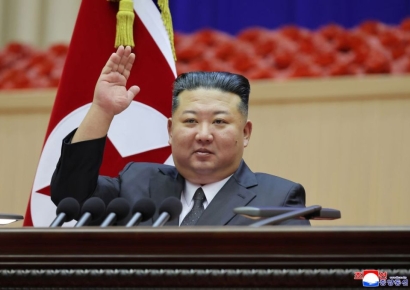 "I'm Fine": Kim Jong Un Dismisses Death Rumors with Photos, Then Makes Surprise China Visit Across New Yalu River Bridge (Update)
- “We’ve Hit Bottom”: Samsung Electronics and SK hynix “Undervalued at Global Financial Crisis Levels” Set for W-Shaped Rebound - But When? [Weekend Money]
- "A Short Trip to Korea Isn't Enough; I Want to Live There for a Month"... Foreign Tourists Take Up Hiking and Yoga, Too
- 'Gwangmyeong Bungeun-woo' Turns Down TV Appearance Offer: "I've Got Bungeoppang to Make"
- "If This Airs, I'm Dead"... Why a Restaurant Refused to Let Jeon Hyunmoo's Show Film
An IB industry insider stated, "Since people are everything at a management company, continued staff departures will inevitably undermine the competitiveness of the entire firm," adding, "Stic Investment, which has played a leading role in the domestic PEF industry under a foreign majority shareholder, will now be tested on how it maintains its identity and independence."
© The Asia Business Daily. All rights reserved. Unauthorized AI training and use prohibited.