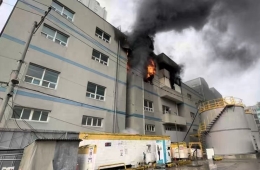
[Exclusive] "Why Are Sales So Strong Only in Korea?"... 200,000 Units Sold in 10 Years Since Entering Korea [Tesla's Solo Run... Hyundai's Counterattack]
First Entry in 2017... Over 50,000 Units Sold in First Half of Year
Mercedes-Benz and BMW Took 13 Years to Reach the Milestone
Tesla has surpassed 200,000 vehicle sales in South Korea, ten years after entering the market. While annual sales hovered around 10,000 units during its early years, the numbers have reversed course since last year, with a late but rapid surge. The automotive industry has expressed surprise that, despite Tesla having already fallen behind Chinese electric vehicle brands in overseas markets, its sales in Korea alone continue to soar.
Industry analysts attribute this exceptional phenomenon to two main factors: the unexpected release of "supervised Full Self-Driving (FSD)" technology in Korea last year, which drew significant attention, and the influx of competitively priced China-manufactured models.

According to statistics from the Korea Automobile Importers & Distributors Association on July 13, Tesla sold 56,139 vehicles in just the first half of this year. This figure nearly matches last year's total sales of 59,916 units. If this trend continues through the end of the year, Tesla is expected not only to achieve its highest annual sales ever in Korea but also to reach the milestone of 100,000 units sold in a single year for the first time.
The record of selling 200,000 vehicles in just a decade is considered exceptionally fast in the imported car industry. For comparison, Mercedes-Benz and BMW each took 13 years to surpass the 200,000 cumulative sales mark after establishing their Korean subsidiaries in 2003.
Tesla established its Korean subsidiary in 2016 and began sales in 2017. Initial sales amounted to only 303 units in the first year, but from 2020, Tesla maintained annual sales of over 10,000 units for four consecutive years, with a sharp increase starting last year.
Tesla achieved half of its total sales in just the past two years, a surge that coincided with aggressive price cuts. In response to weakening global demand for electric vehicles, Tesla reduced its selling prices worldwide in 2023 and 2024. Notably, in the fourth quarter of 2023, China’s BYD surpassed Tesla to become the world’s top EV seller for the first time ever.
![[Exclusive] "Why Are Sales So Strong Only in Korea?"... 200,000 Units Sold in 10 Years Since Entering Korea [Tesla's Solo Run... Hyundai's Counterattack]](http://www.asiae.co.kr/news/img_view.htm?img=2026071308165742948_1783898217.jpg)
In particular, starting in December of last year, Tesla launched aggressive discount campaigns in Korea, slashing the price of the Model 3 Performance by 9.4 million won. Additionally, the rollout of supervised FSD in Korea in November, following the recognition of safety standard equivalence under the Korea-U.S. Free Trade Agreement (FTA), is also seen as a factor that boosted sales.
In the local market, expectations for autonomous driving technology surged as FSD became available on U.S.-made 'Model S, X' and 'Cybertruck' vehicles equipped with HW4 and certified under U.S. FMVSS safety standards.
Hot Picks Today
 "If You Don't Apply, My KRW 1.7 Million Will Be Gone"... Unclaimed National Pension Refunds Vanish After 'This Deadline'
- U.S. Alarmed as Infections from "Brain-Melting Fungus" Surge... 70% Fatality Rate, Cause Unknown
- Lee Juwan, Who Forecast Samsung at 70,000 Won and SK hynix at 200,000 Won, Says They're "Still Overvalued"; Others Counter: "Fundamentals Are Solid, Correction Is Excessive"
- "An Opinion, Not False Information"... Man in His 40s Who Called May 18 a "Riot" on Ilbe Acquitted on Appeal
- Kang Minkyung Raved, "Worth the Money," Then It Sold Out in 10 Minutes... Convenience Store Collaborations Pay Off
Despite these strong sales, uncertainties remain. Owners of older vehicles with HW3, who pre-purchased the FSD option for close to 10 million won, along with owners of China-manufactured vehicles, have filed a class-action lawsuit against Tesla Korea seeking refunds, and the legal battle is ongoing. Furthermore, starting this month, as the government resumed electric vehicle subsidies for the second half of the year, Tesla unexpectedly increased prices for certain models by 3 million to 7 million won, raising questions about whether its strong sales performance can be sustained.
© The Asia Business Daily. All rights reserved. Unauthorized AI training and use prohibited.

!["Please Take Them Off!" They Made It All the Way to the Bed... Then "80% of Fecal Bacteria" Struck [Deep Scroll]](https://cwcontent.asiae.co.kr/asiaresize/307/2026101610053063338_1792112730.png)