Naju Embraces Artificial Sun as Nuclear Fusion R&D Special Zone Designation Accelerates
Completion of R&D Special Zone Strategy Project
Roadmap Presented for Attracting Research Institutes and Companies
Linked Promotion of Artificial Sun Research Facility
Naju City, located in the Jeonnam-Gwangju Special Integrated Metropolitan City, is accelerating efforts to designate a nuclear fusion research and development special zone based on its artificial sun (nuclear fusion) research facilities, taking full-fledged steps to establish itself as a hub for the future energy industry.
On July 6, Naju City announced that it had held the final briefing session for the “Strategy Establishment Project for Designating an Energy (Nuclear Fusion) R&D Special Zone” at the city hall small conference room, during which it shared strategies and step-by-step implementation plans for the special zone designation.
The project, which began in April and continued for three months, was designed to proactively prepare for the designation of the R&D special zone in connection with the artificial sun research facility construction project, which is currently undergoing a preliminary feasibility study.
An R&D special zone is a national innovation cluster that brings together research institutes, companies, and support organizations to promote research and development as well as technology commercialization. Naju City’s plan is to build an industrial ecosystem that supports the entire process from research and development to technology commercialization and company growth, by attracting nuclear fusion research institutes and companies centered around the artificial sun research facility.

On the 6th, the final briefing session for the strategy establishment project regarding the designation of Naju City as an Energy (Nuclear Fusion) Research and Development Special Zone was held in the small conference room at City Hall. Provided by Naju City
View original imageIn particular, Naju City has the advantage of being an energy innovation city, where Korea Electric Power Corporation and Korea Institute of Energy Technology (KENTECH) — the nation’s leading energy research and industrial infrastructure — are concentrated. Additionally, by operating a small but strong R&D special zone in the energy sector, the city has accumulated experience in research and development and business incubation.
Furthermore, if the city obtains designation as an R&D special zone after being selected as the site for the artificial sun research facility in December last year, it is expected that the existing energy industry foundation and nuclear fusion research capabilities will be combined to allow for the growth of the nation’s largest nuclear fusion industrial cluster.
At the briefing session, analyses of the nuclear fusion industry and policy environment were presented, along with the R&D special zone designation strategy, plans to attract nuclear fusion research institutes and companies, and a step-by-step execution roadmap.
The project proposed actively utilizing the special exceptions for R&D special zone designation provided in the enforcement ordinance of the Jeonnam-Gwangju Integrated Special Act as a key strategy. Applying these exceptions would allow Naju City to benefit from relaxed designation criteria by linking national research institutes and institutions scheduled to be attracted, increasing the possibility of Naju-centered independent designation as an R&D special zone.
The plan also included strategies to strategically attract anchor companies and research institutes in the nuclear fusion sector, as well as to operate an advisory group composed of experts in science and technology, industrial policy, and regional development to strengthen the industry-academia-research cooperation system.
Going forward, Naju City plans to refine the logic for special zone designation in line with the government’s nuclear fusion policies and the artificial sun research facility construction schedule, with a focus on building a nuclear fusion industrial ecosystem through concentrated administrative efforts.
Mayor Yoon Byung-tae of Naju City stated, “Nuclear fusion is a core technology that will reshape the landscape of the future energy industry,” adding, “By linking the artificial sun research facility and the R&D special zone, we will establish a nuclear fusion industrial ecosystem where R&D, technology commercialization, and company growth form a virtuous cycle.”
Hot Picks Today
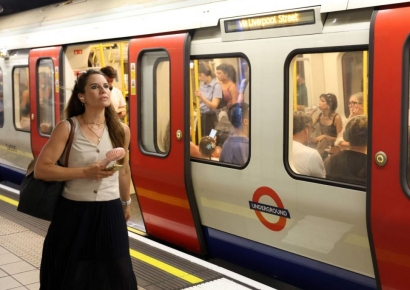 "Unimaginable in Korea": No Air Conditioning Despite 40°C Carriages... London's 'Gentleman’s Country' Endures Sweltering Subways
- "Thank You, Samsung Electronics and SK Hynix" National Pension Service Earns 189 Trillion Won from Domestic Stocks in Three Months
- President Lee Holds First Summit with Ukraine...Agrees to Respect Free Will of North Korean Prisoners
- "Beyond Discomfort—It's Enough to Make You Sick"...Criticism Mounts Over Prime Minister Takaichi's 260 Million Yen Necklace
- Snapping Photos in Tokyo Wearing Uniqlo and Drinking Asahi Beer: "What's No Japan?" A Shift in Consumer Trends
Meanwhile, nuclear fusion is a technology that replicates the process by which the sun generates energy on Earth. It is recognized as a next-generation clean energy source, capable of producing as much energy as about 8 tons of oil from just 1 gram of hydrogen. With no greenhouse gas emissions and high safety, it is attracting attention as a future energy source to address the climate crisis and the skyrocketing power demand in the era of artificial intelligence (AI).
© The Asia Business Daily. All rights reserved. Unauthorized AI training and use prohibited.