KDI: "Semiconductors and Services Drive Economic Growth, While Manufacturing Undergoes Adjustment"
The Korea Development Institute (KDI) assessed that, despite an ongoing adjustment in manufacturing production, the Korean economy continues a moderate improvement trend, supported by robust semiconductor exports and strong performance in the service sector.
According to the "July Economic Trends" report released by KDI on July 8, total industrial production in May increased by 2.3% year-on-year, maintaining a similar pace to the previous month (2.4%). Service sector output rose by 4.9%, up 1.2 percentage points from the previous month (3.7%), driven mainly by the financial and insurance sector (10.4%) and the professional, scientific, and technical services sector (17.5%), thereby bolstering overall production.

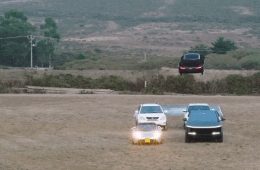
Following U.S. President Donald Trump's signing of a proclamation imposing a 25% tariff without exceptions on imported steel and aluminum products, and his announcement that tariffs on automobiles and semiconductors are also under consideration, export vehicles are waiting to be shipped at Pyeongtaek Port, Gyeonggi Province on February 13, 2025. Photo by Jinhyung Kang
View original imageIn contrast, the manufacturing sector saw a sharp slowdown in semiconductor growth from 13.3% to 1.5%. This, combined with production disruptions caused by a fire at an auto parts supplier and instability in crude oil supply, led to declines in automobile (-5.2%), petroleum refining (-14.7%), and chemical product (-2.8%) output. As a result, mining and manufacturing production shifted from a 1.5% increase in the previous month to a 0.9% decrease. The inventory ratio in manufacturing rose by 4.0 percentage points, from 97.8% to 101.8%, while the average operating rate fell by 2.2 percentage points, from 73.3% to 71.1%, reflecting further production adjustments. Although the decline in construction production narrowed from 5.3% to 1.9%, the sector continued to struggle. KDI noted that external risks have eased somewhat due to peace negotiations between the United States and Iran; however, uncertainty remains regarding the final outcome of these talks.
Despite domestic and external downward pressures, consumption maintained a gradual improvement. Retail sales in May grew by 1.7%, expanding by 0.1 percentage points from the previous month (1.6%). Passenger car sales shifted from a 0.9% increase to a 10.7% decrease due to production disruptions and fewer working days, and durable goods consumption also reversed from a 1.7% increase to a 3.6% decrease. On the other hand, supported by government policies, semi-durable goods consumption expanded from 4.6% to 7.7%, while non-durable goods consumption rose from 0.5% to 2.1%. The service sector, closely linked to consumption, also continued to improve, particularly in transportation and warehousing (2.6%→1.5%) and accommodation and food services (1.2%→2.2%). However, KDI expressed concern that high oil prices and exchange rates could fuel inflation and lead to interest rate hikes, which may constrain the pace of consumption recovery.
Facility investment remained strong, led by the semiconductor sector. Facility investment in May rose from 7.9% to 9.7%, an increase of 1.8 percentage points. Investment in machinery grew from 10.0% to 12.5%, while investment in semiconductor manufacturing equipment surged from 40.7% to 75.9%, driving the overall increase in facility investment. Investment in transportation equipment also remained stable, increasing from 3.8% to 4.2%. In June, machinery imports expanded from 14.1% to 19.3%, and semiconductor manufacturing equipment imports continued to show strong growth at 42.4%, following 54.9% previously, suggesting that the investment trend centered on semiconductors is likely to persist for the time being. However, investment in sectors other than semiconductors, such as general industrial machinery (-3.0%) and electrical and electronic equipment (-1.2%), remained sluggish.
Construction investment continued to be weak, particularly in residential buildings. The decline in construction contracted from 6.1% to 0.4%, but the downturn in residential building construction deepened, shifting from a 2.1% decrease to a 3.9% decrease. By contrast, non-residential building construction turned around from a 2.6% decrease to an 18.2% increase. The civil engineering segment continued to struggle, with the decline widening from 2.8% to 6.1%. Notably, the construction cost deflator increased by 2.8% in March, 4.9% in April, and 5.5% in May, with KDI predicting that this will likely constrain future recovery in construction investment.
Exports were driven by ICT items, supported by demand related to AI. In June, exports grew significantly, rising from 53.4% to 70.9%. On a daily average basis, semiconductor exports jumped by 179.6%, computers by 281.6%, and petroleum products by 39.8%. Exports to the United States (66.7%) and China (79.3%) also rose sharply, and the trade balance recorded a surplus of USD 36.15 billion. Imports expanded from 20.7% to 30.1%, with major energy sources increasing by 41.8% and semiconductor equipment by 41.3%. However, exports to the Middle East fell by 14.5% due to logistics disruptions, and the growth rate of semiconductor export volumes showed some signs of slowing.
The labor market weakened, particularly in manufacturing. In May, the number of employed persons shifted from an increase of 74,000 in the previous month to a decrease of 40,000. Employment in manufacturing contracted further, from a decrease of 55,000 to a decrease of 140,000, while the number of permanent employees also saw a steeper decline, from a decrease of 34,000 to a decrease of 108,000. In contrast, employment in the service sector rose from 214,000 to 245,000. The employment rate for those aged 15 and over fell by 0.2 percentage points to 62.5%, with the most pronounced declines among people in their 20s (-0.5 percentage points) and 40s (-0.4 percentage points). The labor force participation rate also dropped from 64.5% to 64.3%, but the unemployment rate remained steady at 2.8%.
The consumer price inflation rate in June was 3.2%, similar to the previous month (3.1%). Goods prices rose from 3.5% to 3.8%, while service prices slowed from 2.8% to 2.6%. Petroleum product prices increased from 24.2% to 24.7%, and international airfares also recorded a high growth rate of 28.2%. Core inflation remained at 2.5%, unchanged from the previous month. The price of Dubai crude oil fell from USD 103.2 per barrel in May to USD 79.5 in June, but the import unit price of crude oil remained high, dropping only slightly from USD 117.8 to USD 117.1, suggesting that the slowdown in the inflation rate will emerge only gradually.
Hot Picks Today
 "The Transfer Failed, but 'Ding Dong' Money Came In"... 32.5 Billion Won Financial Incident at Toss Bank
- "They Wouldn't Give It a Second Look When Offered to Ancestors"... MZ Goes Wild for 80-Year-Old Ceremonial Liquor as a Household Must-Have
- "Even If He's Handsome, That's a Bit Much"... The "Behavior" That Turns Off 7 in 10 Women
- Pinky swear: "I'll become a female soldier"... An elementary school student's moving letter of support from 11 years ago
- The 'Hangover Legend' That Had You Waking Up the Day After Tomorrow Returns After 11 Years... Lee Sunmin's Captain Q Sells Out
Regarding the global economy, KDI evaluated that, despite the semiconductor boom driven by increased AI investment and easing tensions in the Middle East, downside risks remain due to persistent inflation concerns, potential interest rate hikes, and a slowdown in global trade. In the United States, moderate growth continues on the back of a domestic demand recovery, but inflationary pressures persist. In the eurozone, growth forecasts have been revised downward due to weak real economic activity. In China, despite strong exports of semiconductors and electronic devices, domestic demand and the real estate market continue to deteriorate, resulting in a mixture of upward and downward factors.
© The Asia Business Daily. All rights reserved. Unauthorized AI training and use prohibited.