Teachers' Groups: "Education Grants Must Not Be Cut Due to Declining Student Numbers"
Three Major Teachers' Groups Jointly Demand an End to Education Grant Reduction Talks
"Do Not Undermine Public Education Funding in the Name of Efficiency"
"Grants Are Not Just Budget Allocations, but a National Responsibility to Safeguard Learning"
Teachers' organizations have urged the government to halt discussions on reducing local education grants on the grounds of declining student numbers.
The three major teachers' groups—the Korean Teachers and Education Workers Union, the Federation of Teachers' Labor Unions, and the Korean Federation of Teachers' Associations—held a joint press conference in front of the Government Complex Seoul on the morning of July 8. They stated, "Local education grants are not simply a budget allocation mechanism, but the foundation of the state's responsibility to guarantee basic educational conditions for students anywhere in the country," and emphasized, "The foundation of public education funding must not be undermined under the pretext of correcting fiscal inefficiency."
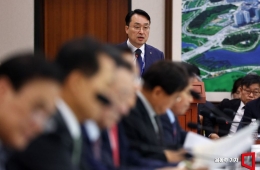
This press conference was held ahead of the public forum on the "Need for Reform of Education Grants" at the Government Complex Seoul. The forum discussed the need to reform the local education grant system in response to declining school-age populations, as well as options for fiscal management.
The teachers' organizations argued that education funding should not be reduced solely due to a decrease in the number of students. They stated, "Even if the number of students decreases, schools and classes must continue to operate, and the basic functions of schools—such as cafeterias, libraries, science labs, after-school care rooms, counseling rooms, and special education classes—should remain intact. The demand for education that schools must meet, including ensuring basic academic skills, special education, student counseling, school safety, and improvement of aging facilities, does not decrease."
They went on to say, "What is needed now is not a reduction in education funding, but the establishment of new fiscal standards that reflect actual educational demand, including the number of schools and classes, local education infrastructure, special education, basic academic skills, aging facilities, safety, the number of teachers, and educational support staff."
The organizations also directed their message to the Ministry of Education, stating, "The ministry should not be a department that merely negotiates with the Ministry of Economy and Finance, but must act as the responsible agency to safeguard public education funding. The budget for early childhood, elementary, and secondary education should not be used to cover higher education, lifelong education, or support for childcare institutions; these areas should be funded separately through national finances."
The three teachers' organizations called on the government to: ▲ halt discussions on reducing local education grants based on declining student numbers; ▲ ensure the stability and predictability of the budget for early childhood, elementary, and secondary education; ▲ establish fiscal standards that reflect actual educational demand; ▲ secure separate national funds to support higher education, lifelong education, and childcare; and ▲ provide additional funding for national policy projects such as Neulbom Schools and digital education.
Meanwhile, at the public forum, experts debated whether to maintain the current local education grant system, which automatically allocates 20.79% of domestic taxes despite the declining school-age population, or to reform the system in line with changing educational demand. The Ministry of Economy and Finance argued for the need for reform, citing falling student numbers and inefficiencies in education spending. In contrast, the Ministry of Education insisted on maintaining the linkage to domestic tax revenues to ensure stable funding for public education.
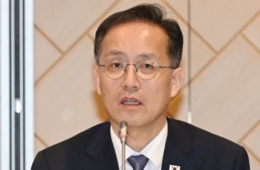
On July 8, Minister of Education Choi Kyojin said, "While I agree on the need for a 'rational fiscal reform' in response to the sharp decline in the school-age population and changing educational environment, I am deeply concerned that discussions are being driven solely by economic logic or numerical efficiency, such as 'fewer children mean a smaller budget.'"
Hot Picks Today
 "I Should Enjoy It After Retirement": Prices Quadruple... Memberships Over 100 Million Won Popular, but Closures Mount
- "I thought getting into a big company was the goal"... The 'position' only 1 in 121 employees reaches
- "Jealous of Koreans" - Now a Must-Do on Every Trip... The Place Where Foreigners Spent KRW 229.8 Billion
- “I Bought Big Packs to Stock Up Because They Were a Better Deal”... Why Are They Disappearing From Grocery Stores?
- "Please Let Me Go Home"... Customers Trapped in Department Store Parking Lot for 5 Hours Vent Their Anger
He added, "Reforming education finances should not be just a matter of cutting budgets, but rather an 'innovative process in education' that considers how to most wisely allocate valuable resources for the future of our children."
© The Asia Business Daily. All rights reserved. Unauthorized AI training and use prohibited.