[Infrastructure, From Construction to Replacement]②Many Sites to Maintain, But No National Funding for Special Cities
No National Funding for Seoul's Sewer Pipeline Maintenance
Sewer Usage Fees to Increase by 9.5% Annually Over Five Years
Urban Railways Struggle to Replace Aging Vertical Transportation Equipment
When a ground subsidence accident occurred in Myeongil-dong, Gangdong-gu early last year, the government provided 33.8 billion won in national funds to the Seoul Metropolitan Government and other relevant local governments through a supplementary budget. However, this was a one-off measure in response to a major social issue.
![[Infrastructure, From Construction to Replacement]②Many Sites to Maintain, But No National Funding for Special Cities](http://www.asiae.co.kr/news/img_view.htm?img=2026070916571640817_1783583836.png)
As aging infrastructure increases, so does the burden of maintenance costs. Local governments inevitably require support from the central government; even the Seoul Metropolitan Government, which boasts the highest fiscal self-reliance rate nationwide, has voiced concerns over the mounting costs of infrastructure maintenance. According to the current Enforcement Decree of the Subsidy Management Act, the central government covers 30% of the cost of sewage pipeline maintenance projects in metropolitan cities, but special cities like Seoul are excluded from receiving national funds on the grounds of their high fiscal self-reliance. Provincial-level local governments receive 60% from the national treasury. However, with the launch of the Jeonnam-Gwangju Integrated Special City on July 1, it appears that the subsidy rate will be adjusted at a similar level, potentially providing a basis for Seoul to request national funding from the government.
According to Seoul officials on July 13, a city official recently met with the Ministry of Planning and Budget and the Ministry of Climate, Energy and Environment near the Government Sejong Complex to propose applying the same national subsidy rate (30%) granted to metropolitan cities. However, discussions have not made progress yet.
Seoul and other local governments maintain that one-off emergency support is insufficient to cover ongoing maintenance costs. A city official stated, "Aging sewage systems are a direct threat to citizen safety," emphasizing, "Support should be provided equally, regardless of region."
If infrastructure maintenance and management budgets are pushed down the priority list, the burden is ultimately shifted to public utility fees, meaning citizens themselves end up shouldering the cost. The Seoul Metropolitan Government plans to gradually raise sewage usage fees to increase the cost recovery rate from the current 55% to 80% by 2030. The cost recovery rate represents the percentage of actual processing costs reflected in the fees, with the goal of securing funds for upgrading aging sewage pipelines and water reclamation centers. Only when the recovery rate reaches 100% can the city independently operate such projects, including infrastructure maintenance. In comparison, Daejeon Metropolitan City, which receives government subsidies, has the highest recovery rate at 98%, while Ulsan and Incheon are at 77% each, making Seoul's rate significantly lower.
![[Infrastructure, From Construction to Replacement]②Many Sites to Maintain, But No National Funding for Special Cities](http://www.asiae.co.kr/news/img_view.htm?img=2026070809424138121_1783471361.png)
Accordingly, Seoul's sewage usage fees will rise by an average of 9.5% annually for the next five years starting this year. For a family of four (using 24㎥ per month), the monthly sewage fee will increase from 11,150 won this year to 18,480 won by 2030. As citizen inconvenience grows due to sewer damage, foul odors, and increased safety risks such as ground subsidence, securing investment funds has become urgent. Seongguk Jeong, Director of the Water Circulation and Safety Bureau at the Seoul Metropolitan Government, said, "Aging sewage systems are a major cause of recurring ground subsidence accidents, so stable national funding is essential to ensure the safety of the country's infrastructure."
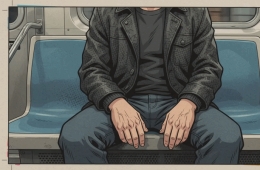
The issues of infrastructure aging and budget shortfalls, which are directly linked to citizen safety, are also recurring in the urban railway sector. About 60% of subway trains in Seoul are over 20 years old, and there are 172 stations that have been in operation for more than 30 years. The situation is similar for vertical transportation facilities. Of the 1,881 escalators operated by the Seoul Metro Corporation, 647 units (34%) have been in use for over 20 years. Due to budget shortfalls, replacements are delayed, leading to a reliance on maintenance. The same applies to elevators, with many aging units and insufficient budget for replacement.
For Seoul's urban railway, the cost recovery rate (average fare as a percentage of transportation cost) was only 57% as of last year. The sharp increase in costs is largely due to the provision of public services such as free rides for certain groups. Nationwide, the losses from free rides across six railway operators are expected to rise from 445.6 billion won in 2020 to 775.4 billion won by 2025, an increase of 1.7 times in five years.
Hot Picks Today
 "End of Samsung and SK Hynix’s Dominance?" CXMT Soars 466% on IPO Debut... Founder’s Wealth Jumps 300%
- Is the Stock Market Decline Just Beginning? "An Even Bigger Crisis Is Coming," Warns Rich Dad Author
- "Spent Over 60,000 Won, Yet Asked to Order More Drinks?"...Online Uproar Over 'One Drink Per Person' Policy
- "It's Even More Beautiful in Person": Visitors Flock to Samsung Gangnam, Many Making Purchases on First Day of Pre-orders [Report]
With a low cost recovery rate, railway infrastructure improvements are pushed to the back burner, as it is difficult even to cover essential expenses such as electricity and labor. According to an analysis, the appropriate base fare required for Seoul Metro Corporation to fully recover costs and operate normally is 2,591 won. This means the current base fare of 1,550 won would need to be raised by 1,041 won to eliminate the deficit. A Seoul Metro official said, "Even though we want to invest in safety-related SOC, financial constraints keep pushing these plans back. Unless we find a solution such as national funding support, citizens will inevitably have to bear additional fare increases."
© The Asia Business Daily. All rights reserved. Unauthorized AI training and use prohibited.