[Editorial] Expedite 'Platform Labor Legislation'
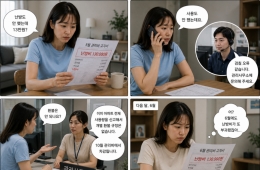
The first court ruling has been issued recognizing delivery riders as workers under the Labor Standards Act. The 38-1 Civil Division of the Seoul High Court (Presiding Judge Lee Ji-young, Judges Hwang Sung-mi and Park Sung-yoon) overturned the lower court's dismissal and ruled in favor of this recognition. Until now, delivery riders have been classified as special-type workers, as they were considered to hold a dual status as both self-employed and workers. However, with this ruling, it appears that a path has opened for platform workers, including delivery riders, to be recognized as workers under the Labor Standards Act.
The court explained that the reason for this decision is because, although delivery riders work only when they connect to the application (app), in reality, they were under the direction and supervision of the employer and were integrated into the business as a single unit. The court stated, "Delivery riders were not acting as independent business operators selectively using the platform; rather, by fulfilling delivery orders through the app, they were, in substance, incorporated into the defendant's business." The court cited the facts that work was performed exclusively through the company-provided app, the company determined the method of work, pay calculation criteria, and payment method, and that the company gave specific work instructions. The court further stated, "Until separate legislation is enacted for platform labor, it is preferable not to deny worker status but to regulate labor relations flexibly in accordance with their actual nature."
Of course, it is premature to conclude that all platform workers will be recognized as workers on the basis of this ruling. This is also why the court mentioned the need for separate legislation on platform labor. There are valid concerns that broadly recognizing the worker status of platform laborers could reduce flexibility and, in turn, potentially decrease the number of jobs. However, critics have continually pointed out that the ambiguous status of platform workers, who are neither self-employed nor workers, has resulted in legal uncertainty and left them in a blind spot. It is time to clarify the rules.
Hot Picks Today
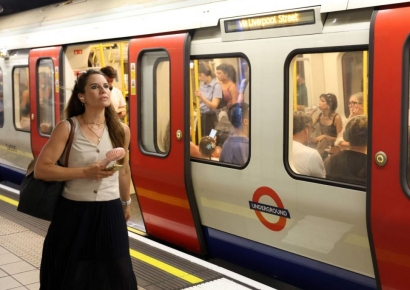 "Unimaginable in Korea": No Air Conditioning Despite 40°C Carriages... London's 'Gentleman’s Country' Endures Sweltering Subways
- "Thank You, Samsung Electronics and SK Hynix" National Pension Service Earns 189 Trillion Won from Domestic Stocks in Three Months
- Chanjin Lee, FSS Governor, Visits Military Again: "Manage Assets, Not Gamble"
- Thai Transgender Illegal Residents Earn Hundreds of Millions Through Dating Sites
- Snapping Photos in Tokyo Wearing Uniqlo and Drinking Asahi Beer: "What's No Japan?" A Shift in Consumer Trends
Currently, the government and National Assembly are promoting the "Basic Act for Working People," a basic law that specifies the constitutional guarantee of labor rights for all working people and provides grounds for state support. However, opposition is mounting, with small business owners holding large-scale protests demanding protection of their livelihoods. It is hoped that this ruling will serve as an opportunity to establish legislation that allows both employers and platform workers to coexist and share the benefits.
© The Asia Business Daily. All rights reserved. Unauthorized AI training and use prohibited.