"Semiconductor Effect" May Current Account Surplus Hits New All-Time High Again (Update)
Record-High May Current Account Surplus of $38.61 Billion
Goods Account Surplus Tops $37.86 Billion, Led by 167.7% Surge in Semiconductor Exports
Travel Account Turns to Surplus... Largest-Ever Drop in Foreign Stock Investment
In May, South Korea’s current account surplus reached a record high of 38.61 billion dollars, once again breaking the previous all-time record. The narrowing deficit in the service account and the shift to a surplus in the primary income account also contributed to setting this new record.

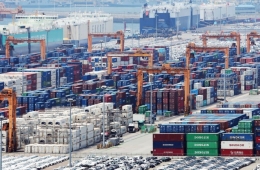
Semiconductor Export Boom... Largest Ever Goods Account Surplus
According to the "Preliminary Balance of Payments for May 2026" released by the Bank of Korea on July 8, South Korea’s current account surplus in May reached 38.61 billion dollars. This surpasses the previous record set in March (37.93 billion dollars), establishing a new all-time high. The surplus increased significantly from the previous month (28.29 billion dollars), and compared to the same period last year (9.91 billion dollars), it nearly quadrupled. This marks the 37th consecutive monthly surplus since May 2023, and the longest period of surplus since March 2019.
The main driver behind this record-breaking surplus was the goods account, which holds the largest share of the current account. The goods account posted a surplus of 37.86 billion dollars in May, setting a new record. The previous high was 35.68 billion dollars in March.
The faster growth in exports compared to imports, driven by strong semiconductor performance, widened the surplus. In May, goods exports totaled 94.34 billion dollars, a 62.9% increase from the same period last year. IT products, including semiconductors, surged by 128.9% year-on-year. Non-IT products also rose by 10.0%. Semiconductor exports based on customs clearance reached 37.29 billion dollars in May, up 167.7% from a year earlier. Exports of computer peripheral SSDs skyrocketed by 249.4%. Among non-IT products, petroleum products increased by 49.1% and chemical products by 11.0%.
Goods imports amounted to 56.48 billion dollars, a 22.2% increase from the same period last year. Imports rose mainly due to raw materials (22.1%) and capital goods (28.0%) amid the ongoing Middle East war. Raw materials imports increased, led by petroleum products (70.5%), coal (37.2%), chemical products (27.6%), and crude oil (24.8%). For capital goods, semiconductors (61.1%) and semiconductor manufacturing equipment (54.9%) saw large increases.
Travel Account Turns to Surplus as Visitor Numbers Rise... Dividend Income Account Recovers from Seasonal Factors
The service account and primary income account also supported the all-time high monthly current account surplus in May. The service account posted a deficit of 1.09 billion dollars. However, this deficit narrowed compared to the previous month (-2.42 billion dollars) and the same period last year (-2.56 billion dollars). The travel account turned to a surplus of 50 million dollars as the number of inbound visitors increased, while the intellectual property rights usage account also shifted to a surplus of 70 million dollars due to higher revenues, reflecting the seasonal characteristics of a mid-quarter month.
The primary income account (2.17 billion dollars) turned to a surplus, mainly due to the dividend income account (1.15 billion dollars). The dividend income account returned to surplus as dividend payments declined following the resolution of seasonal factors from the previous month.
Profit-Taking Sales Lead to Record Drop in Foreign Stock Investment
Meanwhile, net financial assets—assets minus liabilities—increased by 31.08 billion dollars, marking the second largest increase after March (38.05 billion dollars). Direct investment assets (4.56 billion dollars) saw slower growth, mainly in debt securities, while direct investment liabilities (2.69 billion dollars) turned to an increase, mainly driven by reinvested earnings. Securities investment assets totaled 6.24 billion dollars, with bond assets (-1.35 billion dollars) decreasing, thus reducing the pace of increase. Stock assets (7.6 billion dollars) grew, especially among general government and other financial institutions, thanks to the strong U.S. stock market, while debt securities (-1.35 billion dollars) saw a decrease, mainly in short-term bonds.
Hot Picks Today
 "Unimaginable in Korea": No Air Conditioning Despite 40°C Carriages... London's 'Gentleman’s Country' Endures Sweltering Subways
- "Thank You, Samsung Electronics and SK Hynix" National Pension Service Earns 189 Trillion Won from Domestic Stocks in Three Months
- Chanjin Lee, FSS Governor, Visits Military Again: "Manage Assets, Not Gamble"
- Thai Transgender Illegal Residents Earn Hundreds of Millions Through Dating Sites
- Snapping Photos in Tokyo Wearing Uniqlo and Drinking Asahi Beer: "What's No Japan?" A Shift in Consumer Trends
Securities investment liabilities (-24.65 billion dollars) turned to a decline, led by stock liabilities (-31.05 billion dollars), marking the second largest drop after March. The decline in stocks was mainly due to profit-taking sales by foreign investors following a rise in domestic stock prices. Debt securities (6.4 billion dollars) saw an expanded increase, driven by capital inflows tracking the World Government Bond Index (WGBI).
© The Asia Business Daily. All rights reserved. Unauthorized AI training and use prohibited.