"Identifying At-Risk Companies in Advance"... Ministry of SMEs Announces AI-Based Rebound Support Measures
Early Warning System Expanded to 250,000 Companies
Stronger Support Criteria for Distressed Firms
Restructuring Focused on Growth Potential
The government is launching a “rebound support” initiative for small and medium-sized enterprises (SMEs) experiencing stagnant growth and financial crises. The plan involves building an artificial intelligence (AI)-based early warning system to detect signs of corporate distress at an early stage and providing focused support for restructuring and business transformation to companies with growth potential.
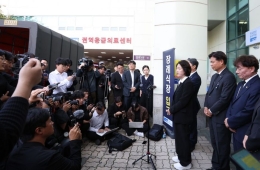
On July 8, the Ministry of SMEs and Startups announced the “SME Rebound Support Measures” in a joint presentation by relevant ministries at the Emergency Economic Headquarters and Economic and Industrial Competitiveness Enhancement Ministerial Meeting.

Recently, the proportion of marginal SMEs has continued to rise as high interest rates and sluggish domestic demand persist. According to Korea Ratings·KR (KODATA), the proportion of SMEs with an interest coverage ratio below 1 for three consecutive years increased from 6.5% in 2020 to 8.8% last year.
An analysis by the Ministry of SMEs and Startups of approximately 110,000 incorporated SMEs with financial data available found that, as of last year, about half—55,000 companies—were either facing a crisis in terms of growth or finance, or showing warning signs. Notably, among companies in financial crisis, 45% of marginal firms (9,700 companies) were found to be increasing their sales, suggesting that timely restructuring could potentially normalize their business operations.
Accordingly, the government will expand the early warning system for signs of distress, currently operated by the Korea SMEs and Startups Agency, from 60,000 companies to all 250,000 SMEs. It will also build an “AI-based SME Crisis Alert Notification System,” which uses AI to analyze not only financial and credit data but also unstructured data such as news and industry trends.
The crisis warning index for each company will be classified into four levels: normal, caution, preliminary alert, and alert. For companies in the preliminary alert and alert stages, information on their crisis status and available support programs will be provided via text message and social networking services (SNS).
Support for restructuring SMEs facing financial crises will also be strengthened. The screening criteria will be revised to focus on normalization and growth potential. Companies with excellent records of implementing management improvement plans will benefit from streamlined funding evaluation procedures and preferential loan terms.
Additionally, from the second half of this year, the “Cooperative Finance Index” evaluation will include the “proportion of SME debt restructuring,” encouraging greater participation from the financial sector in debt adjustments.
For companies seeking rehabilitation, the government will utilize the “Pre-ARS” (Pre-Advanced Restructuring Support) system to support the formulation of debt restructuring plans and offer consulting from accounting and tax experts, thereby increasing the chances of successful rehabilitation.
Support for business transformation among growth-challenged companies will also be expanded. The government will add “5 Key and 3 Specialized” growth engines and regional strategic industries to the six existing new business sectors as priority support targets, and will strengthen step-by-step support in technology, manpower, finance, and market access.
The system for managing business transformation performance will be revamped from a success/failure-based model to a “milestone” approach, providing differentiated support based on achievement of annual goals. Outstanding companies will be designated as “Business Transformation Leading Companies” and linked with the “Jump-Up Program,” a support program for SME growth.
Institutional support will also be expanded. The government will recognize not only industry switches but also spin-offs, joint ventures, and mergers and acquisitions (M&A) as eligible forms of business transformation. For companies approved for new business transformation, the maximum stay period for specialized foreign professionals (E-7) will be extended from three years to five years, and the system will be improved to allow for local investment subsidies if the new investment scale is greater.
Hot Picks Today
 "I Ate It Often Because It Tasted Good"... This Eating Habit Linked to 40% Higher Odds of Asymptomatic Cerebrovascular Damage
- “Dad Just Gave It to Us as a Gift”... Scratched a Lottery Ticket at a Family Gathering and Hit a 1 Billion Won Jackpot
- "Why on earth come to Korea and do this?" ... Chinese Man in Hanfu Says He'll Promote Chinese Culture at Gyeongbokgung
- "My Stomach Was in Knots All Night After Eating a Hamburger"... Woman's Surprise Diagnosis After Tests Came Back Normal
- "What Is That Disgusting Lump in the Water?"... Bizarre Organism Found in Bukhan River
Noh Yongseok, First Vice Minister of the Ministry of SMEs and Startups, stated, “We will concentrate policy capabilities and resources so that SMEs with growth potential can overcome crises and secure new growth engines through restructuring and business transformation.” He added, “We will create an ecosystem for SME rebound in which innovation and challenges continue.”
© The Asia Business Daily. All rights reserved. Unauthorized AI training and use prohibited.


!["Please Take Them Off!" They Made It All the Way to the Bed... Then "80% of Fecal Bacteria" Struck [Deep Scroll]](https://cwcontent.asiae.co.kr/asiaresize/307/2026101610053063338_1792112730.png)