[Exclusive] Police Oppose 'SCIA Notification'; Propose Specific Economic Crimes Act as Alternative
Reporting All General Property Crimes Could Delay Investigations
Alternative Proposal: Use Criteria from the Act on the Aggravated Punishment of Specific Economic or Specific Crimes
Police Request Response Within Five Days; Ministry of the Inter
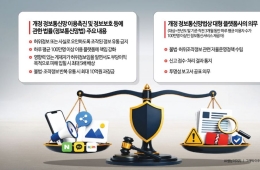
The police have submitted an official opinion to the government, stating that the range of recognized crimes that must be reported to the Serious Crimes Investigation Agency (SCIA) should be significantly reduced. They propose narrowing the scope from all general property crimes under the Criminal Act to only major cases subject to aggravated punishment standards, such as those covered by the Act on the Aggravated Punishment of Specific Economic Crimes.
According to a comprehensive report by The Asia Business Daily on July 7, the National Police Agency recently responded to the SCIA Establishment Support Team that it is difficult to accept the enforcement decree draft for the SCIA Act. Instead, as a supplementary measure, they suggested using laws that specify conditions for aggravated punishment, such as the Act on the Aggravated Punishment of Specific Economic Crimes and the Act on the Aggravated Punishment of Specific Crimes. Under the existing enforcement decree draft, the National Police Agency would be required to report approximately 580,000 cases annually to the SCIA; however, if the proposed alternative is adopted, the number of cases would decrease to tens of thousands.

The enforcement decree draft completed its legislative notice period as of July 6. It outlined the criteria for selecting serious crimes that investigative agencies, including the police, must obligatorily report to the SCIA. If a case falls under any of the six major crime categories—corruption, economic crimes, defense industry crimes, narcotics, crimes of insurrection or treason, and cybercrimes—the police are in principle required to report every such case. Only limited exceptions are specified, such as when the content of an accusation or complaint is unclear, or when there is no practical benefit to an investigation.
The most problematic example is economic crime. If the enforcement decree draft is implemented as is, whenever the police recognize a crime such as fraud, embezzlement, or breach of trust under the Criminal Act, they must report it to the SCIA and wait for a response regarding whether the case will be transferred. Even a minor fraud case worth only tens of thousands of won would be subject to mandatory reporting, which would inevitably delay investigations. However, if the Act on the Aggravated Punishment of Specific Economic Crimes is applied, only economic crimes involving fraud, embezzlement, or breach of trust where the value of illicit gains or property is at least 500 million won would require notification. In the case of narcotics crimes, if the Act on the Aggravated Punishment of Specific Crimes is applied, only cases where the value of the narcotics involved is at least 5 million won would qualify for mandatory reporting, thus reducing the number of cases.
Additionally, the police have argued that voice phishing crimes, such as violations of the Act on the Recovery of Communications Fraud Damage, should be excluded from the reporting requirement. They explain that there is already a government-wide response organization led by the police, the Integrated Response Team for Telecommunications Financial Fraud, and that it is more appropriate for the SCIA to be incorporated into this system, rather than handling such cases separately.
The speed with which the SCIA responds on whether to take over reported cases is also an issue. The National Police Agency has proposed that the SCIA be required to decide within five days whether to take over a case. In comparison, the Corruption Investigation Office for High-Ranking Officials (CIO) currently responds within 60 days after being notified of crimes involving high-ranking officials by other investigative agencies, with possible extensions. The police point out that if crimes with a high risk of escape, such as narcotics cases, are subject to such long response times, it would lead to significant problems such as investigation delays and increased burden of initial response.
Hong Seokgi, Commissioner General of the National Office of Investigation, pointed out during a meeting on July 6 that the enforcement decree draft would impose excessive burdens on investigative agencies. He stated, "We have submitted our opinions to ensure that neither speed nor rigor is compromised in the process of transferring cases, and are currently discussing an appropriate scope after identifying the issues and proposing supplementary measures."
An official from the Ministry of the Interior and Safety stated, "The police have raised concerns that having to report cases outside the SCIA's investigative scope would result in unnecessary administrative work, such as preparing and transmitting documents. We are considering setting the response period for investigation initiation as short as possible, so that it does not take one or two months."
Hot Picks Today
 "Two Eggs for Breakfast, My Protein" The Betrayal of Soft-Boiled Eggs...In July, Always Eat Them Hard-Boiled
- "I Spent 28 Billion Won and Even Received My Son's Plasma to Avoid Aging... But Was Diagnosed with an Incurable Disease"
- Samsung Electronics to Sell KRW 344.5 Billion in Treasury Shares for DX Division Employee Compensation
- "Severity of Social Harm" - Local Official Sentenced to Death in China for Accepting 500 Billion Won in Bribes Over 30 Years
- "Do Not Mess with Her" Warning... Belgium Steps Up Against Trump’s Continued Mockery
Meanwhile, the CIO has also expressed opposition to the reporting provision for recognized crimes. They argue that if the enforcement decree is implemented as is, the SCIA, which operates under the supervision of the Minister of the Interior and Safety, would acquire most information on crimes involving high-ranking officials, thereby undermining the CIO's investigative independence. They also pointed out that this would conflict with the CIO's priority investigative authority.
© The Asia Business Daily. All rights reserved. Unauthorized AI training and use prohibited.