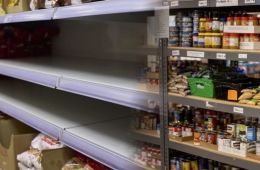
Fierce Franchise Market Sees Wave of Withdrawals from Franchise Business in First Half of Year
1,289 Franchise Registrations Canceled in the First Half of the Year
Including Knotted, Tiger Sugar, and Others
During the first half of this year, several mega brands, including Knotted—which once led trends and rapidly expanded their presence—have withdrawn from their franchise businesses one after another. Brands that enjoyed considerable popularity before and after the COVID-19 pandemic are now adjusting their strategies to prioritize business viability over external growth, reflecting changes in consumer preferences.
According to the Fair Trade Commission’s Franchise Business Information Disclosure System, between January and June of this year, 1,289 companies withdrew their information disclosure statements and canceled their franchise registrations. This represents a 3.5% increase compared to the same period last year. Meanwhile, only 677 companies registered new franchise businesses, marking a 9% decrease from the first half of the previous year.

Registering an information disclosure statement is a mandatory step for engaging in franchise business. Canceling a registration effectively means ending franchise operations, while new registration signals an entry into the franchise business. Over 80% of both those canceling and those newly registering franchise businesses are in the food service industry.
The number of registered franchisors with the Fair Trade Commission decreased for the first time in nine years last year. According to data from the Fair Trade Commission's franchise business database, the number of franchisors who registered disclosure statements was 8,758 last year. The number had grown rapidly, rising from 4,736 in 2017, when data collection began, to 5,835 in 2020 at the height of COVID-19, then to 7,766 in 2021, 8,369 in 2022, and 9,114 in 2024. Despite steady annual growth, last year saw a 3.9% decrease compared to the previous year, marking a shift in the trend. In this context, the first half of this year saw an increase in the number of cancellations and a decrease in the number of newly registered companies compared to last year.
Notably, several brands that once fueled the dessert craze and shook up the market have attracted attention by canceling their franchise registrations and shifting to directly managed stores. Cafe Knotted, which spearheaded the donut “open run” trend, voluntarily canceled its franchise registration in April. In May, 'Yogurt Ice Cream Ui Jeongseok,' a delivery-focused franchise of Yoajeong, was included in the list of voluntary cancellations, while Tiger Sugar, a Taiwanese bubble tea brand that led the milk tea boom just before the pandemic, also ended its franchise business.
Knotted, a premium donut brand launched in 2017, expanded to around 40 locations by 2024 through word of mouth. After registering as a franchise business, the company considered franchise expansion but ultimately did not open any franchise stores, opting instead to return to a directly managed model. A Knotted representative said, "We proceeded with franchise registration during expansion, but ultimately determined it would be difficult to pursue from a business feasibility standpoint, so we decided to focus on directly managed stores instead."
Yoajeong, a yogurt dessert brand founded in 2020 and primarily based on delivery platforms, is now focusing on cafe-type locations, judging growth through delivery-specialized stores to be increasingly challenging. Yoajeong grew as a delivery-focused brand, operating over 180 stores, but after a change in the franchise headquarters in 2024, shifted to opening cafe-style stores, which had expanded to around 660 locations as of last month. As a result, the 'Cafe Yoajeong' franchise brand remains registered, while the delivery-type brand 'Yogurt Ice Cream Ui Jeongseok' canceled its registration. Currently, Yoajeong's official website only provides guidance on launching 'Cafe Yoajeong' locations.
A Yoajeong representative explained, "Concerns over profitability were high due to costs such as delivery platform commissions. While Cafe Yoajeong still offers delivery, our business is now centered on store operations."

Tiger Sugar, which entered the Korean market in 2018, once operated about 50 locations nationwide by 2020. However, as fierce competition in the dessert market led to a sharp decline in interest in brown sugar beverages, the company terminated its franchise business. Tiger Sugar currently operates stores in three locations: Gangnam, Seoul; Pangyo, Gyeonggi; and Uijeongbu, Gyeonggi.
Meanwhile, major corporations have also revised their food service strategies by streamlining their brand portfolios. In May, E-Land Eats voluntarily canceled the franchise registrations for its Asian food brand 'Asiamoon' and Italian brand 'Rimini.' Rimini is now run directly at all but one of its more than 30 stores, and Asiamoon currently operates just one store, which appears to be a franchise outlet. An E-Land Eats representative said, "We are focusing on enhancing brand competitiveness through directly operated restaurants rather than franchise expansion. This is part of a process to adjust our food service portfolio, taking into account the market potential and operational efficiency of each brand."
Orga Whole Foods, which marks its 45th anniversary this year as the origin of Pulmuone, also voluntarily canceled its franchise registration in May, discontinuing its offline franchise business. Pulmuone explained, "Given recent changes in distribution environments and the conditions for offline franchise operations, we have gradually reduced the number of franchise stores. Going forward, we plan to gradually realign our business strategy to focus on external channels and online business expansion."
Some companies canceled their franchise registrations after experiencing severe business disruptions in the first half of the year. After losing a lawsuit filed by franchisees for the return of unjust enrichment, Pizza Hut Korea encountered financial difficulties and filed for corporate rehabilitation in December 2024, with proceedings currently underway. Domestic operations are now continuing under a new franchise headquarters, PH Korea, since last month. Accordingly, Pizza Hut Korea registered again as a franchise under the PH Korea name in April, and the previous registration was canceled a month later in May.
Brands of Sunshine Food (formerly Didim F&B), such as Yeonan Restaurant, which sparked the cockle bibimbap craze, and Shin Mapo Galmaegi, known for affordable skirt meat dishes, also voluntarily canceled multiple franchise registrations in May. Sunshine Food’s business performance deteriorated following the pandemic-induced slump in the food service industry, and after a change in major shareholders, its financial status worsened, resulting in its delisting from the KOSDAQ market in May.
Meanwhile, some brands are pursuing franchise business models after hitting limits in external growth through directly operated stores. In February, Doctor Robin registered as a new franchise business, opening its first franchise outlet in Seoul’s Seorae Village in June, just four months after registering. Yeokjeon FNC, operator of the popular Korean pub franchise Yeokjeon Halmeoni Beer, also registered its new dining-bar franchise 'Halmaek Red' as a franchise in May and has opened two branches in Yeouido and Sadang, Seoul. Well-known for its pork cutlet restaurant 'Jeongdon' in Daehangno, the company registered as a franchise in March, 11 years after its founding, and opened its first franchise location last month.
Hot Picks Today
 "Koreans Spend 1 Million Won Each and Come Back"... 'They Said They Were Going for Value for Money,' but Open Their Wallets Wide in Japan
- "You Mean Only Middle-Aged Men Got to Enjoy This?"... Where Japanese Women in Their 20s and 30s Are Flocking
- "Retired from Politics" Hong Joonpyo Defends Associates in Court for First Time in 25 Years: "I'm a Target... Had No Choice but to Step In"
- "Naked Again?" Controversial Actress Crosses a Line... Slammed for Sexualizing 'Child Characters'
- "They Get a Good Night's Sleep and Earn Twice My Salary... Honestly, I'm So Jealous I Could Die": Civil Servant's Post Targeting Firefighters Sparks Outrage
A franchise industry official commented, "With prolonged high inflation and economic stagnation, more food service companies are exploring strategic changes in their franchise business models. Closely monitoring shifts in consumer tastes and market trends and responding accordingly is crucial at this time."
© The Asia Business Daily. All rights reserved. Unauthorized AI training and use prohibited.