The Country That Limited Summer Vacation Homework and Banned Parents from Grading
Chinese Ministry of Education Issues Guidelines Ahead of Summer Vacation
Supplementary Classes, Early Reopening, and Extension of Vacation Prohibited
Warning Against Exam-Related Corruption and Circumvention
The Ministry of Education of China has announced guidelines ahead of the summer vacation aimed at reducing students' academic burdens and ensuring teachers can focus on their primary duties.
On July 7, Hunan Daily reported that the Ministry of Education of China had distributed a notice titled "2026 Notification on Summer Vacation Safety Work for Elementary, Middle, and High Schools" to local governments and schools, with these core guidelines.

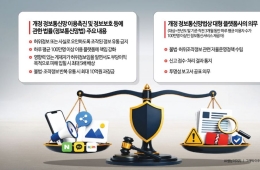
The Ministry of Education of China has announced guidelines aimed at reducing students' academic burdens and ensuring that teachers can focus on their primary duties ahead of the summer vacation. AI-generated image.
View original imageStrict Homework Limits, Parents Prohibited from Checking Homework
The Ministry of Education emphasized that schools across China must strictly control the total amount of summer vacation homework. In particular, it completely banned teachers from assigning homework via smartphone messengers, students completing homework using smartphones, and requiring parents to check or grade their children's homework.
Additionally, it prohibited integrated exams conducted between regions or schools either before, after, or during the summer vacation period, and also targeted exams disguised as summer camps or field trips (experiential learning). Supplementary classes held by schools, early reopening of schools, and extensions of the vacation are also strictly restricted.
The Ministry also issued warnings regarding exam-related corruption and circumvention. While transfers and admissions between neighboring schools and regions are permitted during the compulsory education phase, it stated that illegal early admissions poaching outstanding students from other regions and admissions exceeding enrollment quotas are prohibited. Admissions linked to scholarships or educational donations will also be subject to strict punishment.
Furthermore, all regions and schools are required to conduct safety education and awareness campaigns focused on traffic safety, fire safety, food hygiene, and drowning prevention. As the vacation approaches, schools must provide comprehensive summer safety education to students, and group swimming activities without official approval are also banned.

The Ministry particularly stressed that all local governments and schools in China must thoroughly implement these central government requirements. Only then, it explained, can the burdens at the grassroots level be reduced, allowing teachers to focus on their essential educational responsibilities. While the heavy workload of teachers should be shared, schools must not require teachers to participate in non-curricular training or assign non-educational tasks.
Policy Announced, but Difficult to Implement in Reality
Despite these strong policy announcements, it has become clear that implementation in reality is not easy. Sina Finance reported on July 4, under the headline "Who Actually Listens to the Ministry of Education?" that "every time new regulations are announced, parents express dissatisfaction and a sense of helplessness," adding, "while the policy itself is clearly written, it is not actually enforced in each school and classroom."
Hot Picks Today
 "Is Lunch Getting Too Expensive? This Place Offers 40,000 Won Per Month to Office Workers"
- "Is This the Peak?" Shares Plunge Amid Fears... 'Grim Reaper of Semiconductors' Morgan Warns of Memory Correction
- Jay Y. Lee Attends 'Summer Camp for Billionaires,' Eyes AI Semiconductor Collaboration with Big Tech
- "Why Must Underwear Be Removed at School?"... Japan Stirred by 'Female Student Health Checkup' Controversy
- "I Spent 28 Billion Won and Even Received My Son's Plasma to Avoid Aging... But Was Diagnosed with an Incurable Disease"
The outlet pointed out that because school lessons progress quickly and superficially, all essential and important content is covered through private education, creating a structure in which parents are inevitably forced to join the excessive competition. Despite the Ministry's guidelines, students still have to complete a flood of assignments, including advanced study, copying, and memorization. The report added that elementary school students spend more than three hours a day on homework for each subject, and even after after-school classes, they must study late into the night. It continued, "Students are exhausted both physically and mentally every day, with no time to exercise or rest," and "parents become worn out from caring for their children."
© The Asia Business Daily. All rights reserved. Unauthorized AI training and use prohibited.