[Insight & Opinion] Special Semiconductor Incentive Bonuses Undermine National Happiness
There Is No Clear Answer to the Appropriate Proportion of Rewards
Have We Fully Considered the Social Impact?
A Method to Minimize Damage to Public Values Must Be Established
![[Insight & Opinion] Special Semiconductor Incentive Bonuses Undermine National Happiness](http://www.asiae.co.kr/news/img_view.htm?img=2024062610534629812_1719366826.jpg)
It would not be an exaggeration to say that South Korea is currently in turmoil due to the "windfall" shock brought about by the semiconductor market's super-cycle. This shock has spread widely, affecting not only the stock and real estate markets but also the daily lives of the people.
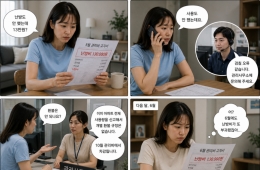
The protest staged on June 18 by members of the "Union Solidarity" in Samsung Electronics' DX (home appliance and mobile) division is considered one aspect of this phenomenon. Wearing black tops and masks, they protested under the banner of "Same Company, Same Rights." The reason for the protest was the special performance bonus criteria agreed upon in May between Samsung Electronics management and labor, which created disparities between business divisions. If this year's operating profit is assumed to be 300 trillion won, each employee in the DS (semiconductor) division could receive up to 600 million won. In contrast, DX division employees are expected to receive only company shares worth about 6 million won per person. As a result, there could be up to a 100-fold difference in the amount of performance bonuses received by employees within the same company, depending on which division they belong to.
The union at Hyundai Motor is also demanding that 30% of last year's net profit be paid as a performance bonus. In this way, the shock caused by special performance bonuses at semiconductor companies such as SK hynix and Samsung Electronics is spreading to the labor sector, fueling a movement to demand that a certain percentage of a company's operating or net profit be paid as bonuses. As this trend is likely to spread further, the Ministry of Employment and Labor has belatedly started efforts to facilitate public discussion on the issue of "excess profits."
There is a growing consensus that in-depth discussion and a redefinition of fair distribution are needed. Recently, compensation such as performance bonuses has varied by workplace, and the gap has grown compared to the past. This is especially evident when comparing public institutions and private companies. This year, the maximum special reward paid to civil servants who achieved outstanding results was 30 million won, given to the "Jeonnam·Gwangju Administrative Promotion Team (11 members)" by the Ministry of the Interior and Safety, which amounts to about 2.72 million won per person. In stark contrast, the special performance bonus agreed upon between Samsung Electronics management and labor is on an astronomical scale.
Some may find this reality unreasonable. Nevertheless, high special performance bonuses based on high profits at semiconductor companies should be recognized as legitimate rewards for results achieved through their own efforts. However, it is important to ensure that these rewards are distributed fairly among all members of the company. The remarkable achievements of semiconductor companies are the result of the collective efforts of all employees and the organizational system. The end result is a total contribution from shareholders, management, workers, and partner companies in the production network. The sustainable growth of a company is a common task that is important to all stakeholders. Continuous investment, both internal and external, has also been necessary to achieve this.
However, there is currently no clear answer as to what constitutes an appropriate level of compensation. This makes it difficult to find the right approach to distributing excess profits in general. As a result, powerful unions repeatedly demand their share through forceful means, while companies compromise at what they consider reasonable levels to quell disputes. The government, concerned about the impact of strikes, is often inclined to tolerate this. It appears that the special performance bonus at Samsung Electronics was also agreed upon through such a process.
The issue that deserves attention is that, during this negotiation process, the potential for the resulting agreement to have a major impact on society was not sufficiently considered. The Ministry of Employment and Labor, which should oversee such matters in the public interest, turned a blind eye. Our society is sustained to a large extent by the sacrifices and dedication of many members who are not properly compensated, going beyond merely questioning the appropriateness of rewards. Even today, we place great value on the social virtues of justice and loyalty rooted in tradition. Nevertheless, the case of Samsung Electronics' special performance bonus for semiconductor employees raises significant concerns that it could foster a growing trend in our society for individuals to meticulously calculate and claim their own share.
The World Happiness Report states that people in Nordic countries are among the happiest in the world because of their high level of trust in society. While the semiconductor super-cycle is expected to boost national income, there are concerns that the shock of special performance bonuses in the semiconductor sector could make our society more sensitive to economic interests, intensify conflicts over profits, and turn it into a place where people are angered by economic inequalities. Ultimately, this could undermine the happiness of the people, which makes it all the more problematic.
Even at this stage, the Ministry of Employment and Labor should establish a payment system for the distribution of excess profits among companies that minimizes harm to public value and national happiness through a transparent public discussion process.
Hot Picks Today
 "Unimaginable in Korea": No Air Conditioning Despite 40°C Carriages... London's 'Gentleman’s Country' Endures Sweltering Subways
- "Two Eggs for Breakfast, My Protein" The Betrayal of Soft-Boiled Eggs...In July, Always Eat Them Hard-Boiled
- Worried About Delisting? Company With 25 Years of Veteran Support Draws Surge in "Donjjul" Spending and Stock Purchases
- "Beyond Discomfort—It's Enough to Make You Sick"...Criticism Mounts Over Prime Minister Takaichi's 260 Million Yen Necklace
- Snapping Photos in Tokyo Wearing Uniqlo and Drinking Asahi Beer: "What Is No Japan?"—How Consumer Trends Have Changed
Kim Dongwon, Former Invited Professor at Korea University
© The Asia Business Daily. All rights reserved. Unauthorized AI training and use prohibited.