Blue House to Include 'Future Response Fund' in August Budget... Additional Semiconductor Tax Revenue to Be Used for 'Future Investment'
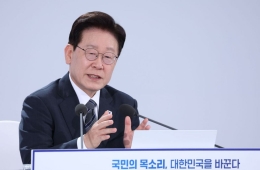
Deokhyun Ryu, Senior Secretary for Fiscal Planning, appears on YouTube program 'Blue House Fact Mill'
Addressing polarization, balanced development, youth, and education issues with the 'Future Response Fund'
The Blue House announced that it plans to finalize the scale and operational plan for the 'Future Response Fund,' which is being promoted using additional tax revenue generated by the semiconductor industry boom, by the time the government budget proposal is formulated in August. The government intends to establish a separate fund through a special law to ensure that the increased tax revenue from the semiconductor boom is not exhausted on short-term spending or one-off supplementary budgets, but instead is directed toward medium- to long-term projects such as boosting the potential growth rate, youth support, balanced regional development, and education.

Deokhyeon Ryu, Senior Secretary for Fiscal Planning at the Blue House, appeared on the YouTube program 'Blue House Fact Mill,' hosted by Gi Hong Seong, Senior Secretary for Public Communication, on July 7 and stated, "We must include specific details by around the time the government budget proposal is prepared in August," adding, "The goal is to prepare swiftly." The main direction of the fund will be presented at the National Fiscal Strategy Meeting next week, and the aim is to outline the scale, uses, and funding methods by the end of August, before next year's budget proposal is submitted.
Senior Secretary Ryu explained the process of establishing the fund, stating, "We will need to create the fund in the form of a special law," and added, "We will comply with legal procedures and form a consensus through sufficient communication with public institutions such as the National Assembly, academia, and the media." He continued, "Since the fund will be formed from taxes paid by companies and citizens, it is not something we can pursue unilaterally," emphasizing that discussions and public debate in the National Assembly will be followed.
Potential uses for the Future Response Fund include boosting the potential growth rate, alleviating K-shaped polarization, promoting balanced regional development, youth policies, and addressing educational issues. Senior Secretary Ryu explained, "There are existential challenges confronting our government," adding, "We must reverse the steadily declining potential growth rate, and even if we achieve growth, we need to mitigate the problem of worsening K-shaped polarization." He also stated, "We are considering how regional revitalization is essential for the nation's prosperity, how to present a vision of the future for young people, and how to address educational challenges."
Youth policy, in particular, was highlighted as a key area for the fund's use. Senior Secretary Ryu stated, "We are preparing comprehensive youth policies," and added, "The fund is also needed for policies reflecting youth needs in areas such as housing and jobs." In addition, infrastructure investment related to the three recently emphasized mega projects is also expected to be a major use of the fund. The rationale is that large-scale investment plans in semiconductors, artificial intelligence (AI) data centers, and physical AI must be accompanied by public infrastructure investments—such as power grids, water supply, land, and living conditions—if they are to lead to actual regional growth.
Senior Secretary Ryu also explained the background for using the term 'additional tax revenue' in relation to the fund's resources. He stated, "Excess tax revenue refers to revenue that exceeds the expected revenue for a single fiscal year projected one year in advance. Additional tax revenue, on the other hand, takes into account instances where revenue exceeds the level generally anticipated each year."
This approach differs from the conventional practice for handling excess tax revenue. Under the current National Finance Act, any remaining surplus after settlement is to be used first for local grants, local education financial grants, contributions to the public fund reimbursement fund, and repayment of national bonds or borrowings. The Blue House's mention of establishing a separate fund through a special law is interpreted as an effort to securely allocate additional tax revenue as an investment resource for the future, without conflicting with the existing system.
The concept of the Future Response Fund was formalized at a high-level meeting between the ruling party and the government on July 5. At the time, Presidential Chief of Staff Hoonshik Kang stated, "The additional tax revenue generated by the semiconductor boom and other factors should not be squandered," and added, "We will boldly invest in the creation of future growth engines, including support for the three mega projects, response to K-shaped polarization, and support for housing, entrepreneurship, and jobs for young people by 2030." The Democratic Party of Korea also expressed agreement with the government's position of allocating additional tax revenue for future generations, growth engines, and addressing polarization, signaling cooperation between the party and the government.
Hot Picks Today
 "Why Go All the Way to Japan?" Walking Alleys and Eating Jjambbong... The Destinations Captivating Travelers in Their 20s and 30s
- "You Wouldn't Expect This from a Police Officer"... Over 5,600 Illegal Videos Found on Mobile Phone
- "You Want Kids to Wear This?"... Zara Halts Sales of 60,000-Won Halloween Costume After Backlash
- "In My Eyes, I'm Still 28"... Chinese Woman Gives Birth to Son at 58 and Daughter at 60
- "Boss, What Is This?" The 2,000 Won 'Pizza-Like Rice Cake' Causes a Sensation at Local Shops [Flavor File X]
Meanwhile, Senior Secretary Seong said of 'Fact Mill,' which was launched today to strengthen communication with the public, "We will enhance open communication so that the policies of the government of popular sovereignty can be delivered to the public in a manner and language they understand." He added, "Relevant aides or officials will appear directly to answer questions from the public and will take responsibility in clarifying any misunderstandings that are not based on fact."
© The Asia Business Daily. All rights reserved. Unauthorized AI training and use prohibited.