[Finance Microscope] Won-Dollar Trading Now Available Overnight... What Challenges Remain?
From July 6, FX Market Moves to 24-Hour Trading
Overnight Trading Gap Disappears, Even in the Early Morning
Thin Liquidity During Overnight Hours Raises Concerns Over Initial Exchange Rate Volatility
Difficult to Respond as During Daytime..
Starting from July 6, the won-dollar market has shifted to a 24-hour trading system, bringing significant changes to the domestic foreign exchange market. With the elimination of the previous gap in FX trading between 2 a.m. and 9 a.m., the market is witnessing both optimism and concern. On one hand, there are expectations that extended trading hours will allow the market to absorb global shocks in real time, leading to greater exchange rate stability. On the other hand, there are worries that low liquidity during late-night hours could cause abrupt spikes in the exchange rate, increasing overall volatility.
Uninterrupted operation on weekdays starting at 6 a.m. on the 6th—What changes are expected?
![[Finance Microscope] Won-Dollar Trading Now Available Overnight... What Challenges Remain?](http://www.asiae.co.kr/news/img_view.htm?img=2026070711355836982_1783391758.png)
The domestic FX market’s trading hours have been gradually extended over time. Until 2016, the market opened at 9 a.m. and closed at 3 p.m., which was later extended to 3:30 p.m. In July 2024, to align with London’s financial market hours, trading was allowed until 2 a.m. the following day.
Two years later, the domestic FX market has entered a new phase. Effective July 6, won-dollar trading hours have been expanded to run from 6 a.m. on Monday to 6 a.m. on Saturday. Excluding weekends and January 1, this effectively enables 24-hour trading. As a result, exporters and importers can now manage FX risk stemming from global events occurring overnight, while individual investors can make real-time transactions that reflect the current won-dollar exchange rate during overseas investments.
The government expects that some of the hedging demand, previously addressed by the offshore Non-Deliverable Forward (NDF) market, will now flow into the onshore official market. The NDF market had absorbed FX demand during the 2 a.m. to 9 a.m. window when the domestic market was closed, but it has been criticized for being a regulatory blind spot vulnerable to speculative bets by global hedge funds. Due to these structural limitations, there have also been concerns that the NDF market distorts the value of the Korean won in the official market.
Will 24-hour FX trading stabilize the exchange rate? The key is controlling abrupt overnight swings
![[Finance Microscope] Won-Dollar Trading Now Available Overnight... What Challenges Remain?](http://www.asiae.co.kr/news/img_view.htm?img=2026070711355536981_1783391755.png)
The main focus is whether the transition to a 24-hour FX market will help stabilize the won-dollar exchange rate, which has recently been above 1,500 won.
Market participants believe that since the domestic FX market can now process external factors around the clock, the past shocks caused by global news being reflected all at once at the morning open will disappear. Because the market remains open even during late-night hours, there is now an ability to gradually absorb shocks in real time as external variables occur.
According to an analysis by Hanwha Investment & Securities Research Center based on data from the Bank of Korea, after the extension of FX trading hours to 2 a.m. in July 2024, the gap volatility between the opening price (9 a.m.) and closing price was reduced by 41.6%. Gap volatility is an indicator measuring the shocks accumulated while the market is closed.
However, there are concerns that during the initial transition period, volatility during late-night hours may actually increase. With fewer trades during these hours, even minor transactions by certain market participants can cause sharp movements in the exchange rate. In fact, after the trading hours were extended in July 2024, overall FX market volatility increased by 30.4% compared to the period before the extension.
Because trading volume is low at night, even a single noticeable news item can cause abnormal and sharp swings in the exchange rate. Compared to daytime trading, price increases are steeper when rising, and declines are deeper when falling, resulting in greater volatility. From the beginning of this year through July 6, there were 69 days—out of a total of 124 trading days—when the closing price of overnight trading (2 a.m. the next day) exceeded the closing price of daytime trading (3:30 p.m.). The first time the won-dollar rate surpassed 1,500 won this year was also during overnight trading, on March 18.
Ultimately, while the volatility caused by external variables being reflected all at once at the morning open has been reduced, the sensitivity to external factors could increase, as the market reacts immediately to capital flows, economic indicators, and political events from the London and New York time zones. In particular, if thin liquidity allows for abrupt overnight spikes in the exchange rate that must be absorbed by daytime market participants, the “tail risk” observed in the NDF market could reappear.
This is why the degree to which trading volume expands during late-night hours is seen as a key factor for future exchange rate stabilization. The monetary authorities’ emphasis on “deepening and broadening the FX market to expand liquidity” is also in line with this point. Strengthening the government’s crisis response and FX management capabilities during the initial settling-in period is cited as a crucial task for advancing toward a more developed market.
The system has begun, but questions remain about workforce sustainability—Further discussion needed

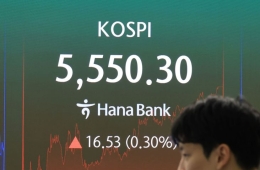
On the 7th, the KOSPI index plunged more than 4% in early trading, breaking below the 8,000 mark. The current status of the domestic stock market is displayed on the electronic board in the dealing room of Hana Bank in Jung-gu, Seoul. 2026.7.7 Photo by Kang Jin-hyung
View original imageThere are also concerns about the changing work environment for personnel supporting the transition to a 24-hour FX market.
Although the Bank of Korea and other FX authorities, Korea Financial Telecommunications & Clearings Institute, and banks have started to respond to the 24-hour system by adding staff and implementing night shift rotations, there is skepticism about sustainability. The number of additional staff is limited to only two or three people, and the structure demands unilaterally extended working hours and sacrifices. In some institutions, overnight shifts rotate about once a week, leading to considerable internal dissatisfaction.
Hot Picks Today
 "The Transfer Failed, but 'Ding-Dong,' Money Came In"... KRW 32.5 Billion Financial Incident at Toss Bank
- Shark 'Bukkangi' Missing... Oil Spill off Busan North Port Raises Concerns
- "Made 12 Billion Won Cleaning Up Other People's Dog Poop With Just a Rake"... 'Poop Scoop Millionaire' Is All the Rage in the U.S.
- [2026 Parliamentary Audit] Education Ministry Pushes New Applicant Numbers That Make the "Competition Rate Impossible to Infer" for Regular Admissions
- Woman Who Bought Economy Ticket Causes Uproar, Demands "Put Me in Business Class," Delays Flight
While uninterrupted 24-hour trading requires a new level of risk management, it is difficult for smaller banks with limited resources to respond effectively to overnight volatility. Banks are also shouldering significant system development and maintenance costs related to these regulatory changes. According to one market participant who requested anonymity, “We are investing our own resources to build the necessary infrastructure and working night shifts to cooperate with government policies,” adding, “Substantive support, such as policy incentives, is needed for the opening of the FX market to take root as a sustainable system.”
© The Asia Business Daily. All rights reserved. Unauthorized AI training and use prohibited.