Canada Submarine Bid Falls Through... Kang Hoonshik Says "Felt the Barrier of Security Alliances Beyond Technology"
Canada Selects Germany's TKMS as Preferred Bidder... Kang Hoonshik Says "We Respect Canada's Decision"
"NATO Barrier Was Difficult to Overcome with Technology Alone... Korea's Defense Industry Scaling Up Has Been Proven"
"K-2 Tank Missed Out in Norw
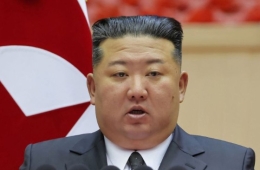
Chief Presidential Secretary Kunshik Kang stated on July 7 that it was “undeniably disappointing” that Hanwha Ocean was not selected as the preferred bidder in Canada’s next-generation submarine project (CPSP), losing out to Germany’s ThyssenKrupp Marine Systems (TKMS). However, he also noted, “It was an opportunity to reaffirm the current standing of Korea’s defense industry.”

Chief Secretary Kunshik Kang is briefing on the results of the Mega Project Public-Private Joint Inspection Meeting held that morning at the Blue House Press Hall on the 6th. July 6, 2026. Photo by Yonhap News
View original imagePosting on Facebook that day, Kang said, “As the President’s special envoy, I oversaw the project on-site and, together with our ‘Defense One-Team,’ we poured all our efforts into it until the very end.” He added, “The Canadian government selected Germany’s TKMS as the preferred bidder on July 6, local time.” The CPSP is a large-scale initiative to replace the aging Victoria-class submarines by introducing up to 12 new diesel submarines. Including construction costs and 30 years of maintenance, repair, and operations (MRO) expenses after acquisition, the project is estimated to be worth up to 60 trillion won.
Kang said that while he respects the Canadian government’s decision, this bid should not be seen simply as a failure. “Canadian local media and experts also assessed that the performance and terms of cooperation offered by Korea and Germany were so evenly matched that it was difficult to determine a clear advantage,” he explained. “The fact that the Canadian government made its decision later than originally planned, only after careful consideration up until just before the NATO summit, shows how difficult a choice it was.”
Kang particularly highlighted the significance of the growth in Korea’s submarine technology. “Korea, which once learned submarine technology from Germany, now stands shoulder-to-shoulder with its former teacher and is even considered equal or superior in terms of performance,” he said. “I feel great pride in the remarkable growth of our defense technology.”
He also diagnosed that the outcome demonstrated the stark realities of defense exports. Kang said, “It also showed that not everything can be explained by technological strength alone.” He added, “It was not easy to overcome the formidable wall of NATO, which has been a strong military-security alliance since 1949.” He continued, “We truly felt the historic weight of the strong security alliance and the legacy of military interoperability built over more than 70 years.”
There is analysis that security and alliance factors played a significant role in Canada’s decision to choose the German company just before the NATO summit. Canada is strengthening its submarine force to bolster Arctic and maritime security, and German TKMS submarines have emphasized their strengths in interoperability with NATO member states. Major foreign media reported that Canada made the decision amid a trend of increasing NATO defense spending, and that the new submarines are focused on enhancing Arctic operational capabilities and NATO interoperability.
Kang stressed that this challenge could serve as a stepping stone to open up other markets in the future. “This project has firmly etched the technological strength of Korea’s submarines and the competitiveness of our industry into the global market,” he said, citing the previous K2 tank bidding case in Norway. “The K2 tank was rated superior to competitors in performance evaluations held in Norway’s harsh winter, but ultimately did not secure the contract due to the NATO alliance barrier,” Kang wrote. “However, Poland, which had paid close attention to its performance, proactively reached out, leading to a historic large-scale contract for up to 1,000 units.”
Hot Picks Today
![“We’ve Hit Bottom”: Samsung Electronics and SK hynix “Undervalued at Global Financial Crisis Levels” Set for W-Shaped Rebound - But When? [Weekend Money]](https://cwcontent.asiae.co.kr/asiaresize/93/2026102210554370325_1792634143.png) “We’ve Hit Bottom”: Samsung Electronics and SK hynix “Undervalued at Global Financial Crisis Levels” Set for W-Shaped Rebound - But When? [Weekend Money]
“We’ve Hit Bottom”: Samsung Electronics and SK hynix “Undervalued at Global Financial Crisis Levels” Set for W-Shaped Rebound - But When? [Weekend Money]
- "Even a Sashimi Restaurant with KRW 400 Million in Monthly Sales Has Little Left" Jung Junha Is "Struggling" Too... Owners Fall Behind on Loan Payments and Struggle with Labor Costs
- Foreign media issue breaking reports on Kim Jong Un's China visit
- 'Gwangmyeong Bungeunwoo,' Drawing Visitors After 9-Hour Trips, Resumes Business: "I Should Make Bungeoppang, Not Go on TV"
- "If This Airs, I'm Dead"... Why a Restaurant Refused to Let Jeon Hyunmoo's Show Film
“This submarine bidding war will also serve as a milestone opening new doors of opportunity,” Kang said. “We will not leave this outcome as mere consolation for a hard-fought loss.” He continued, “We will objectively review the process in which the government and companies worked as one team, address our shortcomings, and further strengthen our advantages to achieve outstanding results in our next challenge.” He added, “The world is vast and there is much to do. We will tie our shoelaces and run again. The strong grip between government and industry, built during this bidding period, will never loosen.”
© The Asia Business Daily. All rights reserved. Unauthorized AI training and use prohibited.