Careful with Every Word... Cultural Industry Issues Warning on Hate and Mockery Expressions
Lisenne’s "Museobno" Remark Sparks Ilbe-Related Mockery Controversy
Original Author of "Manager Kim" Webtoon Also Faces Past Ilbe Allegations
Ilbe-Style Mocking Expressions Must Be Rooted Out from Pop Culture
Beyond Simple Bans: Need for Language Sensitivity Checks and Education

In a video on Lissène's official YouTube channel, Woni is saying "Museobno." Lissène YouTube
View original imageAs controversies over hate speech in popular culture content continue to arise, the responsibility of entertainment agencies and production companies to scrutinize language is increasing. With a surge in self-produced content, there is growing concern that not only celebrities’ remarks but also subtitles, editing, and background props are spreading rapidly in real time, leading to calls for thorough verification of the origins and context of expressions from the production stage.
According to the music and broadcasting industry on July 8, controversy has recently arisen over the use of the phrase "Museobno" ("I'm scared") by Woni, a member of the girl group Lisenne, in their own YouTube content. Critics have claimed that the phrase is associated with Ilbe, a far-right online community. However, others have argued that Woni, who is from Geoje, South Gyeongsang Province, was simply using a local dialect naturally, sparking a debate over the boundary between hate speech and dialect.
In a video released by Lisenne showing Japanese member Minami visiting her hometown, the production staff first said "Museobno," and Woni also used the same expression, commenting, "Even the lighting is scary." After Hyunji Kim, an MBC Gyeongnam producer, raised the issue via social media, the controversy spread and even became a topic of political debate. Former head of the Rebuilding Korea Party, Cho Kuk, insisted that the Yeongnam dialect and Ilbe's "-no" ending should be distinguished, while Lee Junseok, leader of the Reformist New Party, argued that labeling a dialect used by an idol from South Gyeongsang as an Ilbe expression was excessive.
Ilbe is a far-right online community where expressions that ridicule specific politicians and the deceased, or disparage regions, genders, and socially vulnerable groups, are repeatedly used. As a result, suspicions of such expressions appearing in broadcasts, music, or webtoons often lead to boycotts or calls for removal. This has heightened demands that not only celebrities with significant social influence but also production staff must be especially careful to scrutinize expressions that may carry connotations of hate or mockery.
However, there have also been side effects, as some online communities have appropriated the Gyeongsang Province dialect "-no" as a form of political mockery or to insult the deceased, leading to misunderstandings about dialect users themselves. The "-no" ending is a sentence-final particle that has long been used in the Yeongnam region, with usage varying by region, generation, and context. This has led to criticism that it is difficult to judge a speaker’s intent or attitude based on a single ending, and to calls to avoid stigmatizing dialect users in the process of monitoring for hate speech.
Linguistic controversies are expanding from the music industry to content as a whole, including webtoons and dramas. Recently, as the SBS drama "Manager Kim" has gained popularity, suspicions have resurfaced concerning Park Taejun, the original webtoon author and executive producer, alleging ties to Ilbe. Some online communities and YouTube channels have again claimed that the numbers and background signs appearing in the webtoon "Lookism" are intended to mock former President Roh Moo-hyun.


Park has previously denied such allegations, and as of now, the production crew of the drama "Manager Kim" have not issued a separate statement. As content gains greater influence, there is a growing trend for creators’ past statements and works to be scrutinized more broadly.
The industry points to the expansion of self-produced content as a major background for these language controversies. Whereas broadcast programs and interviews were once the main channels of communication, now YouTube channels, short-form content, and live broadcasts operated by agencies are at the forefront. With not only performers’ speech but also subtitles, editing, and background props spreading rapidly, there are more cases where self-produced content that is not subject to broadcast review leads to even greater controversy.
Online memes spread quickly and often have unclear origins, so it is not uncommon for celebrities or production staff to use them without being fully aware of their provenance. However, there is a growing recognition in the industry that simply claiming ignorance is not enough to avoid social responsibility. Expressions with connotations of hate or mockery must be filtered out by establishing a screening system from the production stage.
There is also an increasing need to strengthen internal review systems within entertainment agencies and production companies. Critics point out that current mandatory legal education for those engaged in popular culture and arts planning is insufficient to address the rapidly changing landscape of online hate speech and memes. There are calls for education and internal guidelines that cover not only celebrities but also the production staff responsible for planning, filming, subtitles, and editing.
Hot Picks Today
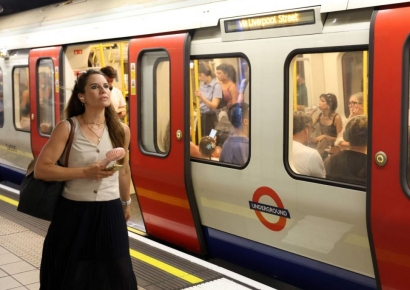 "Unimaginable in Korea": No Air Conditioning Despite 40°C Carriages... London's 'Gentleman’s Country' Endures Sweltering Subways
- "Thank You, Samsung Electronics and SK Hynix" National Pension Service Earns 189 Trillion Won from Domestic Stocks in Three Months
- National Investigation Committee Calls for Stronger Election Commission Audits... Divergence on Constitutional Amendments, Early Voting
- Thai Transgender Illegal Residents Earn Hundreds of Millions Through Dating Sites
- Snapping Photos in Tokyo Wearing Uniqlo and Drinking Asahi Beer: "What's No Japan?" A Shift in Consumer Trends
An industry insider stated, “As self-produced content increases, not only members’ remarks but also staff conversations, subtitles, and editing all become subject to review. While hate speech should be thoroughly filtered out, regional dialects and everyday language should not be mechanically stigmatized.” The insider added, “Rather than simply listing banned words, internal standards should be established that include education on the origin and context of expressions, as well as the characteristics of local language.”
© The Asia Business Daily. All rights reserved. Unauthorized AI training and use prohibited.