The Heat Is On... Korea Energy Agency Urges Applications for Energy Voucher Program
Up to 701,300 Won for Households of Four or More in Vulnerable Groups
'Advance Exception Payment System' Available for Households with Energy Costs Included in Rent

Applications have opened for the 'Energy Voucher' program designed to ease the burden of cooling and heating costs for vulnerable groups. Households with four or more members can receive up to 701,300 won in energy vouchers, which can be used to purchase electricity for cooling, providing significant support for the energy-vulnerable to stay cool during the summer.
The Korea Energy Agency (President Jaegwan Choi) is now accepting new applications for the '2026 Energy Voucher' program, which supports the cooling and heating costs of vulnerable groups. Applications will be accepted until the end of the year. The energy voucher is a system that provides vouchers so that vulnerable groups can purchase energy needed for cooling and heating. Eligible recipients are households that receive at least one of the following benefits: basic living security, medical, housing, or education benefits, and also meet specific household composition criteria.
If income and other criteria are met, 290,000 to 700,000 won is provided depending on the number of household members
Eligible households are those where the applicant or a household member falls into one of the following categories: senior citizens (65 or older), infants and toddlers (children under 7 who are not yet in school), people with disabilities, pregnant women, those with severe, rare, or intractable diseases, single-parent families, children living without guardians (including those in foster care), or families with multiple children (where the household includes a father or mother and at least two children under 19). Beneficiaries can choose between two payment methods: automatic bill deduction from electricity, city gas, or district heating bills (or apartment management fees), or payment for the desired energy source (excluding district heating) using the 'National Happiness Card.'
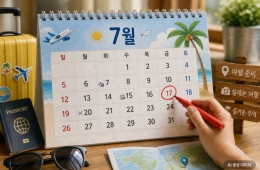
The voucher amount varies by household size: single-person households (295,200 won), two-person households (407,500 won), three-person households (532,700 won), and households with four or more members (701,300 won). Vouchers can be used from July 1, 2026, to May 31, 2027.
As part of the government’s livelihood stabilization measures, households receiving energy vouchers that use kerosene or liquefied petroleum gas (LPG) (220,000 households) will receive an additional 147,000 won. This additional support can be used from October 2026 to May 2027.

New Implementation of Advance Exception Payment System and Briquette Conversion Voucher
This year, two new programs are being introduced to support those who might be excluded from using the energy voucher or from energy use in general: the 'Advance Exception Payment System' and the 'Briquette Conversion Energy Voucher.' The advance exception payment system provides a portion of the voucher amount to households that, due to living in accommodations such as gosiwon (small rooming houses) or jjokbangchon (shantytowns), have energy costs included in their rent and thus have difficulty making direct payments with the voucher. This support is for households that have not used their voucher by the end of October 2026.
The Briquette Conversion Energy Voucher supports the purchase cost of alternative fuels for vulnerable groups who used briquette boilers but have switched to other types of boilers since January 2026.
The agency will expand its 'visiting welfare service,' which provides direct support to households having difficulty using the voucher after application, from the current 59,000 households to 122,000 households (based on budget). Through collaboration with local governments, the agency plans to establish a comprehensive energy welfare support system, including real-time monitoring of energy usage to identify households at risk, in order to ensure that no one is left behind.
Life and Non-life Insurance Associations Donate 100 Million Won...Supporting Energy Costs for Shantytown Residents
On April 29, 2026, the agency signed a Financial Business Agreement (MOU) for 'Public-Private Partnership Energy Welfare Support' with the Korea Life Insurance Association, the Korea Non-life Insurance Association, and the National Jjokbang Counseling Center Association. Under this agreement, the agency will strengthen hands-on administrative support for voucher recipient households in shantytowns—about 4,500 residents—by checking voucher usage status and identifying the reasons for non-usage, including assisting with exception payment applications.
For vulnerable groups who do not qualify for the energy voucher, the agency will use donated funds from the life and non-life insurance associations to provide customized support such as kerosene or LPG costs, electricity bills, or daily necessities depending on the living conditions of each household.
Hot Picks Today
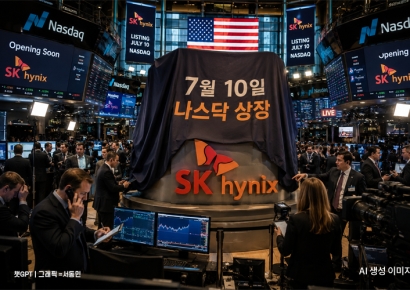 "Everyone Who Hasn't Boarded Yet Will Gather"...SK hynix's Long-Awaited Nasdaq Listing on the 10th
- "Homebodies, Take Note: Just One Day Alone Dramatically Alters the Brain [Reading Science]"
- "Embarrassed at This Age?" Is Outdated... Number of Single 50s and 60s Surges Fivefold
- Fearing for Their Lives, Europeans Rush to Buy Chinese Products... Chinese Factories Overwhelmed
- "Less Than 10,000 Won for 30 Bottles" Snapped Up Online, But Shocked by QR Code... Government Strengthens Control Over Illegal Bottled Water Distribution
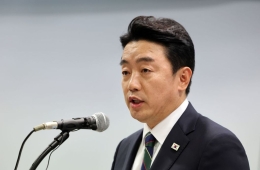
President Jaegwan Choi of the agency stated, "This will serve as a model case demonstrating how public-private cooperation can help alleviate the energy burden on vulnerable groups amid high energy prices and realize social value," and added, "We will continue our efforts to ensure that no neighbors are left behind in energy welfare by closing any remaining gaps in the support system."
© The Asia Business Daily. All rights reserved. Unauthorized AI training and use prohibited.