Franklin Templeton: "Korean Semiconductor Concentration Intensifies... Time to Find Undervalued Quality Stocks"
"Volatility Intensified by Single-Stock Leverage
Need to Establish Hedging Mechanisms for Semiconductor Holdings"
Global asset management firm Franklin Templeton has assessed that while the Korean stock market remains one of the most attractive markets in Asia, the increasing concentration in large-cap semiconductor stocks means that now is the time to seek out undervalued quality stocks in sectors such as defense, shipbuilding, nuclear power, robotics, and electric power equipment.
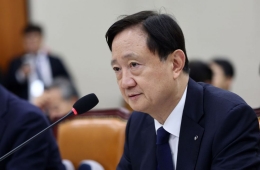
Christy Tan, Global Investment Strategist at Franklin Templeton Research Center, stated in a commentary on July 6, "The Korean stock market is still one of the most appealing destinations for equity investment in Asia. However, the strategy of simply 'buying the index' no longer works," adding, "This rally has been driven by the AI-led semiconductor earnings cycle, political stability, and strong buying from individual investors. Nevertheless, the recent market correction and Korea's continued presence in the MSCI Emerging Markets Index have both highlighted the market's upside potential and its structural limitations."

Christy Tan, Global Investment Strategist at Franklin Templeton Research Center. Franklin Templeton
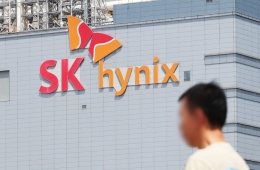
View original imageShe described the Korean stock market as a landscape where "brilliant peacock" semiconductor companies coexist with the still sleeping "Korean tiger." Tan emphasized, "The memory supercycle is an undeniable trend, and AI-driven demand for high-bandwidth memory (HBM) has completely transformed companies' earnings outlooks. However, investors should not lump Samsung Electronics and SK hynix together as AI beneficiaries. Unlike SK hynix, which has solidified its leadership in HBM, Samsung Electronics still faces the challenge of closing its execution gap."
Pointing out the increasing concentration in these large-cap semiconductor stocks, she suggested focusing on 'undervalued quality companies.' Tan stated, "The problem is that index concentration is becoming more severe. And within that, there lies the 'sleeping tiger.'" She explained, "Most Korean companies, overshadowed by the large-cap stocks that dominate the index, remain significantly undervalued. About two-thirds of listed domestic companies are trading below their book value, and around 41% have a price-to-book ratio of 0.5 or less. Rather than chasing overheated megacap semiconductor stocks, investors should seek out robust companies with solid capital bases that have yet to be properly valued by the market."
As examples, she cited defense, shipbuilding, nuclear power, robotics, and electric power equipment. Tan said, "Sectors that benefit from the reindustrialization of the United States and global supply chain investments offer more direct channels for investing in Korea's strategic positioning. Through these sectors, investors can gain exposure to Korea's elevated geopolitical and industrial status without relying solely on semiconductor momentum."
She also stressed the need for a shift in investment strategy to guard against heightened volatility caused by leveraged single-stock positions. Tan noted, "The recent period of volatility has shown that even normal profit-taking can instantly turn into forced mechanical selling due to single-stock leverage and derivatives. The flow of leveraged capital from Korean retail investors has now become a structural risk to the market, rather than just a sentiment indicator."
Hot Picks Today
 Sold for 3.8 Billion Won, Now Down 700 Million... "I'll Sell" as Eunma Listings Surge 3.7-Fold
- "Koreans Spend 1 Million Won Each and Come Back"... 'They Said They Were Going for Value for Money,' but Open Their Wallets Wide in Japan
- [Earnings Call] SK hynix's Kwak Nojeong: "Solidigm IPO Unlikely to Deliver Expected Benefits"
- "Wow, Have Middle-Aged Men Had This All to Themselves?"... Women in Their 20s and 30s Find Comfort in a Standing Drink
- "I Have 9 Billion Won, but I Still Can't Quit"... The Unexpected Worry of a Major-Company Employee in His 40s Who Hit It Big with Investments
She advised, "Therefore, investors should reduce concentration in individual stocks and adopt a phased buying strategy. At the same time, they should strengthen risk management criteria and establish hedging mechanisms for semiconductor holdings that have seen heavy inflows."
© The Asia Business Daily. All rights reserved. Unauthorized AI training and use prohibited.