[Meeting the Ambassador] "Korea and EU Share Geopolitical Headwinds... Economic Security Cooperation Must Be Strengthened"
Ugo Astuto, Ambassador of the European Union (EU) to Korea
"Korea and the EU must cooperate based on shared values of liberal democracy and their converging interests as advanced economies."
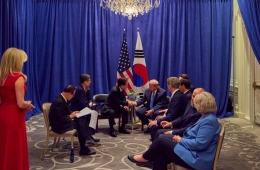
Hugo Astuto, Ambassador of the European Union to Korea, stated this during an interview with The Asia Business Daily on June 29th, reflecting on President Lee Jaemyoung's recent visit to Europe and the achievements of the Korea-EU summit, as well as future areas for cooperation between the two sides.

Hugo Astuto, Ambassador of the Delegation of the European Union to Korea, is posing ahead of an interview with The Asia Business Daily on the 29th at the Delegation of the European Union to Korea in Jung-gu, Seoul. Photo by Jinhyung Kang
View original imageAmbassador Astuto expressed concern, saying, "We are facing the challenge of geopolitical headwinds," and added, "We are living through difficult times when the temptation to believe that might makes right is once again resurfacing in international relations."
Korea and the EU have been like-minded partners for the past 60 years. Their cooperation is now expanding into economic security and supply chain security, as well as advanced technology and green and digital transitions. Ambassador Astuto said, "The newly established Competitiveness Partnership, the 2+2 Trade and Economic Dialogue, and the Energy Dialogue launched at this summit will serve as new tools to enhance the resilience of both countries' economies and tackle supply chain crises." The following is a Q&A with Ambassador Hugo Astuto of the EU.
-What do you see as the greatest achievements and future messages of this Korea-EU summit?
▲It was a very positive summit. In many ways, it was significant, and the leaders of both sides injected new momentum into the rapidly developing strategic partnership of recent years. Given that we are now faced with the challenge of geopolitical headwinds, it is only natural that like-minded partners such as Korea and the EU work together, united by shared values of liberal democracy and the converging interests of advanced economies.
-Specifically, in what areas did discussions advance during this summit?
▲The leaders of both sides expressed their intention to further advance the partnership across all trade and economic issues. Economic security and supply chain stability are now at the forefront of our agenda. That is why we established the 'Competitiveness Partnership' and the new '2+2 Trade and Economic Dialogue.' In addition, the recent crisis surrounding the Strait of Hormuz confirmed our ongoing vulnerability in oil and gas supply chains, prompting us to accelerate the transition to a green energy mix by launching the 'Energy Dialogue.' We have agreed to deepen cooperation in areas where Korea leads—such as artificial intelligence (AI) and industrial robotics—and in the EU's areas of expertise, such as research, innovation, and manufacturing.
-It appears that Korea and the EU are also expanding cooperation in AI and digital transformation.
▲The introduction and spread of AI is a priority for both Korea and the EU. We want to promote innovation, but at the same time, we believe it must proceed in a manner that meets the expectations of democratic societies. Values such as respect for individual rights are important. Green and digital transitions, as well as research and innovation, are key areas where Korea and the EU can cooperate even more closely in the future.
-What is the key word that defines the Korea-EU relationship over the past 60 years?
▲If I had to choose one keyword, it would be "shared values." We are living through a very challenging time in international relations, and in some places we are witnessing the re-emergence of the temptation to believe that "might makes right." We must push back against this and defend a system governed by international law and respect for the United Nations Charter.
-What are the three projects the EU is currently watching most closely?
▲We value our relationship with Korea across the board. Among the especially interesting new developments, the three areas I would highlight are: first, research and innovation; second, digital transformation; and third, economic security.
-How can Korea's defense industry and the EU's defense initiatives complement each other?
▲It is well known that Korea's defense industry is highly competitive. Korea has already become one of the major suppliers of weapons to some EU member states. Europe is currently facing a clear and present threat following Russia's invasion of Ukraine. The EU's role is to address the fragmentation of the European defense market and to promote rationalization, joint procurement, and joint investment. By providing a more comprehensive framework and serving as a kind of force multiplier, the EU can generate complementary synergy between the two sides.
-Korea and the EU issued a joint statement condemning North Korea and Russia's illegal military cooperation.
▲Security in Europe and in the Indo-Pacific region are closely interconnected. North Korea has played a major enabling role in Russia's war of aggression against Ukraine, supplying troops, ammunition, missiles, and all kinds of military materiel. We do not know how much military technology North Korea is receiving from Russia, but it is leading to the further encouragement of North Korea's ongoing illegal nuclear and missile activities. We share concerns about the continued missile launches and illegal nuclear proliferation and nuclear weapons buildup by North Korea, and we must urge the full implementation of existing United Nations Security Council resolutions.
-How do you expect the recently agreed 'Classified Information Protection Agreement' to develop?
▲We are only at the initial stages of discussion and negotiation, so it is difficult to comment in advance on the specific nature or details of the agreement. However, I hope this agreement will be understood as a natural corollary of the 'Security and Defense Partnership' we concluded in 2024.
-What role can the EU play in promoting peace, stability, and regional security cooperation in East Asia?
▲Security in the Indo-Pacific is directly linked with European security. The EU has a significant stake in the peace and prosperity of this region, and a substantial portion of our trade and global GDP growth comes from here. Since 2022, the EU has held regular 'EU-Indo-Pacific Ministerial Meetings' to strengthen cooperation and identify areas of common interest. Specifically, we are expanding our free trade agreement (FTA) network to cover nearly 50% of global GDP.
-What diplomatic and security support can the EU provide for peaceful coexistence on the Korean Peninsula?
▲We strongly welcome the Korean government's efforts to ease tensions and promote dialogue. If and when it becomes possible in the future, we are always ready to support a meaningful diplomatic process.
-How will you safeguard the multilateral trading system amid the spread of global protectionism?
▲The more uncertain the times, the more the EU can act as a beacon of predictability—a reliable and trustworthy partner. Our defining characteristic is that we are a rules-based organization. We believe that the open, rules-based trade system centered on the World Trade Organization (WTO) has provided us with great benefits for a long time. Korea played a pioneering role in this field by concluding an FTA with the EU in 2011, and this agreement has achieved significant results.
-Do you see the complete denuclearization of the Korean Peninsula as achievable within our generation?
▲The important thing is to adhere to United Nations resolutions and, as members of the international community, to be clearly aware of and consider the risks we face in a world where nuclear proliferation is widespread.
Hot Picks Today
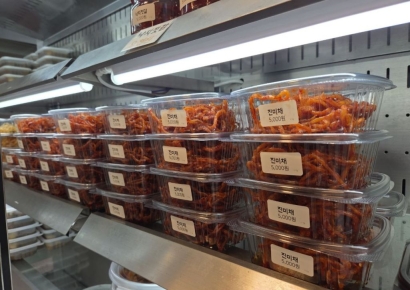 "Auntie, When Will Dried Shredded Squid Return as a Side Dish?"...Once Vanished from Restaurants, Now Making a Comeback
- Monthly Salary Soars 3.7 Times from 8.25 Million Won to 30.59 Million Won... 86 Fair Trade Commission Retirees Join Law Firms Over 10 Years
- "Looks Like a Curtain" — 60% of Retinal Detachment Patients Are in Their 20s to 50s, Not Just an Elderly Disease
- "You've Earned Your Wealth—Now It's Time to Use It Well"...Seniors Turning to Financial Centers Before Illness Hits [Finance Embracing Seniors] ①
- "V and Go Yoonjung Wear Them Too"... The Transformation of the ‘Grandma Ring’ Captivates Foreigners [K-Holic]

Hugo Astuto, Ambassador of the European Union Delegation to Korea, is interviewed by The Asia Business Daily on the 29th at the European Union Delegation to Korea in Jung-gu, Seoul. Photo by Kang Jinhyung
View original imageHugo Astuto, the EU Ambassador to Korea, is a seasoned diplomat with extensive experience in multilateral diplomacy and Asian affairs. He majored in political science and earned bachelor’s degrees in history, international law, and economics at Sapienza University of Rome, and completed the Foreign Service program at the Italian Society for International Organization (SIOI), building a solid foundation in Asian and multilateral diplomacy. Notably, Ambassador Astuto also completed his military service as an air force second lieutenant from 1987 to 1988.
Ambassador Astuto began his career in 1991 at the Economic Department of the Italian Ministry of Foreign Affairs, building experience at the core of policy decision-making and the field as Second and First Secretary at the Italian Embassy in Kenya. He went on to serve as First Secretary and Counsellor at the Italian Permanent Representation to the Western European Union (WEU) and the EU, as well as Adviser to the Foreign Minister. He also gained experience in multilateral economic diplomacy as the Italian Alternate Director at the European Bank for Reconstruction and Development (EBRD) and as First Counsellor at the Italian Embassy in the UK.
In addition to his native Italian, Ambassador Astuto is fluent in English and French, with basic German proficiency. He has long worked in the diplomatic field, analyzing the situation and economy in Asia and his home country. He served as Counsellor and Deputy Head of Mission at the Italian Embassy in India, Head of South and Southeast Asia Division and Deputy Director for Asia and the Pacific at the European External Action Service (EEAS), where he oversaw Asia-related diplomatic policy. He then held roles as Deputy Director for Asia and Deputy Director for Globalization at the Italian Ministry of Foreign Affairs, served as EU Ambassador to India and Bhutan, and, after serving as Deputy Director for G7 and G20 affairs in the Political Directorate of the Italian Ministry of Foreign Affairs, he assumed his post in Korea in September of last year.
© The Asia Business Daily. All rights reserved. Unauthorized AI training and use prohibited.