Gap in Jeonse Deposits Between New and Renewal Contracts in Seoul Doubles
Burden of New Jeonse Contracts Rises Amid Strong Price Trends
Share of Renewals in Seoul Surpasses New Contracts
Recently, as the rise in jeonse prices continues in the Seoul metropolitan area, the burden on tenants seeking new jeonse contracts has increased. Unlike new contracts, renewals are influenced by the conditions of existing contracts, resulting in a widening gap in jeonse deposits between new contracts and renewals even within the same complex and the same unit size.

Apartment complexes around Dongtan Station, Hwaseong City, Gyeonggi Province. Photo by Yonhap News
View original imageAccording to an analysis by Zigbang on July 6 of apartment jeonse transactions in the Seoul metropolitan area from January to June 2026, the gap in jeonse deposits between new contracts and renewals has expanded, especially in Seoul.
The analysis focused on cases where both new and renewed contracts occurred in the same complex for the same unit size. Jeonse deposits were compared based on the median transaction value for each type, specifically for exclusive areas of 59㎡ and 84㎡. Monthly rental contracts were excluded from the analysis.
Among the Seoul metropolitan area, Seoul recorded the largest gap in jeonse deposits between new contracts and renewals. For 59㎡ units, the difference in jeonse deposits between new and renewed contracts more than doubled from 35 million won in January to 77.5 million won last month. During this period, the jeonse deposit for new contracts rose from 500 million won to 547.5 million won, while renewals remained around 465 million won to 470 million won.
The gap was even more pronounced for 84㎡ units. The difference in jeonse deposits between new contracts and renewals widened from 43.75 million won in January to 80 million won last month. While the jeonse deposit for new contracts increased from 656.25 million won to 700 million won during this period, renewals rose only slightly from 612.5 million won to 620 million won, highlighting a clear difference in the rate of increase between new and renewed contracts.
Gyeonggi Province also showed a trend of increasing burden for new contracts. For 59㎡ units, the gap in jeonse deposits between new contracts and renewals expanded slightly from 20 million won in January to 22 million won last month. In contrast, the gap for 84㎡ units widened significantly from 10.5 million won to 51 million won over the same period. The jeonse deposit for new contracts increased from 400 million won to 450 million won, whereas renewals only rose from 389.5 million won to 399 million won, further expanding the gap with new contracts.
In contrast, Incheon showed a similar trend where new contracts had higher jeonse deposits than renewals, but the widening gap seen in Seoul and Gyeonggi Province was relatively limited. As of June, the difference in jeonse deposits between new and renewed contracts was 9.5 million won for 59㎡ units and 7.12 million won for 84㎡ units, the smallest gap among metropolitan areas.
Actual transaction data confirmed a steady increase in the proportion of renewals. In Seoul, the share of new contracts dropped from 52.6% in January to 45.0% in June, while the share of renewals rose from 47.4% to 55.0%, surpassing new contracts since April. In Gyeonggi Province as well, the share of renewals increased from 38.6% to 45.4% over the same period.

A Zigbang official stated, "While new contracts immediately reflect the current market price, renewals are influenced by the conditions of the previous agreement. In cases where the contract renewal request right is exercised, legal restrictions on rent increases can further widen the gap in jeonse deposits between new contracts and renewals. Even general renewals without the contract renewal request right may more closely reflect the current market, but since they are still based on the previous contract, differences in deposit levels between new and renewed contracts can occur."
Hot Picks Today
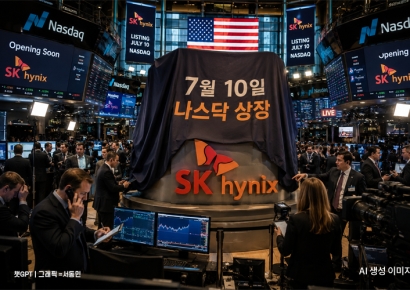 "Everyone Who Hasn't Boarded Yet Will Gather"...SK hynix's Long-Awaited Nasdaq Listing on the 10th
- "Homebodies, Take Note: Just One Day Alone Dramatically Alters the Brain [Reading Science]"
- "KOSPI’s Fate Hinges on Samsung’s Earnings: Will the ‘Surge’ Resume as Profit Eyes 99 Trillion Won?"
- Fearing for Their Lives, Europeans Rush to Buy Chinese Products... Chinese Factories Overwhelmed
- "Less Than 10,000 Won for 30 Bottles" Snapped Up Online, But Shocked by QR Code... Government Strengthens Control Over Illegal Bottled Water Distribution
The official added, "With the recent shortage of jeonse listings and rising jeonse prices, the burden of deposits required for new contracts has increased. When factoring in moving costs and brokerage fees, more existing tenants are choosing to renew. As the trend of increasing renewals in Seoul and Gyeonggi Province continues, it is expected that the widening gap in jeonse deposits between new and renewed contracts and the preference for renewals will persist for the time being while jeonse prices remain strong."
© The Asia Business Daily. All rights reserved. Unauthorized AI training and use prohibited.