"Getting Worse and Worse": Even "All Staff Annual Leave" Fails as High Exchange Rate and Oil Prices Render "Emergency Management" Useless
Foreign Currency Translation Losses Surge Despite Company-wide Emergency Management
Second Quarter Earnings Crisis... Heightened Tension in Petrochemical and Steel Industries
On July 3, all employees at Korean Air headquarters took annual leave. Despite declaring emergency management in April, the prolonged high exchange rate and high oil prices prompted the company to take further cost-saving measures, such as having staff use their annual leave. A company representative stated, "Except for essential operational personnel, we decided at the headquarters level to take joint annual leave," adding, "We are in a situation where cost reduction is desperately needed, like squeezing water from a dry rag."

As the record-high exchange rate persists, the domestic aviation industry is facing an unprecedented 'financial shock.' Each airline has declared company-wide emergency management and is working to cut costs, but the prolonged strength of the dollar has left them powerless.
Petrochemical and steel companies, which are also concerned about losses due to the high exchange rate, are expected to face increased management burdens in the second half of the year due to both oversupply and sluggish demand. With the foreign exchange market moving to 24-hour trading, concerns are rising that exchange rate volatility will intensify, heightening corporate anxiety over currency fluctuations.
According to the industry on July 6, the outlook for the second quarter financial results of airlines is expected to be 'in the red.' This is due to a surge in operating costs from the rising exchange rate and the ballooning of foreign currency translation losses on the books. In the first quarter, the combined foreign currency translation losses of domestic listed airlines nearly reached 1.2 trillion won.
Korean Air and Asiana Airlines recorded foreign currency translation losses of 865.1 billion won and 266.1 billion won, respectively. Low-cost carriers (LCCs) such as Jeju Air (45.2 billion won), Air Busan (41 billion won), Trinity Air (formerly T'way Air, 31.5 billion won), and Jin Air (24.8 billion won) also suffered hundreds of billions of won in book losses.
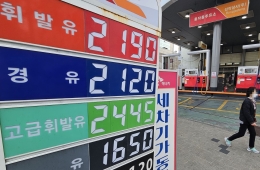
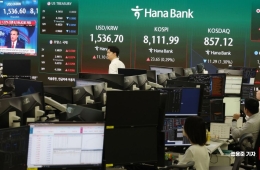
The situation in the second quarter is deteriorating further. The won-dollar exchange rate at the end of the first quarter was 1,530 won, but by the end of the second quarter it had risen to 1,549 won. The quarterly average exchange rate broke past the 1,500 won mark for the first time in 28 years since the foreign exchange crisis, making it certain that the scale of foreign currency valuation losses will only grow. Most aircraft financing (leases and purchase loans) used by airlines to acquire aircraft consists of dollar-denominated debt.
When the exchange rate rises, the principal and interest that must be repaid in won terms increases by hundreds of billions without any action taken. This is the main factor eroding net profit. Airlines are actively increasing fixed-rate borrowing based on other currencies such as yen or euros, instead of dollar-denominated debt. However, most experts point out that these financial measures are insufficient to keep up with the rapid surge in the dollar.
In particular, the second quarter is traditionally an off-peak season for passenger demand, and as the high exchange rate increases the cost burden for overseas stays, more consumers are giving up on international travel, making the phenomenon of 'demand contraction' more visible and raising concerns of operating losses. According to FnGuide, Asiana Airlines is estimated to post an operating loss of 349 billion won, while Jeju Air is expected to report a loss of 93 billion won, Trinity Air 121 billion won, and Jin Air 34.5 billion won. Only Korean Air is projected to barely turn a profit, with an estimated 44.2 billion won, thanks to the strong performance of its cargo division.

The petrochemical and steel industries are expected to see some improvement in second-quarter performance due to supply disruptions from the Middle East war and the lagging effect (profitability improvement from delayed raw material input costs). However, this may be only a temporary effect. The petrochemical industry imports most of its key raw materials, such as crude oil and naphtha, in dollars. In the past, when costs rose, they could offset some of the burden by raising product prices, but now, with oversupply from China and sluggish market conditions, price competition has intensified and their ability to do so has diminished significantly.
The industry believes that if the current exchange rate level persists, a deterioration in profitability will be inevitable. An industry official explained, "There was a temporary improvement in profitability as product prices rose due to supply disruptions caused by the Middle East war," but added, "Recently, while the rising exchange rate has increased the cost of importing raw materials, the final product prices have stabilized, leading to a gradual decline in profitability."
In response, companies are restructuring their business portfolios to reduce the proportion of generic products and focus on high value-added specialty products. Their strategy is to expand the share of high-profit products such as semiconductor and mobility materials to minimize the impact of exchange rate fluctuations and market downturns. Lotte Chemical is actively developing high value-added businesses to quickly improve its business structure. The company plans to reduce the proportion of generic petrochemicals to below 40% and diversify its portfolio by fostering new businesses in advanced materials, fine chemicals, battery materials, and hydrogen energy.
LG Chem has also restructured its portfolio to focus on high value-added businesses, selecting semiconductor, mobility, and robotics materials as well as anticancer drugs as key future businesses. By 2035, the company plans to invest a total of 15 trillion won in research and development (R&D), allocating 70% of all investments to semiconductor, mobility, and robotics materials. The goal is to grow its electronic materials business to 2 trillion won in sales by 2030.
Hot Picks Today
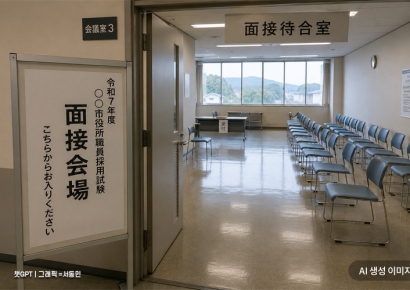 "Who Wants to Be a Public Servant These Days?" Japan on High Alert as Technical Positions See Zero Applicants
- "Everyone Who Hasn't Boarded Yet Will Gather"...SK hynix's Long-Awaited Nasdaq Listing on the 10th
- "ChatGPT Taught Me": Japanese High School Student Hacks Streaming Service, Causes Uproar
- Thought It Was a Salary, But It's $5,860 Rent... Even a $190,000 Salary Can't Keep Up in This City
- "Can't Even Pay the Freezer Electricity Bill"... Ice Cream Company Sees 99% Plunge in Brand Value
The situation is similar for the steel industry. As it relies on imports for major raw materials such as iron ore and coking coal, the continuation of a high exchange rate will inevitably increase their cost burden. Due to the industry’s structure being more sensitive to the domestic economy than to exports, the positive effects of currency depreciation on exports are limited. An industry source said, "We have been operating natural hedges to minimize the impact of exchange rate fluctuations, but in the current high exchange rate situation, the burden of raw material imports is much greater," adding, "We are continuing efforts to improve profitability by cutting costs and expanding sales of high value-added products."
© The Asia Business Daily. All rights reserved. Unauthorized AI training and use prohibited.