Samsung's 19 Trillion Won Investment and Government Initiatives: Gumi City Bets on Becoming South Korea's Manufacturing AX Capital
Humanoid Robots, AI Data Centers, Semiconductors, and Defense
Government Vision and Samsung Investment Redraw the Industrial Map
Dedicated Task Forces Launched, Ushering in a "Second Industrialization"
Gumi, once known as the "City of Electronics," is once again emerging as the center of South Korea's industrial landscape.
Following the government's official declaration on July 3, 2026, at the Yeongnam Region National Briefing Session, designating Gumi as a manufacturing AI transformation (AX) innovation hub focused on robotics and semiconductor materials, components, and equipment, Samsung Electronics and Samsung SDS have announced a massive investment plan totaling 19 trillion won. This has positioned Gumi as the core stage for South Korea's advanced manufacturing innovation.
![Panoramic view of Gumi Industrial Complex along the Nakdong River<br>[Photo by Gumi City]](http://www.asiae.co.kr/news/img_view.htm?img=2026070512044334305_1783220683.jpg)
Panoramic view of Gumi Industrial Complex along the Nakdong River
[Photo by Gumi City]
This announcement represents more than a simple corporate investment. It is being recognized as a rare example where government industrial policy, global corporate future investment strategies, and local government industrial development plans are all aligned around a single axis.
Samsung plans to establish a humanoid robot mass-production line in Gumi, convert existing production facilities into AI-based smart manufacturing plants, and build a large-scale AI data center. This will create a new industrial ecosystem in which manufacturing, artificial intelligence, and data infrastructure are all concentrated in one place.
◆ Robotics Industry... Gumi's New Flagship Industry The most prominent change lies in the robotics sector.
The government has outlined a blueprint to nurture South Korea into one of the world's top three robotics powers, centered around Gumi. Samsung Electronics has also unveiled plans to establish a humanoid robot production base in the city.
Notably, Tae Moon Roh, President of Samsung Electronics, directly requested the President to designate Gumi as a specialized robotics cluster, significantly increasing the likelihood of government support.
In response, the Gumi City government immediately decided to form a dedicated task force for the robotics industry.
This dedicated organization will support the entire process, including investment scale, production facilities, attracting partner companies, workforce development, and research and development.
Having already enacted an ordinance for robotics industry promotion and applied for designation as a national advanced strategic industry cluster, Gumi will now take on a practical control tower role connecting Samsung's investment and government policy.
◆ Semiconductors... Beyond "Materials, Components, and Equipment Capital" to Production Base The semiconductor strategy is also becoming more concrete.
The government has decided to nurture Gumi as a hub for semiconductor materials, components, and equipment, as well as for defense semiconductors.
Gumi City plans to use this opportunity to focus on being selected for a preliminary feasibility study for the construction of an advanced semiconductor materials and components manufacturing complex, while also actively proposing government projects for defense semiconductor pilot production and mass-production infrastructure.
The most notable declaration is that "there will be no giving up on attracting a fab (semiconductor production plant)."
With all the necessary conditions, including water supply, electricity, industrial land, transportation networks, and skilled professionals, the city will continue to pursue the attraction of semiconductor manufacturing facilities.
Currently, Gumi is the only non-capital region that has secured both a specialized semiconductor materials and components cluster and a southern innovation belt.
◆ Defense Industry and AI... Completing the Future Industrial Puzzle The defense industry strategy is also aligned with government plans.
Gumi already hosts leading domestic defense companies such as Hanwha Systems and LIG D&A, clustered around the Defense Industry Innovation Cluster.
In addition, the city is seeking designation as a specialized cluster for defense industry materials, components, and equipment, aiming to become a key production base for advanced weapon system core parts.
An even more ambitious vision has been presented for the AI sector.
If Samsung SDS's 120MW AI data center and a global company's 1.3GW-class AI data center are realized, Gumi will become one of the largest AI data hubs in South Korea.
Gumi City is also moving to attract a demonstration smart industrial complex supporting manufacturing companies' AI transformation (AX) and an AI convergence cluster, with the goal of establishing an industrial city model that combines manufacturing with AI.
◆ Solving Industrial Land Shortages... Pushing for a 2 Million Pyeong National Advanced Industrial Complex The biggest challenge for large-scale investment is securing enough industrial land.
To accommodate the simultaneous attraction of Samsung's investment, AI data centers, semiconductor, and defense companies, Gumi City plans to propose to the government the creation of a new national advanced strategic industrial complex spanning 2 million pyeong.
At the same time, the city will form specialized task forces for each sector—robotics, semiconductors, defense, and AI—to accelerate investment support and responses to government project competitions.
Jang Ho Kim, Mayor of Gumi City, stated, "Fifty years of manufacturing expertise and advanced infrastructure have met Samsung's future vision," adding, "We will develop Gumi into the center of manufacturing innovation in South Korea."
The core of the Yeongnam Region National Briefing Session is not the scale of the 19 trillion won investment. More importantly, government policy, Samsung's future investment, and local government strategies have all been aligned in the same direction.
Although Gumi has long enjoyed a reputation as the "Mecca of the Electronics Industry," it has been perceived as having lost its growth momentum amid changes in industrial structure and the concentration of development in the capital region.
This announcement is significant not as a simple expansion of factories, but as a national strategy that integrates robotics, semiconductors, defense, and AI into a single industrial ecosystem.
Of course, there are still considerable challenges ahead. Securing large-scale industrial land, supplying electricity, developing skilled professionals, and establishing an ecosystem of partner companies are all issues that must be addressed. However, the fact that both government policy and Samsung's long-term investment direction are focused on Gumi means this project is likely to be recorded as the most significant industrial turning point since the establishment of national industrial complexes.
Hot Picks Today
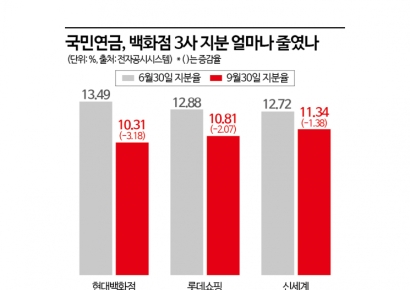 'Big Investor' NPS Has Already Cut Its Losses... Sold Department Store Stocks in Q3 Despite Strong Earnings Outlook
- "Female Teachers Must Wear Skirts in Class"... Outrage Erupts Over Principal's Demand: What's Happening in North Korea?
- "The Inner Aisles Are Risky; Stick to the Perimeter": Why a Doctor Warned
- "I Put in 10 Million Won, but Only 2 Million Won Is Left" ... 77% Plunge Leaves Retail Investors in Samsung Electronics and SK hynix Leveraged ETFs Crying Out
- "The leggings are all see-through. It's so embarrassing to look at," complaints prompt Lululemon to fire development staff.
Gumi has once again begun to beat as the heart of South Korea's manufacturing innovation. Now, what remains are speed and execution.
© The Asia Business Daily. All rights reserved. Unauthorized AI training and use prohibited.