Caught for Driving Hungover While Reporting Minor Accident; Man in His 50s Fined
"Possibility of Measurement Error" Claimed
Court: "Reliability of Device Acknowledged"
A man in his 50s who visited a local police station to report being the victim of a minor collision ended up being caught for driving under the influence while still hungover. He claimed there could be a margin of error in the breathalyzer test, but was ultimately punished.
According to Yonhap News Agency on July 4, the Chuncheon District Court's Criminal Division 2 (Presiding Judge Ko Beomjin) sentenced Mr. A (59), who was indicted on charges of drunk driving under the Road Traffic Act, to a fine of 5 million won.

Mr. A was put on trial for driving a passenger car with a blood alcohol concentration of 0.03%, which is at the threshold for license suspension, over a distance of approximately 2.9 kilometers in Chuncheon, Gangwon Province, at around 11:10 a.m. on October 18 of last year. Investigation revealed that after drinking with an acquaintance the night before the incident, Mr. A discovered the next day that his parked vehicle had been hit by another car and drove himself to the police station to report it.
The police detected the smell of alcohol on Mr. A and conducted a preliminary alcohol screening. When the device showed a positive result, he was instructed to rinse his mouth with water, after which a breathalyzer was used to measure his blood alcohol concentration, confirming drunk driving.
During the trial, Mr. A admitted to driving while hungover but denied the charges, arguing, "There was a possibility that my blood alcohol concentration was below 0.03% at the time of the breathalyzer test." His defense argued, "Since the reading of 0.03% is exactly at the legal minimum threshold, measurement errors in the device or external factors could have affected the result, yet the police did not eliminate this possibility by conducting repeated tests."
However, the court of first instance did not accept Mr. A's claims. The court found him guilty, noting that the breathalyzer used on the day had been calibrated by the Korea Road Traffic Authority three months prior, and that Mr. A neither objected to the test result nor requested a blood test after the breathalyzer was administered.
The court explained, "The measurement of the defendant's blood alcohol concentration was conducted using a certified breathalyzer, after measures were taken to prevent excessive readings due to residual alcohol in the mouth. No other suspicious circumstances were found." The court also pointed out that, in general, blood alcohol concentration peaks 30 to 39 minutes after drinking and decreases by 0.008-0.03% per hour, so calculating Mr. A's drinking and driving times suggests that his blood alcohol level could have been higher than the measured result of 0.03%.
Hot Picks Today
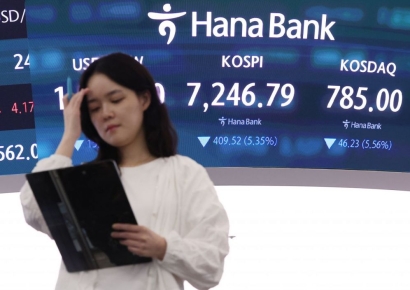 Report That Accurately Predicted KOSPI's 20% Plunge Now Says "Buy Now... Path to 11,450 Points Opens"
- [Exclusive] "Why Are Sales So Strong Only in Korea?"... 200,000 Units Sold in 10 Years Since Entering Korea [Tesla's Solo Run... Hyundai's Counterattack]
- Youth Employment Insurance Subscribers Decline for 46 Months... Total Subscribers Increase by Over 200,000 for Six Consecutive Months
- "They Warned Us Five Years Ago": Collapse Inevitable After Ignoring the Danger... It Finally Gave Way [Infrastructure, From Construction to Replacement]③
- "Why the World Should Learn from Korea: Why Foreigners Are Impressed by Riding the Subway"
The court stated, "The defendant has two prior convictions for drunk driving, having been fined in 2010 and again in 2023. Taking into account the circumstances of driving while hungover and the fact that the blood alcohol level was not high, we determined the sentence accordingly."
© The Asia Business Daily. All rights reserved. Unauthorized AI training and use prohibited.